Showing posts with label Tech. Show all posts

Thursday, December 30, 2010

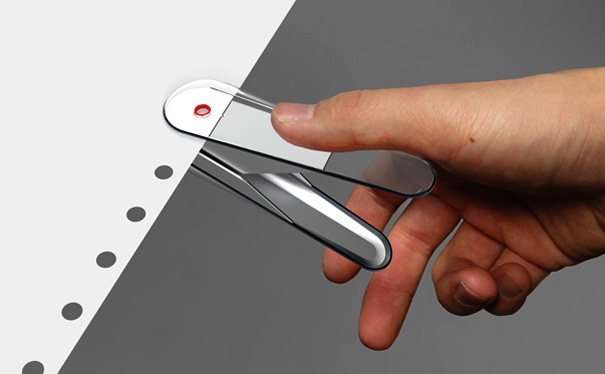
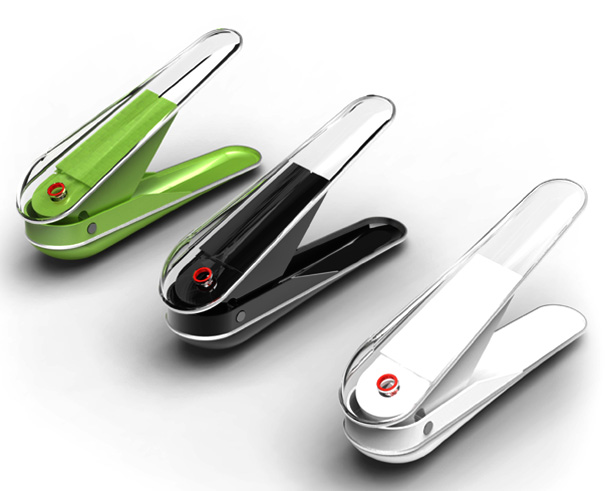
No-Guessing, Only Clear Punching


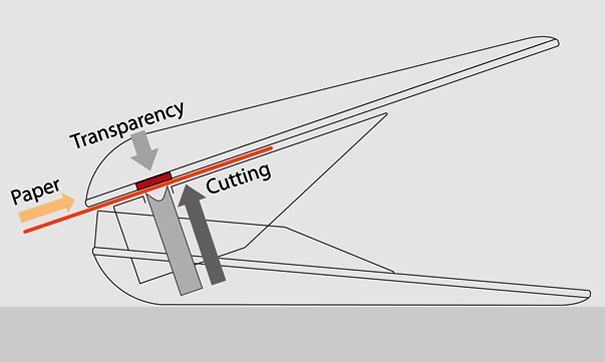
The Transparent Punch allows you to see where exactly you will be punching the hole in a paper. The red ring guides your placement and saves you from doing a shoddy job.

Designers: Kisang Yoon and Kyubok Lee


Source: Yanko design 

Wednesday, December 22, 2010

Scam: 'See who viewed your Facebook profile'!


Many of us are quite curious to know who viewed our Facebook profile. However, unfortunately scammers too are aware of this, and use the lure of such functionality as a way to trick users.

And, one such scam is again prowling on Facebook having claimed thousands of victims. The rogue application is spreading virally among Facebook users pretending to offer them a way of seeing who has viewed their profile.

According to security firm Sophos, "Messages spreading rapidly across the Facebook social network right now say: OMG OMG OMG... I can't believe this actually works! Now you really can see who viewed your profile!"

In fact, so far there is no application or way to find out who viewed your facebook profile. This means all those applications that promise you to show who has viewed your Facebook profile pages are actually scams.

Sophos warns that scams like these are used to earn commission for the mischief makers behind them, who have no qualms about using your Facebook profile to spread their spammy links even further.

However, in case, you've already fallen to the scam like this, remove references to it from your newsfeed, and revoke the right of rogue applications to access your profile via Account/ Privacy Settings/ Applications and Websites.

Wednesday, December 15, 2010

How the Cell Phone Is Changing the World


The impact of the ubiquitous device extends from politics to business, medicine, and war.
The modern mobile-phone era dates back only to the 1970s. In just 40 years, in the West, they’ve gone from suitcase-size novelty to ubiquity. And they’re no longer just luxury goods. More than 4 billion of the 6 billion people on earth now have a cell phone, with a quarter of those owners getting one in just the last two years. And many are using them, in a giant global experiment, to change the way life is lived, from Manhattan to Ouagadougou.

The phones now allow Masai tribesmen in Kenya to bank the proceeds from selling cattle; Iranian protesters to organize in secret; North Koreans to communicate with the outside world; Afghan villagers to alert Coalition soldiers to Taliban forces; insurgents to blow up roadside bombs in Iraq; and charities to see, in real time, when HIV drugs run out in the middle of Malawi.

“I was actually sitting around with a bunch of Ethiopian farmers recently,” says Duncan Green, research director for the charity Oxfam, “when I noticed that none of them had light or running water, but each family had a mobile phone.” The reasons are simpler than we think, he says. “Before, these farmers, if they wanted to check on a sick relative elsewhere, had to walk three hours in each direction. Now they just make a call.” That convenience, he says, drives their eager embrace of the phones. But the phones’ growing ubiquity—“they’re a technological Coca-Cola,” Green says—has other uses, too. Here are five ways they’re changing the world.


Exposing Secrets

On the Chinese border with North Korea, human-rights activists have a mission. They aim to persuade the few North Koreans allowed to travel outside the country to smuggle cell phones back in, and help open the most closed society in the world. (Mobile phones are officially allowed, but are strictly limited in range and closely monitored.) If discovered with their smuggled phones, the spies risk imprisonment and death, all in an effort to report on everything from pets to famine, and the swirl of story and counter-story that manages to penetrate dictator Kim Jong-il’s wall of silence. One such person, The New York Times reports, was executed by firing squad when authorities discovered his cell phone.


Advancing Democracy


Cell phones present a problem for oppressive regimes everywhere. So many Iranians were using text
messages to secretly organize protests against last year’s flawed elections thatthe government eventually shut down service entirely. The Finnish company Nokia Siemens was criticized by the European Parliament for providing the government the equipment to do so. China presumably has its own capability: when prominent democracy campaigner Liu Xiaobo won the Nobel Peace Prize last month, messages containing the Chinese characters for his name failed to send, reported the Associated Press. Unbowed, his supporters continue to make their voices heard in the West. By cell phone, of course. In Africa, Green says, people are able to report violent incidents and government oppression in a way they couldn't before. “It’s kind of the first time they’ve had bottom-up democracy,” he says.


Enabling Commerce


In Tanzania, reports the BBC, only 5 percent of people have a bank account. In Kenya, there is one bank branch per 100,000 people. It’s a situation that is repeated in many developing countries, including such potential powerhouses as India. The solution, for some, has come through the cell phone.

 In Uganda, where villages often have one top-up phone run by a trusted operator, a basic system helps store and transfer money. In a TED talk in 2007, Jan Fishman, an analyst for Frog Design, a global innovation firm, outlined a common method of banking using a cell phone where there are no banks.

A villager, working hundreds of miles away from home, buys a cell-phone refill card with his earnings. To send his money back to the village, he calls the operator, who tops up the phone using the card. The operator, having taken a commission, then hands cash on to whoever has been authorized.

 In India, the systemhas been formalized and is supported by the Bank of India. In Kenya, the main service, M-Pesa, moves millions of dollars per day by text message. In the East African nation, the ability to SMS means that Masai farmers can bank the money from the sale of a cow instead of carrying the cash. One minor difficulty, says Green, is that the same farmer will sometimes spend money he should be using for food on a shiny new phone. “But that’s just people,” he says.


Distributing Medicine


Stock-outs—which is what it’s called when isolated clinics in countries such as Kenya, Uganda, Malawi, and Zambia run out of antimalaria medicine, zinc tablets, penicillin, HIV and AIDS drugs, and diarrhea treatments—are potentially deadly, even as their occurrence often is denied by local governments.

A new project, Stop Stock-Outs, aims to use cell phones to solve the problem. Activists send a simple text message to a central number reporting which drugs are out of stock. The information is collated in a virtually real-time map, on which bright red dots signify a dangerous shortage.


Waging War

In Afghanistan, The Wall Street Journal reports, the Taliban have forced local cell-phone-service providers to shut down their towers at night. The move is designed to stop locals reporting Taliban movements to Coalition forces. NATO troops, meanwhile, also black out entire areas of cell coverage before an offensive to prevent insurgents from remotely detonating roadside bombs, says one official who did not want to be named discussing operational details. Suppressing the devices will become harder and harder for both sides—cell phones are one of the few economic bright spots in the country. Hundreds of thousands of Afghans now have one.

Source:Newsweek

Friday, November 12, 2010

Driverless van crosses Europe to Asia


A driverless van has completed the longest-ever trip by an unmanned vehicle, beginning in Italy and arriving in China, covering 13,000 kilometers (8,077 miles), researchers said.

The van arrived at the Shanghai World Expo on Thursday, after leaving Italy on July 20.

The three-month trip took the van through Eastern Europe, Russia and Kazakhstan; across China through the Gobi Desert; and finally along the Great Wall, before arriving for a celebration at the expo. The driverless van relied solely on electricity.

The vehicle weathered three months of rain, blizzards and sun, and arrived in Shanghai with no major problems, according to researchers tracking its progress. The van even stopped to pick up hitchhikers outside of Moscow.

"We are really happy. It's a real milestone in our field of vehicular robotics," said lead researcher Alberto Broggi.

The van, designed by Italian tech company Vislab, featured 12 refined sensors, including cameras, a carbon dioxide sensor, a GPS device and an off-road laser scanner.

"This driverless trip to China shows how science can capture people's imagination through achievements that would recently have been unthinkable ... [and] provide major environmental and economic benefits," said Maire Geoghegan-Quinn, head of research, innovation and science for the European Commission.

The record-setting journey comes in amid of major developments in driverless vehicle technology.
Earlier this month, Google announced that its self-driving vehicle had successfully traveled about 350 miles [563 kilometers] from its headquarters in Mountain View, California, to Santa Monica, California. Google, which engages in energy-related businesses along with its core Internet search-engine service, says its self-driving cars have logged more than 140,000 miles. General Motors, Volkswagen and Stanford University are also developing driverless vehicles.

No maps were used as Vislab's van traveled from Italy, then off-road through much of Siberia and China. The van topped out at 37 miles per hour and traveled about four hours a day to allow for adequate battery recharging.

As for human intervention during the van's three-month journey, "We had to intervene manually only on limited occasions, such as in the Moscow traffic jams and when passing toll stations," said lead researcher Broggi, who also is a professor at Italy's University of Parma.
Two engineers rode in the van to prevent dangerous situations. The vehicle was part of a four-vehicle caravan, which included a leading van that was occasionally driven by two engineers, but mostly operated without human guidance.

From Italy to Russia to China, the driverless van baffled onlookers. During a special demonstration on the outskirts of Moscow on September 10, a police officer approached the vehicle as it maneuvered in a pedestrian zone, only to find a driver missing.

"He realized there was no driver!" engineers wrote on the van's official trip blog. "He then looked around and tried to find a clue of what was happening. He really seemed puzzled!"

"We talked to him ... explained this is a big test," Broggi said. "It was extremely difficult, but in the end we avoided getting the first ticket to an autonomous vehicle."

Other challenges along the way included replacing a 430-kilogram battery in Moscow, lengthy and complicated border crossings due to customs clearances, and several frigid nights camping along the van's route in Siberia.

"We weren't worried about not making it," though, Broggi said. "This big trip was an intermediary step in a longer process. We have something new planned for 2012."

The European Research Council primarily funded the expedition, to develop technology to increase road safety and fuel efficiency by supplementing driver decisions at the wheel. The project used low-cost technologies that could be integrated in most current vehicles' chassis, researchers said.

More than 1.2 million people die annually in auto crashes, according to the World Health Organization.

Source:CNN,http://branham.org

Friday, October 15, 2010

No laps for warm laptops; skin damage is possible


CHICAGO – Have you ever worked on your laptop computer with it sitting on your lap, heating up your legs? If so, you might want to rethink that habit.

Doing it a lot can lead to "toasted skin syndrome," an unusual-looking mottled skin condition caused by long-term heat exposure, according to medical reports.

In one recent case, a 12-year-old boy developed a sponge-patterned skin discoloration on his left thigh after playing computer games a few hours every day for several months.

"He recognized that the laptop got hot on the left side; however, regardless of that, he did not change its position," Swiss researchers reported in an article published Monday in the journal Pediatrics.

Another case involved a Virginia law student who sought treatment for the mottled discoloration on her leg.

Dr. Kimberley Salkey, who treated the young woman, was stumped until she learned the student spent about six hours a day working with her computer propped on her lap. The temperature underneath registered 125 degrees.

That case, from 2007, is one of 10 laptop-related cases reported in medical journals in the past six years.
The condition also can be caused by overuse of heating pads and other heat sources that usually aren't hot enough to cause burns. It's generally harmless but can cause permanent skin darkening.

In very rare cases, it can cause damage leading to skin cancers, said the Swiss researchers, Drs. Andreas Arnold and Peter Itin from University Hospital Basel. They do not cite any skin cancer cases linked to laptop use, but suggest, to be safe, placing a carrying case or other heat shield under the laptop if you have to hold it in your lap.

Salkey, an assistant dermatology professor at Eastern Virginia Medical School, said that under the microscope, the affected skin resembles skin damaged by long-term sun exposure.

Major manufacturers including Apple, Hewlett Packard and Dell warn in user manuals against placing laptops on laps or exposed skin for extended periods of time because of the risk for burns.

A medical report several years ago found that men who used laptops on their laps had elevated scrotum temperatures. If prolonged, that kind of heat can decrease sperm production, which can potentially lead to infertility. Whether laptop use itself can cause that kind of harm hasn't been confirmed.

In the past, "toasted skin syndrome" has occurred in workers whose jobs require being close to a heat source, including bakers and glass blowers, and, before central heating, in people who huddled near potbellied stoves to stay warm.

Dr. Anthony J. Mancini, dermatology chief at Children's Memorial Hospital in Chicago, said he'd treated a boy who developed the condition from using a heating pad "hours at a time" to soothe a thigh injured in soccer. Mancini said he'd also seen a case caused by a hot water bottle.

He noted that chronic, prolonged skin inflammation can potentially increase chances for squamous cell skin cancer, which is more aggressive than the most common skin cancer. But Mancini said it's unlikely computer use would lead to cancer since it's so easy to avoid prolonged close skin contact with laptops.

Source:Yahoo.com

Friday, October 1, 2010

Saturn!


 1-Many astronomers consider Saturn the most beautiful planet in the solar system because of its stunning rings. In fact, Saturn’s nickname is “the jewel of the solar system.”

2-Saturn is the second-largest planet in our solar system after Jupiter, which is about 20% larger than Saturn. Earth is the fifth-largest planet in our solar system.

3-Saturn is not the only planet with rings. Jupiter, Uranus, and Neptune also have rings, although they are much fainter and less spectacular than Saturn’s.

4-Saturn is the least dense planet in the solar system, and if there were a body of water large enough to hold Saturn, the planet would float. In contrast, Earth and Mercury would sink the fastest.

5-A year on Earth is 365.256 days. A year on Saturn is 10,759.22 days.

6-A day on Earth is 24 hours. A day on Saturn is 10 hours 39 minutes.

7-The Assyrians, who lived in modern-day Iraq, were the first to record sighting Saturn in 700 B.C. They called the planet the Star of Ninib, after the Assyrian sun god of spring.
8-The planet Saturn is named after the Roman god of farming, Saturn, who was also the father of the Roman god Jupiter. The planet’s symbol is a sickle, a tool that belonged to the Roman god of harvest and was also the weapon Cronos used to castrate and depose his father, Uranus.

9-As the seventh day of the week, Saturday is named after Saturn, the farthest of the seven objects in the solar system known in ancient times.

10-Because Saturn spins on a tilt, it has seasons. Summer on Saturn lasts about eight Earth years.

11-Saturn is called a “naked eye” planet because it can be seen without a telescope or binoculars. Saturn is often the third brightest planet in the night sky and has a yellowish color that does not twinkle. Unlike stars, planets like Saturn do not twinkle because they are much closer to Earth than stars.

Sunday, September 26, 2010

What Your Digital Photos Reveal About You


The geotagging data contained in many mobile phone images lets strangers know exactly where you are.

Robert Vamosi, PCWorld 

The moment is special: Your kid just learned how to ride a bike without training wheels. So you fire up your iPhone's camera, snap a photograph, upload the image to TwitPic, and share the evidence of your child's triumph via Twitter.

When you post the picture, a subset of the 75 million Twitter users will know the exact location of you and your child. Digital photos automatically store a wealth of information--known as EXIF data--produced by the camera. Most of the data is harmless, but as Mayhemic Labs' Ben Jackson noted at the Next HOPE security conference in New York last July, about 3 percent of all photos posted on Twitter contain location data, and that figure is growing. Anyone on the Web who can read the data knows where the photographer was standing. And arguably this is a gross invasion of personal privacy.

EXIF Data and Geotagging

Created by the Japan Electronic Industries Development Association (JEIDA), the Exchangeable Image File format (EXIF) specification adds metadata to common JPG and TIFF image files. Along with a thumbnail image of the photo, EXIF data stores details about aperture, shutter speed, focal length, metering mode, and ISO settings, some of which can help a printer do a better job of color-matching the final printed image. There's also room for other information, such as the camera's make, model, and registration number, and in some cases, location data.

Geotagging is the process of storing latitude and longitude data inside an image's EXIF data. This information mates the image with a photographer's specific geographic location, which mapping services such as Google Earth can then chart.

For older digital cameras, adding location data to an image requires complicated peripherals: You must attach a cable to the camera to communicate with a GPS receiver, such as a stand-alone navigation device or a mobile phone. But many newer digital cameras and mobile phone cameras have built-in GPS receivers. The geotagging features in these newer devices are integrated and seamless, and your EXIF files may store latitude, longitude, time (in the form of Coordinated Universal Time or UTC readings), and and even altitude data (which can be helpful for reconstructing a family vacation on a map). With the explosion of smartphones today, Jackson is seeing an increasing number of geotagged images posted to the Web.

ICanStalkU.com

To highlight geotagging-related privacy issues, Jackson and Larry Pesce, a colleague, adopted the Twitter username ICanStalkU to respond to tweeters who posted geotagged images. Twitter shut down the account but let Jackson back in after he argued for the need to educate users. He has also started a Web site called
ICanStalkU.com to get his message out.

ICanStalkU uses a Perl script to scrape some 20,000 images each day off of MobyPicture, SexyPeek, Twitter, and Yfrog. The site then reposts the pictures with messages like "I am currently nearby..." and supplies the street address, latitude and longitude data, city, and state (if these are known). Each ICanStalkU entry also shows the location mapped on Google, the original tweet, and the original photo.

Another site, PleaseRobMe.com (now shut down), used data from Foursquare and Twitter to emphasize the abundance of personal data being posted online. The researchers behind the project--Frank Groeneveld, Barry Borsboom, and Boy van Amstel--say that they're reviewing feedback they've already received be¬¬fore continuing with the project.

In his New HOPE security conference presentation, Jackson detailed how he found personal details about a man in a photo. Using accompanying geotagging data, Jackson located the man's house on Google Earth.

Then he found a name associated with the house where the photo was taken, leading him to a Facebook account that yielded a birth date, marriage status, and friends.

A second username listed on the Facebook page led to a second Twitter account, and so forth. The point here is that once you start pulling on the thread of information contained in a geotagged image, a single photo can reveal a whole trove of personal data--far more than you might think.

Some people say they don't mind sharing their real-time location data with total strangers. But others dislike the idea that strangers can know where they are at any given time. Fortunately, smartphones and cameras let you turn off the photo geotagging feature.

Phone-Specific Remedies

On an iPhone, you can block geotagging by disabling all geolocation apps, such as Foursquare. To do so, go to Settings, General, and toggle the Location Services settings to Off. In iOS 4, you can disable location services for specific apps (off for the Camera app, but on for Yelp, for instance).

If you don't use iOS 4, instead of turning off Location Services for the entire phone, you can reset the Location Warnings. Go to Settings, tap Reset, and select Reset Location Warnings. Start the camera, and answer No to the ‘Ask on first use...' question. You can then allow or disallow individual apps the next time you open them.

On Android phones, turning off GPS will break all location-based apps on the phone. Instead, start the Camera application, and under Location and Security in the menu on the left side, disable GPS. To check your work, open the Camera app and pull out the left side menu. ‘Store Location' should be disabled.

For the RIM Blackberry, disabling the feature within the camera is easy. Press the Menu key, select Disable GPS, and select Yes to confirm the change.

Monday, September 13, 2010

The USB Wall Socket

These days, the iPhone and other devices that we interact with most are USB friendly and often times, USB dependent.

So it’s no wonder some genius decided to develop a wall socket equipped with USB ports. Not only does this wall socket allow you to charge devices using USB, but it also potentially doubles the number of things you can power from a single wall socket. Bonus!

The best part is that this socket retrofit can be installed easily on any existing wall outlet. All you’ve got to do is swap them out. Oh, and no need to worry about the vampire effect. The USB ports will only draw power if something is plugged in.

http://www.techvert.com

Friday, August 13, 2010

Japanese Scientists Create Touchable Holograms


Researchers at Tokyo University have come up with a technology that is a first and significant step away from the mouse and keyboard – touchable holograms.


[Hiroyuki Shinoda, Professor, Tokyo University]:

"Up until now, holography has been for the eyes only, and if you'd try to touch it, your hand would go right through. But now we have a technology that also adds the sensation of touch to holograms."

The technology consists of software that uses ultrasonic waves to create pressure on the hand of a user “touching” the projected hologram.

Researchers are using two Wiimotes from Nintendo’s Wii gaming system to track a user’s hand.

The technology was introduced at SIGGRAPH, an annual computer graphics conference, and has so far only been tested with relatively simple objects.

But its inventors have big plans for touchable holograms in the future.

[Hiroyuki Shinoda, Professor, Tokyo University]:

"For example, it's been shown that in hospitals, there can be contamination between people due to objects that are touched communally. But if you can change the switches and such into a virtual switch, then you no longer have worry about touch contamination. This is one application that's quite easy to see."

Touchable holograms could be used for a wide variety of things... everything from light switches to books with each appearing when needed, and then disappearing when not.

And holograms could replace the need for making new interfaces for technology, since they could be changed without having to make a new physical product.

Thursday, June 24, 2010

The 9-year-old Microsoft genius


Skopje, Macedonia (CNN) -- A colorful mural runs along the outside the Blaze Koneski public school in Macedonia, but it's been vandalized by graffiti artists who spray their tags all over the school.

There are metal bars on the windows and the building itself is run down and dilapidated. We are here to interview a "child prodigy" for CNN's i-List Macedonia.

Marco Calasan is the youngest Microsoft systems engineer in the world, holds four Microsoft certificates and has written a 312-page book on Microsoft's Windows 7.

As we enter the classroom a young boy with a warm smile and dark, curly shoulder length hair pulled back in a ponytail, extends his hand and introduces himself.

Marco is just nine years old; he's an only child and a computer genius. He takes us on a tour of the school computer lab, as if it were his home. Marco only lives across the road but spends endless hours in here working away each day, well and truly after the school bell has rung.
Asked why he loves computers so much, Marco responds sagely that, "with knowledge, everything is possible." He goes on to give a detailed explanation of IPTV - the content delivery network system that he set up all by himself.

With his sweet, innocent voice, Marco explains how he streams high quality video throughout Macedonia and even provides a service for the country's disabled.

Throughout the conversation, the word "Microsoft" peppers every single sentence and it becomes clear this child is obsessed with Bill Gates' creation.

And while you'd think his impressive resume at such a young age would give him the right to be precocious, Marco is the complete opposite.

He's humble, friendly and so very patient as I ask him to repeat and re-explain the computer jargon that flies over my head.

I ask whether he sees himself as special and gifted. He tells me he's just a regular kid, and forgets that he has all this knowledge in his head when he plays with his friends.

But Marco is anything but normal. He speaks three languages and is learning a fourth and while English is not his mother tongue, his command of the language and vocabulary is mind-boggling. In finite detail he explains the ins and outs of computers and the curriculum he's teaching his peers and adults. He even educates his own teachers.

Later this month he's going to Montenegro where the government has asked him to give a presentation on his IPTV system.

Marco's brain function is quite extraordinary. Professor Elena Achkovska-Leshkovska at the Institute of Psychology in Skopje tested Marco when he was seven years old. She found that his brain operated the same as a child over the age of 12. But just as fascinating was his high level of emotional and social skills. Something not normally found in such gifted children.

As Marco chats away with the crew, his mother Radica stands proudly in the background. With her jet back hair, slender figure and smiling face, this pretty young mum watches as her son dazzles the room.

Their bond is exceptionally close as they describe each other as best friends. Radica works seven days a week running a computer business to make ends meet and every cent she earns goes straight to Marco and furthering his education.

Last month Radica had a health scare when she was diagnosed with breast cancer. She spent a week in hospital having the tumor removed and when she got home, Marco had printed off more than 200 pages of information on breast cancer treatments, and what his mom should eat to make a full recovery.

Doctors have told Radica she must undergo chemotherapy but she's reluctant to do so because she's concerned she won't be able to care for her little boy. Her other concern is Marco's future. She knows he needs opportunities and an education system that exists only in expensive overseas schools. Something she cannot afford.

Despite the obstacles and challenges that await them both, a sense of calm and optimism surrounds this little boy and his mother. They walk us out of the school and watch us leave, Radica with her arm lovingly around her gifted son.

Saturday, May 15, 2010

Is your computer keeping you awake?


 (CNN) -- J.D. Moyer decided recently to conduct a little experiment with artificial light and his sleep cycle.

The sleep-deprived Oakland, California, resident had read that strong light -- whether it's beaming down from the sun or up from the screens of personal electronics -- can reset a person's internal sleep clock.

So, for one month, whenever the sun set, he turned off all the gadgets and lights in his house -- from the bulb hidden in his refrigerator to his laptop computer.

It worked. Instead of falling asleep at midnight, Moyer's head was hitting the pillow as early as 9 p.m. He felt so well-rested during the test, he said, that friends remarked on his unexpected morning perkiness.

"I had the experience, a number of times, just feeling kind of unreasonably happy for no reason. And it was the sleep," he said. "Sure, you can get by with six or seven hours, but sleeping eight or nine hours -- it's a different state of mind."

Moyer may be onto something.

More than ever, consumer electronics -- particularly laptops, smartphones and Apple's new iPad -- are shining bright light into our eyes until just moments before we doze off.

Now there's growing concern that these glowing gadgets may actually fool our brains into thinking it's daytime. Exposure can disturb sleep patterns and exacerbate insomnia, some sleep researchers said in interviews.

"Potentially, yes, if you're using [the iPad or a laptop] close to bedtime ... that light can be sufficiently stimulating to the brain to make it more awake and delay your ability to sleep," said Phyllis Zee, a neuroscience professor at Northwestern University and director of the school's Center for Sleep & Circadian Biology.

"And I think more importantly, it could also be sufficient to affect your circadian rhythm. This is the clock in your brain that determines when you sleep and when you wake up."

Such concerns are not entirely new: One sleep researcher said Thomas Edison created these problems when he invented the light bulb. But they've been revived by the popularity of Apple's new slate computer, the iPad, which many consumers say is good for reading at night in bed, when the brain thinks the environment should be dark.

Unlike paper books or e-book readers like the Amazon Kindle, which does not emit its own light, the iPad's screen shines light directly into the reader's eyes from a relatively close distance.

That makes the iPad and laptops more likely to disrupt sleep patterns than, say, a television sitting across the bedroom or a lamp that illuminates a paper book, both of which shoot far less light straight into the eye, researchers said.

"I wish people would just take a boring book -- an old-fashioned book -- and [read] by a lamp. Make sure that it's not too bright -- just so you can read," said Alon Avidan, associate director of the Sleep Disorders Center at UCLA. "And if they do that, I think they'll feel a lot better and they'll be able to relax."

These concerns stem from the fact that people are biologically wired to be awake when the sun is out.

When receptors in our eyes are hit with bright light for an extended period of time, they send a message to the brain saying it's time to be awake. The brain, in turn, stops secreting a hormone called melatonin, which makes people sleepy and helps regulate the internal sleep clock.

Normally, our brains start giving us that hormonal sleep aid at about 9 or 10 p.m. But if bright lights are shining in our eyes, that may not happen as planned. That's what worries some sleep researchers.

To make matters worse, our eyes are particularly sensitive to blue light, which is common during the day, but is less so in the evening. The fact that computer screens and phones tend to put out a lot of blue light could intensify the screen's awakening effects, even if the light isn't all that bright.

There's no exact formula for determining how much light is needed to reset a person's internal clock. Several factors are at play, including how bright the light is, what hues are present, how large the light source is, how far it is from the person's eyes and what that person tends to do during the day.

A farmer who is exposed to sunlight all day long would likely be less sensitive to artificial light at night than a person who works in a dimmer office environment, said Mariana Figueiro, an assistant professor and director of the Lighting Research Center at Rensselaer Polytechnic Institute in Troy, New York.

While there has been research to show that light -- even artificial light -- can affect human melatonin production, no research has been done specifically on whether the iPad and laptops disrupt sleep cycles.

Some researchers are skeptical of the link.

"I don't think it's an area of concern. I think it's an area of personal preference," said Mary Lou Jackson, director of vision rehabilitation at the Massachusetts Eye and Ear Infirmary, which is affiliated with Harvard Medical School.

People shouldn't be concerned about reading on backlit electronic devices at night unless they're experiencing insomnia, in which case they should dim the screen, Jackson said.

Several iPad owners contacted by CNN said they enjoy reading on the device before bed and haven't noticed sleep problems.

Apple did not respond to a request for comment on this story.

George Brainard, director of the Light Research Program at Thomas Jefferson University in Philadelphia, Pennsylvania, said it's more important for people to turn off their computers and gadgets at night -- so they have a dark sleeping environment -- than to worry about reading in bright conditions before bed.

Electronics with glowing screens may create problems for people who are susceptible to insomnia, he said, but that research hasn't shown the link yet.

"Can we jump from [the available research] to an iPad? Not quite yet," he said. "But you can begin to see the potential is there for low levels of light to potentially have a biological effect."

Avidian, from UCLA, said several factors play into how well a person sleeps. It's possible iPads and laptops, when used late at night, may delay sleep because they require more focus and provide more potential distractions than books, he said.

Still, the possible relationship between reading at night on backlit screens and insomnia has led some sleep doctors to prescribe zany solutions for patients.

Figueiro, the professor at RPI, prescribes sunglasses with orange lenses.

"Wearing these orange glasses definitely will take away any of the [blue] light that the circadian system is sensitive to," she said. "Your circadian system would basically be blind."

Zee, the Northwestern doctor, said she has recommended the same. She also says people who have trouble sleeping should keep iPads and laptops out of the bedroom. It's best to stop using them one or two hours before going to bed, she said.

Changing your computer or iPad's screen settings to make the display dimmer or take blue hues out of the display at night may also help, researchers said.

A free, downloadable program called F.lux will automatically adjust the hues on your computer screen to eliminate blues when the sun starts setting -- and then replace them when it rises again.

The program, which was developed by a computer programmer and an artist, is not scientific. Sleep researchers said they are unsure of its actual impact.

Moyer, the Oakland resident who turned off all of his gadgets and lights at sundown for a month in 2009, said he hasn't kept up the rigid routine.

But he has applied some lessons from his lights-off-at-night experiment.

For one, he uses the computer less at night. And when he needs to use it, he employs F.lux to make the screen more red and less blue.

Tuesday, May 11, 2010

12 Wackiest Landlines Phones

 from www.Oddee.com

1-Hamburger Phone 

Remember that funny phone the movie “Juno”? Now you can have the same Hamburger Phone at home for only ($ 12.99).


2-French Fries Phone
 
Ever get hungry while talking on phone? Now you can have some fast food talk with the French Fries Phone ($49.99).


3-Hot Lips Phone

Ooo la la .Feat your eyes on Hot Lips Phone, made for those who could not care less about phones jam packed with special features ,but love funky retro gadgets.


4-Simpsons Phone

The Homer Simpson Animated Talking Telephone ($42.27) alerts you to incoming phone calls like only Homer can! The phone dispenses Classic Homer wisdom such as “Don’t touch it, might be work!” and “I am leaving the clowning business to the clowns in the clowning business!”


5-Telecome Fur Phone

What do you think of this fur one .it would be nice for girls!!!!!!!!!($24.21).


6-Animated Spiderman Phone

Just what you were looking for, the Animated Spiderman Phone ($54.47) plays Spiderman‘s theme song with incoming call redial.


7-SpongeBob Flip Phone 

Popular Nickelodeon character SpongeBob Square Pants is now a phone that kids will love. The one-piece corded yellow telephone is made of soft plastic .it plugs into a standard phone jack but flips open so kids can pretend they are using their own cell phone. ($27.35)


8-Star Wars R2D2 Novelty Phone

R2D2 ($59.99), the adorable electronic companion featured in the Star Wars films, now appears on your desks as a great novelty telephone. Dispelling the myth that phones are merely functional ,the R2D2moves his head when the phone rings ,lights up, and emits sound effects .this is a must for any serious Star Wars fantastic.


9-Michael Jordan Animated Phone 

When the Telemania Michael Jordan Animated Phone ($34.99) rings, the basketball opens to a basketball court complete with fans, MJ is announced, fans start cheering and lights flash .


10-The Incredible Hulk Animated Phone

You may not escape the HULK….but you’ll definitely want to take a call from him with The Incredible Hulk Animated Phone ($69.99)


11-Wall Mount Vintage Style Phone

This colonial style country Phone ($82.95) is an authentic reproduction of early American heritage .while this beautiful recreation is designed to provide extremely high-quality communication, it has all charm of the faithful original. Originally introduced in the early 1920’s, this classic features a crank handle that actually turns.


12-Snoopy Animated Phone

This fun Snoopy & Woodstock Animated Phone ($39.99) features Snoopy ,wearing a tux & sunglasses ,play his saxophone, taps his foot ,and swivels his hips to original peanuts theme song. Woodstock, wearing hi top hat dances along nest to Snoopy; the animation will begin when incoming call is received.

Wednesday, April 28, 2010

Color Parker, Future Pen for future world


Written By: admin from the most interesting fact

Color Picker is a pen that can scan any color from the objects around us and can be used instantly to draw / write. The way it works are, the first attach sensor on the object that have the color we want, then press the Scan button. RGB cartridge will work so that the color we want appears in the display of the pen.

So Color Parker works simply as follow scan a leave or an apple and you can write or draw after scans through the scanning device at the end of the pen to the desired subject in the exact color of that apple of leaves.

Here are some pictures of the pen:


                                                                     Scan leave 


Draw after scan 
Related Posts Plugin for WordPress, Blogger...