Showing posts with label Health. Show all posts

Friday, February 4, 2011

Diabetics could soon 'grow their own insulin'


Scientists may have found a way of curing diabetes - at least in men.

They have used tiny slivers of testicular tissue to make millions of healthy replacements for the faulty cells behind the condition.

In experiments on mice, grafts of the lab-grown pancreatic cells produced enough insulin to control blood sugar levels in diabetic mice.

Although the work is at an early stage, the American researchers believe it could lead to a cure for men and boys with type 1 diabetes in perhaps just five years.

However, British experts have urged caution, saying that any cure is still many years away.
Diabetes occurs when the pancreas does not make enough insulin, a hormone key to the conversion of sugar into energy, or the insulin that is made does not work properly.

The 250,000 Britons with type1, or childhood, diabetes do not make any insulin at all and so need to take regular injections to stop blood sugar levels from fluctuating wildly.
In the latest study, immature cells that would normally go on to form sperm were turned into healthy insulin-producing cells.

The researchers, from Georgetown University Medical Centre, in Washington DC, started with tiny samples of tissue from human testicles.

Using a cocktail of vitamins and growth factors, they transformed them first into stem, or ‘master, cells, and then into the beta islet cells that produce insulin in the pancreas.
The process took around five weeks, the American Society of Cell Biology’s annual conference heard.
Layers of pancreatic cells were then grafted onto diabetic mice, where they produced enough insulin to control blood sugar levels for a week.

While this might not seem long, the researchers say it should be possible to make the cells work for much longer - and for them to produce enough insulin to benefit human diabetics.
Researcher Dr Ian Gallicano believes the testicular cells, or spermatogonial stem cells, could succeed whether other potential diabetes cures have failed.

He said: ‘No stem cells, adult or embryonic, have been induced to secrete enough insulin yet to cure diabetes in humans, but we know that spermatogonial stem cells have the potential to do what we want them to do, and we know how to improve their yield.’

Using a man’s own cells as the source of the treatment would sidestep any chance of the tissue being rejected by the body.
They hope to test the technique on men for the first time within months. If large-scale trials show it to be safe and effective, the transplant technique could be in widespread us in as little as five years.
Adapting the technique to eggs instead of sperm could allow female diabetics to eventually benefit too, the researchers believe.
Although the work is focused on type 1 diabetes, the technique may also be applicable to some cases of type 2 diabetes, the more common form of the condition.

This type of diabetes tends to affect people over 40 and occurs when not enough insulin is produced, or the insulin that is made doesn't work properly.
Chris Mason, professor of regenerative medicine at University College London, welcomed the breakthrough but cautioned it may be many years before patients can benefit.

He said: ‘Yet again, a world-class team of scientists has suggested another novel cell-based therapy for diabetes.
‘The question is how to turn such great discoveries into safe effective cures for people with diabetes - a process that has a high failure rate and takes years. It is time for less hype and more pragmatism.’
The charity Diabetes UK was more blunt, describing the research as ‘a tiny, incremental advance’ in the search for a cure for diabetes.

Source:

Monday, January 31, 2011

5 Mind-Blowing Benefits of Exercise


Think exercise is all about toned abs and weight loss? It also makes you happier and smarter.

Maybe you exercise to tone your thighs, build your biceps, or flatten your belly. Or maybe you work out to ward off the big killers like heart disease, diabetes, and cancer. But how about sweating to improve your mind? "Exercise is the single best thing you can do for your brain in terms of mood, memory, and learning," says Harvard Medical School psychiatrist John Ratey, author of the book, Spark: The Revolutionary New Science of Exercise and the Brain. "Even 10 minutes of activity changes your brain." If you need a little extra incentive to lace up those sneakers, here are five ways that exercise can enhance your brainpower:


1. It reverses the detrimental effects of stress. 


Jumping on the treadmill or cross trainer for 30 minutes can be an instant way to blow off tension by boosting levels of "soothing" brain chemicals like serotonin, dopamine, and norepinephrine. What's fascinating, though, is that exercise may actually work on a cellular level to reverse stress's toll on our aging process, according to a June study from the University of California at San Francisco.

The researchers found that stressed-out women who exercised vigorously for an average of 45 minutes over a three-day period had cells that showed fewer signs of aging compared to women who were stressed and not active. Working out also helps keep us from ruminating "by altering blood flow to those areas in the brain involved in triggering us to relive these stressful thoughts again and again," says study coauthor Elissa Epel, an associate professor of psychiatry at UCSF.

2. It lifts depression. 

Research suggests that burning off 350 calories three times a week through sustained, sweat-inducing activity can reduce symptoms of depression about as effectively as antidepressants. That may be because exercise has been found to stimulate the growth of neurons in certain brain regions damaged during depression. What's more, animal studies have found that getting active boosts the production of brain molecules that improve connections between nerve cells, thereby acting as a natural antidepressant.


3. It improves learning. 

Exercise increases the level of brain chemicals called growth factors that help make new brain cells and establish new connections between brain cells to help us learn. Interestingly, complicated activities, like playing tennis or taking a dance class, provide the biggest brain boost. "You're challenging your brain even more when you have to think about coordination," explains Ratey. "Like muscles, you have to stress your brain cells to get them to grow." Complicated activities also improve our capacity to learn by enhancing our attention and concentration skills, according to German researchers who found that high school students scored better on high-attention tasks after doing 10 minutes of a complicated fitness routine compared to 10 minutes of regular activity. (Those who hadn't exercised at all scored the worst.)

4. It builds self-esteem and improves body image. 

You don't need to radically change your body shape to get a confidence surge from exercise. Studies suggest that simply seeing fitness improvements, like running a faster mile or lifting more weight than before, can improve your self-esteem and body image.


5. It leaves you feeling euphoric. 

Yes, that "runner's high" really does exist if you're willing to shift into high-intensity mode. Ratey recommends sprint bursts through interval training. Run, bike, or swim as fast as you can for 30 to 40 seconds and then reduce your speed to a gentle pace for five minutes before sprinting again. Repeat four times for a total of five sprints. "You'll feel really sparkly for the rest of the day."

Wednesday, January 19, 2011

Why don't children's shoes fit?


Four million children are wearing the wrong-size shoes, according to new research. Why?

It's a common part of childhood, the trip to the shoe shop and your feet being measured. But according to new research conducted by Glasgow Caledonian University, there are still four million children in shoes that don't fit them.

Parents who squeeze their child's feet into the wrong-sized shoes could be condemning them to a lifetime of problems. From blisters, pressure sores and in growing toe nails in the short-term, to feet deformities like hammer toe and knee and posture problems in the long-term. The list goes on.

People need to take as much care of their children's feet as they do with their teeth, say podiatry professionals. If that's the case, why are so many children in shoes that don't fit?
Neglect, budget constraints, convenience and fashion are all to blame, says Dr Gordon Watt, lecturer in podiatry at Glasgow Caledonian University.

"People think of feet as smelly," he says. "They often just forget about them, when they should actually take much more of an interest."

Children's feet tend to grow rapidly in the first four years of their life, but it can take up to 18 years for the foot's bones, muscles and ligaments to harden into adult form. So teenage feet need to be looked after as well as those of smaller children.
According to the research, one in 10 parents say their children have continued to wear shoes that are too small for them. Half admit to only buying new shoes when their children complain their feet are hurting.

Podiatry experts say many people neglect their children's feet because they simply don't understand the problems an ill-fitting pair of shoes can cause. Only 40% of parents interviewed as part of the research took into account whether the shoes on their offspring's feet were well fitting and supportive.

False economy

Another issue is money. Two fifths of parents admitted to buying shoes that were too big so their children could grow into them over time, saving money. When it came to actually purchasing footwear, a quarter of parents said they based their decision on the cost.
The rise of cheaper shoes, sold without expert advice and proper fitting in stores and supermarkets, has also had an impact. Not only do they cost less, but they are often more convenient to buy than taking a child to a proper shoe shop for a fitting.
But it's a false economy in more ways than one, says Bob Hardy, a leading expert on shoe fitting and fellow of the Society of Shoe Fitters.
"Not only are the health of their child's feet at risk, cheaper shoes often fall apart and people end up going back two or three times for a new pair. They end up paying the same as they would have for well-made, properly-fitted shoes.
"Also, these shoe often don't come in half sizes or different widths, both of which are important if you want a shoe to fit properly."
Fashion trends also sway one in ten parents. This is a particular problem among older children and teenagers.
"Often fashionable shoes offer very little support," says Dr Watt.

Specialist training

"Take the current trend for ballet pumps among girls. They offer no support and are very flat. If you have an active child running around in them it could lead to Achilles [tendon] problems in the future."

There are checks that parents can do at home to make sure their child's shoe fits properly, says Mr Hardy.
A part of BBC News Magazine, Who, What, Why? aims to answer questions behind the headlines
There should be no more than a 14mm gap between the big toe and end of a shoe in a new pair. Anything less than 8mm and it's time to visit the shoe shop and get another pair. When it comes to width, the shoe should be supporting the foot, not squeezing it.

It is worth going to a shoe shop because proper shoe fitters will have undergone specialist training, either through their employer or with the Society of Shoe Fitters.

What parents should also remember is there are variations in shoe sizing due to factors like the place they are made, says Mr Hardy. German shoes, for example, are wider than Italian.

Because of this a child's foot should be measured every time they get new shoes and parents should not rely on the size printed inside the shoe, he says.

Finally, make sure both feet are measured, as one can be larger than the other.

Source: BBC.com

Tuesday, January 18, 2011

Smoking cigarettes damages 323 different human genes


It's not exactly news that smoking cigarettes is bad for you, but this latest danger is a doozy: smoking damages your genome. The largest genetic study of smoking ever has identified over 300 genes that are negatively affected by cigarettes.

The study looked at white blood cells from over a thousand people in the hopes of isolating specific genes whose expression was altered by smoking cigarettes. It's just one of many studies being undertaken as part of the San Antonio Family Heart Study, which has spent years examining health issues in the Texas city's Mexican American community, but this particular test is probably the most ambitious.


Research leader Jac Charlesworth explains what they found and why it's significant:

'Previous studies of gene expression as influenced by smoking have been seriously limited in size with the largest of the in vivo studies including only 42 smokers and 43 non-smokers. We studied 1,240 individuals, including 297 current smokers. Never before has such a clear link between smoking and transcriptomics [effects on gene expression] been revealed, and the scale at which exposure to cigarette smoke appears to influence the expression levels of our genes is sobering.'


The genetic effects observed fit into a variety of categories that correlate well with the known physical effects of smoking, such as decreased immune response, cell death, increased risk of cancer, metabolism of foreign particles, and natural killer cell signaling. Taken as a whole, the study points out just how deep the damage of smoking goes.


As Charlesworth puts it: 'Our results indicate that not only individual genes but entire networks of gene interaction are influenced by cigarette smoking. It is likely that this observed effect of smoking on transcription has larger implications for human disease risk, especially in relation to the increased risk of a wide variety of cancers throughout the body as a result of cigarette smoke exposure'

Source:Amazing news blog 

Microneedles may make getting flu shots easier


One day your annual flu shot could come in the mail. At least that's the hope of researchers developing a new method of vaccine delivery that people could even use at home: a patch with microneedles.

Microneedles? That's right, tiny little needles so small you don't even feel them. Attached to a patch like a Band-Aid, the little needles barely penetrate the skin before they dissolve and release their vaccine.

Researchers led by Mark Prausnitz of Georgia Institute of Technology reported their research on microneedles in Sunday's edition of Nature Medicine.

The business side of the patch feels like fine sandpaper, he said. In tests of microneedles without vaccine, people rated the discomfort at one-tenth to one-twentieth that of getting a standard injection, he said. Nearly everyone said it was painless.

Some medications are already delivered by patches, such as nicotine patches for people trying to quit smoking. That's simply absorbed through the skin. But attempts to develop patches with the flu vaccine absorbed through the skin have not been successful so far.


In the Georgia Tech work, the vaccine is still injected.
But the needles are so small that they don't hurt and it doesn't take any special training to use this kind of patch.

So two problems are solved right away — fear of needles, and disposal of leftover hypodermic needles.
"The goal has been a means to administer the vaccine that is patient friendly," Mark R. Prausnitz of Georgia Tech said in a telephone interview.

That means "not only not hurting or looking scary, but that patients could self-administer," he said, and people would be more likely to get the flu vaccine.
By developing needles that dissolve, there are no leftover sharp needles, especially important for people who might give themselves the vaccine at home, he said.

The patch, which has been tested on mice, was developed in collaboration by researchers at Georgia Tech and Emory University, Prausnitz said. The researchers are now seeking funds to begin tests in people and, if all goes well, the patch could be in use in five years, he said.

Flu vaccination is recommended for nearly everyone, every year, and that's a big burden on the public health network, Prausnitz noted. Many people don't get the shot because it's inconvenient, but if they could get in the mail or at the pharmacy they might do so, he said.
The patch is placed on the skin and left for 5 minutes to 15 minutes, he said. It can remain longer without doing any damage, he said. In tests on mice, the miocroneedles delivered a correct dose of the flu vaccine.
The little needles are 650 microns (three-hundredths of an inch) in length and there are 100 on the patch used in the mouse study.

Asked if the term "microneedle" might still frighten some folks averse to shots, Prausnitz said he was confident that marketers would come up with a better term before any sales began.
The research was supported by the National Institutes of Health.

Source :arab news.com 

Wednesday, January 12, 2011

The teenager who sleeps for 10 days


 While most teenagers struggle to get out of bed in a morning, Louisa Ball might take 10 days to fully wake from her slumber, due to a very rare neurological disorder. So what's it like living with Kleine-Levin Syndrome?

Louisa has slept through holidays, friends' birthdays and half of her GCSEs.

In 2008, aged 14, she had been suffering from flu-like symptoms. She was at her school in Sussex when she started nodding off in class and behaving strangely.

"I didn't know what I was doing, what I was saying, everyone thought 'hey this isn't right,'" she recalls.
"I was hallucinating and after that I don't remember anything. All of a sudden it just went blank and I just slept for 10 days. I woke up and I was fine again."

Her parents Rick and Lottie watched their daughter becoming fidgety and with unusual facial expressions as she sank into sleep. The first time was a frightening experience for them, although Louisa herself says she wasn't scared by the episode, more puzzled.

"It was really weird, no one knew what was wrong, we just thought it wasn't going to happen again. And then four weeks later it happened again."

She was finally diagnosed with Kleine-Levin Syndrome (KLS). There is no known cause or cure but Louisa says it was good to know what it was and that it wasn't life threatening.

The average time it takes to diagnose the condition is four years, because there is no test and so it requires a process of elimination of other disorders.

The disease was named after Willi Kleine, a neurologist from Frankfurt, and Max Levin, a psychiatrist from New York, who identified patients with similar symptoms in 1925 and 1936.

Louisa is unusual as KLS usually affects teenage boys, who can also exhibit hypersexuality and inappropriate behaviour.
As well as excessive sleeping, symptoms include behaviour changes, irritability, feeling in a dream-like state and binge eating, symptoms that can be mistaken for normal teenage behaviour. There are no drugs that have conclusively shown to alleviate symptoms.

'No dreams'

People with the sleep disorder narcolepsy fall asleep immediately, but people with KLS might sleep more and more over a number of days before falling into sleep mode.
Louisa says she remembers very little when she wakes up from an episode: "It's just blank - no dreams. Now I'll remember a lot more that's gone on. Before I wouldn't remember anything at all. My dad thinks my brain is learning to cope with it more."

So how do you deal with a disorder that takes over your life so much?

It nearly ruined Louisa's career ambitions, because she slept through most of her GCSEs but her college allowed her to enrol and she is studying sport performance and excellence, with dreams of being a dancer.
At first, her school teachers didn't understand, she says. "They'd give work to my brother for me to do and when I went back to school they expected me to have done it but I'd have slept for 10 days."

Some people with KLS have complained they have lost their friends because they suddenly disappear for weeks on end but Louisa has a close knit group of girlfriends. Some even visit her when she's sleeping, just to check she's ok.

When she wakes up, it takes her a few days to fully come round, and her body is quite stiff so her dancing is affected for while.

"I've never really got upset about it but I sometimes do think 'why me', because I've always been a normal healthy person. But all of a sudden it happened and there's no reason why it happened and that sometimes frustrates me.

"But I've got used to it now and learnt to live with it. I'm a special kid."
The change in behaviour before and during a sleep episode is one of the most upsetting things for Louisa's parents, who take it in turns to remain with her. Doctors have told the family it's crucial to wake Louisa once a day to feed her and get her to the bathroom.

But Lottie admits it can take a while to get her to come round. "I've tried before to literally force her to wake up but she just starts swearing and gets so agitated and aggressive."
After watching a video the family made of her while sleeping, Louisa says: "I look scary, it doesn't look like me, it's like I'm on drugs."

Frustrated by the lack of information in the UK, Louisa was taken by her parents to the Hospital Pitié-Salpétrière in Paris, where researchers are looking into whether it is caused by a defective gene.

Many sufferers have abnormalities in their temporal lobe, the area of the brain involved in behaviour and memory. A scan of Louisa's brain function revealed she does have abnormalities in her frontal lobe but there are no signs that this has affected her behaviour or memory.
The good news is the disease can also disappear just as suddenly as it came on. This normally happens after 10 to 15 years.

But Louisa is currently going through a good period. She was out doing Christmas shopping with her best friend this week and has not had an episode in 13 weeks. A few weeks ago she won yet another dance competition.

"It's almost as if I've forgotten about it because I haven't had one in so long."
Louisa's parents, however, are still watching her constantly for signs she could be heading into a sleep state.
"It's weird - now I've left school I haven't actually had an episode, they probably think I was faking it," she jokes.

What is Kleine-Levin Syndrome?


KLS is a disease of adolescence, and sometimes will begin after infection or illness, says Tom Rico of the Center for Narcolepsy & KLS Research at Stanford University, California.
"An individual with KLS will have sleep episodes, typically lasting between one and three weeks, with coinciding cognitive disturbance in the few hours of wakefulness.
"During this time period, a patient will sleep anywhere between 16 to 22 hours a day, every day, until the conclusion of the episode."
But the excessive sleeping is only half the problem, he says, because when awake during the episode, patients experience what they describe as a "dream-like state".

Source: Frances CroninBBC News

Friday, January 7, 2011

Genes give clue to early puberty


At least 30 genes appear to play a role in the age at which girls reach puberty, according to an international group of scientists.

The team scanned the genetic code of more than 100,000 women, reporting their findings in the journal Nature Genetics.

In the UK, girls as young as 10 are now showing the first signs of puberty.

A specialist said early puberty was linked to an increased risk of female cancers later in life.
The reasons why girls are going through puberty several years earlier than a century ago are not well understood by scientists.

Some have suggested a relationship between early puberty and obesity, and the latest research, carried out by the Reprogen consortium of scientists from the US, Europe and Australia, supports this idea.
Among the 30 genes highlighted by their genome research were some already linked to fat metabolism and weight regulation.

However, it is still not clear whether being obese or overweight in childhood is itself the cause of early puberty, or just another consequence of a different mechanism.

In addition, the study does not show how much of the risk is due to genes, and how much other environmental factors such as diet and upbringing are responsible.

Fat stores

One author, Dr Ken Ong, from the Medical Research Council Epidemiology Unit in Cambridge, said: "We know that girls who are overweight are more likely to go through puberty at young ages.
You need to be aware that you may be laying down your future risk from childhood”
Professor Anthony Swerdlow,Institute of Cancer Research

"If rates of childhood obesity continue to rise we will see many more girls with puberty at young ages."
Dr Anna Murray, another of the researchers from Exeter University, suggested that holding larger stores of fat might signal to the brain that it had the resources to start a woman's reproductive life.

She said: "We found that the timing of puberty is related to fatty acid metabolic pathways - there is evidence that the brain can sense these types of body fats."
Aside from the confusion experienced by young children entering puberty, it carries other health risks in the longer term.

Professor Anthony Swerdlow, from the Institute of Cancer Research, said that early puberty meant a higher risk of female cancers, particularly breast cancer.
This was possibly due to a higher lifetime exposure to sex hormones such as oestrogen.

He said that good diet and exercise, or the lack of it, in early childhood might be crucial to health many decades later.
He said: "What we increasingly believe is that, at least for breast cancer, the risk starts very, very young, even before puberty.

"If you are to prevent it, you need to be aware that you may be laying down your future risk from childhood."

Thursday, December 30, 2010

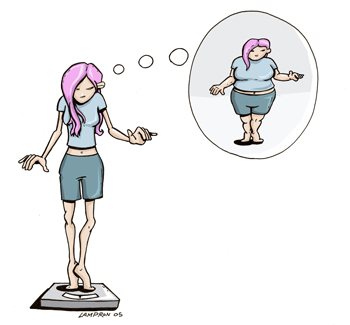
Eating Disorders Strike Younger and Younger


"I always wanted to be the good girl. Good girls are skinny and happy. The bad girls are the fat ones."
That was the explanation a recent visitor to the Alliance for Eating DisordersAwareness in West Palm Beach, Fla. gave when asked why she starved herself to the point of hospitalization. She was eleven years old.

Anorexia and its sister-disorder, bulimia,have historically been thought of as striking white, middle to upper class teenage girls. But a recent report from the American Academy of Pediatrics warns doctors that eating disorders arehappening to younger girls -- and boys -- at an alarming rate.

"People tend to have this idea of who gets eating disorders, but an eating disorder doesn't discriminate between age, gender, race, or class," says Johanna Kandel, founder and director of the alliance.

"Some research says that as much as ten percent of those with eating disorders are under the age of ten. What I'm finding at the alliance is that the number of parents seeking help for their 7-, 8-, 9-year-olds is escalating rapidly," she says.

A 2009 analysis found that in the last decade, hospitalizations for eating disorders more than doubled among children under twelve and now account for four percent of all such hospitalizations.

"Pediatricians need to be aware of the early symptoms of eating disorders because they are the medical professional that a child is mostly likely to see in any given year," says Dr. Jim Lock, director of the Eating Disorder Program at Packard Children's Hospital. "They are the gatekeepers."

It used to be that the onset of an eating disorder tended to be around mid-adolescence, around age fifteen or around the time of first menses at about age thirteen. So why are there a growing number of girls who are showing signs of bingeing and purging as young as eight?

When Kids are Weight-Obsessed

It could be hormonal, he says, as the onset of puberty has been occurring earlier over time, but a big trigger might be the dropping psychological onset of puberty as opposed to the physiological one. In terms of interest in appearance, clothing, social behavior and sexualization, girls at twelve are experiencing what girls at fourteen were experiencing just a decade ago, Lock says. Culturally, the cues to be concerned with appearance are being delivered to girls at younger and younger ages.
Part of the growth of anorexia may have to do with the growing focus on educating kids about obesity, Kandel says.

"There's been so much emphasis onchildhood obesity, all these programs to ameliorate the situation and in a way we're actually potentiating eating disorders. That's a very thin line we need to walk and make sure the dialogue is one of a healthy attitude towards food," she says.


How to Read the Signs

In many ways, an anorexic ten-year-old may not behave very differently from a fourteen-year-old one, experts say, but because of their age, parents and doctors may be less likely to recognize the signs of an eating disorder.

"What you look for is the same -- they stop eating, they start to restrict food intake or binge," says Dr. Carol Bernstein, associate professor of psychiatry at NYU School of Medicine. Unreasonable amounts of exercise and an obsession with food or weight are also signs that would be similar across the age group.

But because children do not have the mental or emotional maturity of their teen counterparts, Lock warns that they might not even be able to articulate that they are doing these things to lose weight. "Older girls might be able to say, I feel like I'm losing control or I feel scared that I'll gain weight, but like with any child psychiatric issue, you have to look at their behavior," he says.

A depressed child will often not recognize that they are sad but will have an unexplained stomach ache or be unable to sleep, he adds, so you have to watch the behavior. Parents should watch to see if their child may be displaying behaviors of an eating disorder even if they don't seem weight-obsessed.

The personality traits that tend to accompany eating disorders in older patients are also seen in children: anxiety, perfectionism and obsessive tendencies.

Weight loss doesn't necessarily have to be a symptom either, experts warn, because children under twelve are supposed to be putting on weight continually so even a child that is trying not to gain any weight could be doing his or herself harm.

Pediatricians, First Line of Defense

The American Academy of Pediatrics report, published Monday, suggests that pediatricians screen for eating disorders as part of annual checkups or during pre-participation sports exams. If an eating disorder is suspected, a more thorough history and physical exam should be ordered and possibly assessment for psychological problems.

It's essential to catch these behaviors at an early stage, Kandel says, "because you don't want this behavior to become any more entrenched than it already is."
For parents who are worried that their child might be at risk for developing an eating disorder, experts recommend teaching by doing.

"They observe and follow us," Bernstein says, so parents should set a good example and be careful not to obsess over food or their own weight in front of their children.

Encourage healthy eating in the home and stay away from using food as a punishment or reward, Kandel says, because this sets up an unhealthy relationship with food. Also stay away from talking about certain foods as categorically "good" or "bad" because this might lead to bingeing, she says

Source: ABC news 

Friday, December 24, 2010

Is a potato-only diet good for you?


A man in the US has eaten nothing but 20 potatoes a day for the past two months. So, the Magazine asks, what does such a diet do to the body?

Chris Voigt's reason for eating potatoes, potatoes and nothing but potatoes is as plain and simple as his diet has been for the past two months.

As executive director of the Washington State Potato Commission, he's trying to debunk perceptions that potatoes are unhealthy and instead are a good source of fibre, potassium and vitamin C.

To that end, he's eaten nothing but 20 potatoes a day - no cheese toppings, no butter and milk for mashing - since 1 October. He's had them baked, chipped, boiled, steamed, mashed, fried - and for Thanksgiving last Thursday, he feasted on mashed potato formed into a turkey shape, and pumpkin pie made with - you guessed it - mashed potato with pumpkin pie flavouring added.

Nutritionist Fiona Hunter agrees that potatoes have a bad rep. "Although many people think potatoes are nothing more than starch carbs, they are a surprising source of several vitamins and minerals. However, eating just potatoes will not provide all the nutrients needed for good health."

Critics had warned Mr Voigt it would lead to weight gain, loss of energy and worryingly high blood sugar levels from all the carbohydrates.

But in the course of his two-month diet, Mr Voigt himself says he has lost 18 pounds. His previously borderline-high cholesterol has dropped - down 52 points at the half-way mark. And the family food bill is down as he can feed himself for $15 (£9.40) a week.

"Physically I feel great. Lots of energy, sleep good at night, no strange side-effects," says Mr Voigt from his office in Moses Lake, Washington state. "I'm not encouraging anyone to go on this crazy diet, nor would my doctor. This diet was just a bold statement to remind people that there is a lot of nutrition in a potato.

"My doctor is interested to see the final results, and he suspected I would be just fine at the end of 60 days."
While nutritionist Sue Todd wouldn't recommend such a diet, she says it has more going for it than some - especially if he was in reasonably good health to start with, and doesn't continue beyond 60 days.

"Sailors on long sea voyages used to get scurvy, because they ate mainly starches from grain, which contained no vitamin C. Potatoes are a decent source of vitamin C, although they are not high in it.

"Depending on how you restrict your diet, missing out on some vitamins affects you more than others. Variety is really important to get the nutrients our bodies need."

It is an eating regime that's low in fat, which she approves of, and by eating a good proportion of his potatoes with the skin on, the fibre Mr Voigt consumes cuts the risk of one-side effect associated with restricted diets - constipation.

But a potato-only diet provides none of the calcium and omega three - an essential fatty acid crucial for brain and heart function - needed for good health, says Ms Hunter.

"The body needs 40 nutrients to function and no single food will provide all of these, which is why the nutrition guidelines from groups like the Department of Health stress that we need to eat a variety of food.

"A diet of just potatoes will be deficient in vitamins A, E and K, the minerals calcium and selenium, essential fatty acids, protein and dietary fibre. Although they may provide enough iron for a man, they will not provide enough iron for women.

"One way of addressing the vitamin shortfall would be to substitute white potatoes with sweet potatoes, which have more vitamin E and A."

Mr Voigt did not take any multivitamins - something she says would help anyone undergoing this kind of regime.

And when his diet ends, what will that do to his body? Ms Todd warns of possible digestive discomfort as his system readjusts.

"He should ease himself out of it and not eat too much meat too soon, as it takes longer to digest."

So what is Mr Voigt planning to eat once freed from his self-imposed diet?

"I think my first meal is going to be a spicy beef taco, a glass of milk, a crunchy apple, and yes… roasted potatoes."

Source: BBC magazine 

Wednesday, December 22, 2010

Stop Food Cravings Through Imaginary Eating?


Imaginary chewing and swallowing can reduce cravings, study says.

Fighting an M&M's craving this holiday season? Let that milk chocolate melt in your mind—not in your mouth.

According to new research, imagining eating a specific food reduces your interest in that food, so you eat less of it.

This reaction to repeated exposure to food is called habituation, and it's well known to occur while eating. A "tenth bite of chocolate, for example, is desired less than the first bite," the study authors note.

But the new research is the first to show that habituation can occur solely via the power of the mind.

"A lot of people who diet try to avoid thinking about stimuli they crave. This research suggests that may not be the best strategy," said study leader Carey Morewedge, a psychologist at Carnegie Mellon University in Pittsburgh.

"If you just think about the food itself—how it tastes, smells, and looks—[that will] increase your appetite," Morewedge said.

"This research suggests that it might be better, actually, to force yourself to repeatedly think about tasting, swallowing, and chewing the food you crave to reduce your cravings."

What's more, the technique works with only the food you've imagined, he added. For instance, imagining eating chocolate wouldn't prevent you from gorging on cheese.

Mind Over Chocolate

Morewedge and colleagues conducted five experiments, all of which revealed that people who repeatedly imagined eating chocolate or cheese would eat less of that food than people who pictured eating the food fewer times, eating a different food, or not eating at all.

In one experiment, for instance, 51 subjects were divided into 3 groups. One group was asked to imagine inserting 30 quarters into a laundry machine—which requires the same motor skills as eating M&M's, the study says—and then eating three M&M's.

Another group was asked to imagine inserting three quarters into a laundry machine and then eating 30 M&M's. Lastly, a control group imagined just inserting 33 quarters into a laundry machine—no M&M's.

All participants then ate freely from bowls containing 1.5 ounces (40 grams) of M&M's each. When the subjects said they were done, the bowls were taken away and weighed.

The results showed that the group that imagined eating 30 M&M's each ate fewer of the chocolates than both the control group and the group that imagined eating 3 M&M's.

New Anti-OvereatingTechnique?

The study is part of a new area of research looking into the triggers that make us overeat, Morewedge noted.
Physical, digestive cues—that full-belly feeling—are only parts of what tells us that we're finished a meal. Recent research suggests that psychological factors, such as habituation or the size of a plate, also influence how much a person eats.

Such experiments are important as obesity rates climb—in the United States, for instance, nearly 30 percent of adults were obese in 2009, according to the U.S. Centers for Disease Control and Prevention. Obesity increases chances of Type 2 diabetes, heart disease, stroke, and other ailments.

The new study, Morewedge said, may lead to new behavioral techniques for people looking to control overeating or other addictive behaviors such as smoking.

Source:National Geographic 

Wednesday, December 8, 2010

Foods to ward off garlic breath


Garlic is one of those ingredients that I always have on hand: there’s a bulb on  kitchen counter and a jar of minced garlic in my fridge. I love it because not only does garlic add flavor and aroma to any dish, but it offers health benefits too. Studies show garlic may lower breast, colon, stomach, throat and skin cancer risks. It’s heart-healthy, too, as it’s been shown to prevent clotting. The secret to all these health benefits? Sulfides.


(Cooks take note: the way garlic is treated in the kitchen can affect its health benefits. Those beneficial sulfides aren’t released unless the garlic is crushed or chopped and left to sit for at least 10 to 15 minutes before eating or cooking. Garlic purchased already chopped offers the same benefits, but whole roasted garlic, while delicious, may not yield such perks.)

Unfortunately, those same good-for-you sulfide compounds leave you with dragon-breath aftereffects that can last days. If you’re that person who saves the parsley garnish to chew on after a garlicky meal, good for you—because new research (reported by Amy Paturel in EatingWell’s November issue) suggests certain foods may offer a remedy.


Apples, spinach, basil, parsley: Studies show these and other phenolic-rich foods help kick garlic breath. The polyphenols (compounds that act like antioxidants) break down the smelly sulfur compounds in garlic. “But only when they’re mixed with garlic,” says Sheryl Barringer, Ph.D., professor of food science and technology at Ohio State. For the biggest benefit, combine garlic and one of these foods in the same dish; eating them in different dishes at the same meal might help too.


Milk: A new study suggests that milk is perhaps even more effective at banishing garlic breath—particularly if you drink it before or during a garlicky meal. Researchers found that milk offered greater odor-reducing effects for garlic breath than other foods previously tested—prunes, basil, burdock, eggplant and mushrooms. “The water [in milk] rinses the mouth,” says Barringer, “but it’s not just the water; it’s the fat.” That’s why whole milk was more effective than skim.


Green tea: Can’t stomach the idea of milk with your Asian stir-fry? Drinking green tea before or during a meal may also mitigate garlic breath, as the polyphenols reduce volatile sulfur compounds.


So the next time you go heavy on the garlic, be sure to have one of these items on hand.

Source:Shine Magazine 

Tuesday, November 30, 2010

6 New Stress Management Strategies That Work


Everything You Think You Know About Beating Stress Is Wrong
Read on for six smart new stress relief strategies to start now

If deep breaths, weekly yoga classes, and venting to your friends aren't helping you to stop stressing out and relax, you have plenty of company--and it's not your fault. New studies show that these supposedly tried-and-true anxiety busters are often just... well, a bust. Read on for the surprising truth about what really helps manage stress--and what doesn't--when it comes to relieving chronically fried nerves.

1. Yesterday's wisdom: Never go to bed angry
Today's smart stress strategy: Just get some sleep already


When you're mid-dustup and about to wring your husband's neck, the last thing you feel like doing is curling up in bed beside him. But deep down, many of us worry that going to bed angry just tempts fate. So we bargain, cajole, and then fight some more in an effort to resolve the dispute, thinking all will be well by the morning if we can just reach a resolution.


2. Yesterday's wisdom: Control your temper
Today's smart stress strategy: Throw a tantrum now and then

From the time we're little girls, we're taught to control our tempers, and as adults--especially women--we still believe that venting anger is unhealthy (not to mention unladylike). In fact, the opposite now appears to be true. According to a study published in Biological Psychiatry that looked at the effect of facial expressions of emotions, such as fear and indignation, on our stress responses, displaying your anger may actually cause your brain to release less cortisol, the stress hormone associated with obesity, bone loss, and heart disease.

And while experts know that chronic anger contributes to hypertension and coronary disease, they've also found that expressing irritation in response to a short-term and unfair frustration, such as being cut off in traffic, can actually dampen the nasty effects of stress. That's because anger confers feelings of control, counteracting the helplessness and frustration we often feel in response to perceived insults and injustices, says lead study author Jennifer Lerner, PhD.

The fact is, forcing a discussion by bedtime can actually make things worse, says Andrea K. Wittenborn, PhD, an assistant professor in the marriage and family therapy program at Virginia Polytechnic Institute and State University. When you're upset, a part of the brain called the amygdala cues the fight-or-flight response, limiting your ability to have a calm, rational discussion. So it's a good idea to hold off on any showdown until you cool off.

"Taking a time-out or even a night off is critical, because once you've activated the fight-or-flight system, you can't simply tell it to turn off," says Ronald Potter-Efron, PhD, author of Rage: A Step-by-Step Guide to Overcoming Explosive Anger. "If you're already angry or frustrated, you become emotionally flooded and unable to think clearly." Plus, sleep is a powerful antidote to stress, says Russell Rosenberg, PhD, director of the Atlanta Sleep Medicine Clinic and vice chairman of the National Sleep Foundation.

Instead, agree to call a truce until morning, and make sure to actually talk things out the next day. "Completely dropping issues that really bug you can be damaging to your relationship and contribute to increased stress," warns Dr. Wittenborn.

3. Yesterday's wisdom: Turn to family and friends for support
Today's smart stress strategy: Cuddle up with your pet

Hanging out with loved ones has long been touted as an instant mood-booster, but according to new scientific evidence, when it comes to managing stress, the calming effects of spending time with a furry friend trump those obtained by hanging out with friends and family. "Having your pet, whether a cat or a dog, with you during a stressful event turns out to be more soothing than a best friend or a spouse," says James J. Blascovich, PhD, a professor of psychology at the University of California, Santa Barbara.

Dr. Blascovich and colleagues asked volunteers to perform difficult math problems while in the company of their spouse, a friend, or their pet. Using heart rate and blood pressure as measures of stress, the researchers found that people strained the least and performed the best when in the company of their cat or dog. While spending time with a friend or spouse can be a great way to relax, sidle up to your pet when the pressure's on.


4. Yesterday's wisdom: Express your feelings
Today's smart stress strategy: Keep it to yourself

In our tell-all, Oprah-fied culture, we've come to believe that sharing our feelings is the only way to deal with life's struggles. But just the opposite is often true. "We've long thought that talking about problems is always better, but there's also evidence suggesting that this coping style doesn't work for everybody," explains Karin Coifman, PhD, an assistant professor of clinical psychology at Kent State University.

Dr. Coifman and colleagues looked at how people whose spouse or child had just died coped with their loss. They learned that many of the subjects who avoided thinking or talking about their sadness--a style psychologists call repressive coping--had fewer short-term health problems, such as sore throats, diarrhea, and shortness of breath, as well as a lower incidence of long-term psychological problems. What's more, they returned to their everyday lives more quickly than those who dwelled upon their grief.

"There's a lot to be said for getting on with the business of living," says Dr. Coifman. "People who talk endlessly about their problems are actually the ones at greater risk of depression." In fact, researchers at the University of Missouri, Columbia, found that participants who repeatedly expressed their sadness or disappointment were more likely to develop depression and anxiety.

That doesn't mean you should just suck it up when something bad happens. While you shouldn't deny yourself natural grieving moments, learning to direct your attention away from the stressor is a powerful coping mechanism. So after experiencing that initial burst of tears, turn to something positive--check in on a friend or rearrange your furniture. It's an important skill to look beyond the bad--we wouldn't survive as a species otherwise, Dr. Coifman adds.

5. Yesterday's wisdom: Never soothe yourself with food
Today's smart stress strategy: Treat yourself to chocolate

We've been warned that bingeing on cookies and ice cream is a poor way to ease a worried state of mind and can actually create more anxiety. But here's a sweet exception to the rule: Indulging in a little chocolate can actually help. According to new findings published in the Journal of Proteome Research, eating a few pieces of dark chocolate when you're feeling on edge can help calm your nerves. (Unfortunately for you milk chocolate lovers, the researchers believe the flavonoids in dark chocolate are responsible for this soothing effect.) In the study, stressed-out participants who ate 1½ ounces of dark chocolate a day for 2 weeks had reduced levels of stress hormones. We can't think of a better way to treat yourself to some dessert, guilt- and stress-free!

6. Yesterday's wisdom: "Om" your way to calmness
Today's smart stress strategy: Do something you love

For some people, meditation is the secret to serenity, but for others, it's a fast track to frayed nerves. In fact, in a study published in the Journal of Consulting and Clinical Psychology, 54% of participants reported feeling anxious while meditating! "There is no evidence that meditation 'cools off' the body's stress response better than any other type of stress reduction technique, so you have to find what works for you," insists Jonathan C. Smith, PhD, director of the Stress Institute at Roosevelt University.

Anything that allows you to disengage from your thoughts can help you relax. One way meditation works is by breaking the chain of everyday thoughts, which are often tied to our to-do lists and other stressors, according to Herb Benson, MD, director emeritus of the Benson-Henry Institute for Mind Body Medicine at Massachusetts General Hospital in Boston and author of Relaxation Revolution. While chanting a mantra certainly helps to quiet your mind, if meditating is not your thing, any repetitive activity that keeps your attention in the present moment, including jogging, swimming, painting, walking, knitting, or praying, will work just as well, he says.

Source:Prevention Magazine 

Friday, November 26, 2010

Hazards: Work Stress Raises Women’s Heart Risk, Study Says


Women who are stressed at work are more likely than other working women to have a heart attack or other forms of heart disease, a new study suggests.

The findings, presented Nov. 15 at anAmerican Heart Association meeting in Chicago, were based on data from 17,415 otherwise healthy middle-aged women who took part in the Women’s Health Study, sponsored by the National Heart, Lung and Blood Institute.
The researchers found that women who reported high job strain faced a 40 percent increase in cardiovascular disease over all, and an 88 percent increase in risk for heart attacks alone. (“Strain” was defined as demanding work with little decision-making authority or ability to use one’s creativity and skills.)
Women who worried about losing a job did not experience an increase in heart ailments, but they were more likely than women with high job security to be overweight or to havehigh blood pressure or high cholesterol, risk factors for heart disease.
Earlier studies on chronic job stress and heart disease in women have had mixed results, though studies of mostly male subjects have found a clear association between the two, said the study’s senior author, Dr. Michelle A. Albert, a cardiologist at Brigham and Women’s Hospital in Boston and an associate professor at Harvard Medical School.
“You can’t get rid of stress, but you can manage it,” she said

Source :The New York Times

Saturday, October 30, 2010

Lungs have taste buds, scientists find


Scientists have discovered that lungs can taste which may lead to new treatments for asthma.

Human lungs can detect bitter tastes in the same way as the tongue can and respond to the sensation in a particular way.

The team from University of Maryland School of Medicine found that contrary to what they thought would happen, the airways in the lungs opened in response to a bitter taste.

Senior author Dr Stephen Liggett said: “I initially thoguht the bitter-taste receptors in the lungs would prompt a ‘fight or flight’ response to a noxious inhaleant causing chest tightness and coughing so you would leave the toxic environment but that’s not what we found.

It turns out that the bitter compounds worke the opposite way from what we thought. They all opned the airway more profoundly than any known drug that we have for treatment of asthma or chronic obstructive pulmonary disease.

“This could replace or enhance what is now in use and represents a completely new approach.”
The team tested bitter substances on human and mouse airways and published the results in Nature Medicine.
Quinine and chloroquinine, normally used to combat malaria, were used as they taste bitter along with the artificial sweetner saccharin, which has a bitter aftertaste.

Dr Liggett said: “Based on our research we think that the best drugs wold be chemical modifications of bitter compounds which would be aerosolised and then inhaled into the lungs in an inhaler.”

The discovery was made by accident when the team were studying muscle receptors that cause contraction and relaxation in the lungs.

It is thought that the bitter substances affect how calcium controls muscles.

Source:telegraph.co.uk

Saturday, September 18, 2010

How did plastic surgery get its name?


Plastic surgery rarely involves any actual plastic. The term originates from the Greek word plastiko, meaning (to form) or (to mold) .

source: Ask Encyclopedia

Best Nutrition Secrets


1-Drink a second cup of coffee. 

  It might lower your risk of adult-onset diabetes, according to a study in the American Journal of Clinical Nutrition.


 2. Keep serving dishes off the table. 


 Researchers have found that when people are served individual plates, as opposed to empty plates with a platter of food in the middle of the table, they eat up to 35 percent less!


3. Think before you drink. 

The average person drinks more than 400 calories a day--double what he or she used to--and alone gets around 10 teaspoons of added sugar every single day from soft drinks. Swap out sweetened teas and sodas for no-cal drinks and you could lose up to 40 pounds in a single year!


4. Practice total recall.

British scientists found that people who thought about their last meal before snacking ate 30 percent fewer calories that those who didn't stop to think.

The theory: Remembering what you had for lunch might remind you of how satiating the food was, which then makes you less likely to binge on your afternoon snack.


5. Eat protein at every meal. 


Dieters who eat the most protein tend to lose more weight while feeling less deprived than those who eat the least protein. It appears that protein is the best nutrient for jumpstarting your metabolism, squashing your appetite, and helping you eat less at subsequent meals.


6. Choose whole-grain bread.


Eating whole grains (versus refined-grain or white bread) has been linked to lower risks of cancer and heart disease.


7. Think fish.

Consuming two 4- to 6-ounce servings of oily fish a week will sharpen your mind. Among the best: salmon, tuna, herring, mackerel, and trout. They're high in docosahexaenoic acid (DHA), which may reduce your risk of Alzheimer's. Study participants who had high blood levels of DHA also performed better on nonverbal reasoning tests and showed better mental flexibility, working memory, and vocabulary than those with lower levels.


8. Eat a handful of fruit and vegetables a day. 


In one study, people who ate four or five servings scored higher on cognitive tests than those who consumed less than one serving.


9. Sip green tea.


It might help you build a strong skeleton, say researchers in China, and help protect you from broken bones when you're older. And one study found that it helps fight bad breath, too.


10. Sleep 8 hours a night.

Too much or too little shut-eye can add extra pounds, say Wake Forest University researchers.


11. Drink two glasses of milk daily.


People who drink the most milk have about a 16 percent lower risk of heart disease than people who drink the least. (I recommend nonfat or 1 percent milk.)


12.  Snack on walnuts.


Eating a handful of walnuts each day may boost your HDL (good) cholesterol fastest, while lowering your LDL (bad) cholesterol.
25. Scramble your breakfast. People who ate eggs in the morning instead of a bagel consumed 264 fewer calories the rest of the day, according to a Saint Louis University study. That’s because protein is more filling than carbs.
----
Source:Shine
Related Posts Plugin for WordPress, Blogger...