Showing posts with label Life. Show all posts

Tuesday, February 15, 2011

Women prefer men in red, study shows


(CNN) -- Men on the prowl for a date may want to add red to their wardrobe.
A new multicultural study shows red is no longer just a sexy color for women. Men in red are considered just as appealing.

Women in China, the United States, England and Germany said they found men pictured wearing red, or surrounded by the color, more sexually attractive.

Women consider men in red as higher in status and more likely to climb the social ladder, according to Andrew Elliot, the lead author and professor of psychology at the University of Rochester.
The perception of high status is what leads to the attraction, he says.

Despite the cultural differences among women surveyed, the results were consistent, according to the study.
However, researchers said, the color only enhanced perceptions of status and romance, but not did not make the man seem more likable and kind.

"Women's romantic preferences are of great interest ... and although the popular media often portrays female sexuality as a mystery, scientific research has revealed several factors that influence women's attraction to men," the study says.

Authors attributed the color's appeal to its historic use as a symbol of wealth and status. It is used in bold body paintings and necklaces in rituals and ceremonies in various cultures, including the Masai in east Africa.
"In primitive societies, sacred objects were painted or coated in red to enhance their potency and convey a sense of great importance," the study says.

"In ancient China, Japan, and sub-Saharan Africa, red was viewed as a symbol of prosperity and high status. Classical Romans called the most powerful men ' "the ones who wear red.' "
The red effect was limited to women's perception of men. Color did not make a difference when men rated the appeal of another male.

Authors conducted seven experiments, including the effect of red and white on a man's attractiveness.
The study was published in the Journal of Experimental Psychology.

Monday, February 14, 2011

7 Types Of Guys Women Can't Resist


Have you ever wondered why some guys have all the luck when it comes to women? It's no secret that certain archetypal males have been proven over and over to be irresistible to women -- and it's not simply because of their good looks or a well-defined six pack.

The truth is that women tend to be attracted to certain personality traits and so, naturally, they flock to the men who possess them.

Below are seven of these "ideal types" of guys that women are drawn to, and an explanation as to why these guys are so appealing. But don't freak out or permanently alter your personality if you don't fit into any of these categories exactly -- women will see right through that.

Ideally, you should exude some traits from each of these different categories; in fact, you probably already do. With a quick perusal of the list below, you should be in much better shape to understand what women are looking for, and most importantly, to make sure that you fit the bill.

1. The Romantic Guy

He believes in classic romance. He is constantly bringing her flowers and chocolate and lighting candles during dinner. He calls her often to let her know he is thinking about her and looks into her eyes and tells her how he feels.

Why he is so irresistible: A woman loves to feel appreciated, and the romantic guy makes this happen. He uses romantic gestures to show her he is thinking about her. As an added bonus, she feels free to reciprocate and act on her own romantic tendencies.

2. The Confident Guy

He is totally secure and sure of himself. He is assertive in public and gives off an aura of power and control (within reason of course, as the "cocky guy" is not on this list). In a relationship, he doesn't get jealous of other men; he doesn't feel threatened by his girlfriend's male friends or coworkers.

Why he is so irresistible: Women are attracted to confident men. Consider this: If you think you are great, she will probably be influenced to think the same. The confident man doesn't seek approval from women, and this makes them want him even more.

3. The Artistic Guy


The artistic guy is spontaneous and lives for the moment. Often, he will use his creativity to woo her, such as with a song he has written about her or a painting he has made for her.

Why he is so irresistible: Every woman wants to feel unique and special. There is no better way to make her feel this way than to use her as your muse or your source of inspiration. She is intrigued by the artistic guy's creative mind and especially by the way he incorporates her into his art.

Charismatic, rebellious, smart, and considerate guys all get the girl... Next Page >>

4. The Foreign Guy

He comes from a faraway exotic country; he might have a cute accent or a unique way of seeing the world. His social customs and everyday behavior can be a little quirky, but he always manages to come off as uniquely charming. Note that you don't have to actually be foreign to fit into this category. If you are well-traveled or speak many languages, you might be able to pull off the charm as well as any sweet-talking foreigner.

Why he is so irresistible: Charisma, charisma and charisma. There's not much more I can say about this one; it's just that mysterious je ne sais quoi that is so alluring. Women often choose this kind of guy if they are curious about the world, but most of the appeal comes down to a fascination with dating someone from another culture.

5. The Free Spirit Guy (aka the Bad Boy)

The free spirit guy goes where the wind takes him -- and the wind usually takes him on some kind of wacky adventure. He might ride a motorcycle, or he might skip work to take her on a last-minute road trip, but this guy doesn't worry too much about the consequences; he just sees where his own devices take him.

Why he is so irresistible: Every woman wants a bit of a rebel (within reason, of course). She loves his carefree attitude and hopes that it will rub off on her too. The bad boy spirit adds an element of youthfulness to the relationship and she loves to try taming him -- although she knows she'll never actually succeed.

6. The Intelligent/Witty Guy

He instigates conversations that are intellectually stimulating and listens to what she has to say in response. He makes her laugh with his clever sense of humor and has an uncanny ability to make politics interesting. He can shoot the breeze with her for hours and it will never get boring.

Why he is so irresistible: As time goes on, your hairline may recede and your buff body may soften, but if you can keep her interested, you've won half the battle. An intellectual connection is a big part of what sustains a relationship and if you can show her that you've got that, she'll be hooked pretty quickly.

7. The Considerate Guy

He holds open her car door and pulls out her chair. He foots the bill for dinner and makes sure to offer her dessert. He always asks her out with reasonable notice and picks her up at her door. He is generally sensitive to how she is feeling and when she is ready to go home.

Why he is so irresistible: Surprised? You probably think that nice, considerate guys never get the woman, but consider this: Once a woman has gone through her share of the bad guy, the rude guy and the not-calling-her-back guy, she will likely reevaluate her priorities. It takes a bit of maturity on her part to realize this, but eventually most girls come around and realize that they want a guy who will treat them well in the long run.
a word of caution

Don't take any of these character types to the extreme or try to be someone you're not -- it will be way too obvious.

The key to success here is to keep in mind why women like the character traits outlined above and what kind of gestures they appreciate. Then, mix them up and see which of these traits and gestures you are most comfortable with. With just a little bit of effort, you'll be able to find more than a few irresistible qualities within yourself -- and accordingly, she'll be easily wooed by your newfound individuality.

Friday, February 4, 2011

Diabetics could soon 'grow their own insulin'


Scientists may have found a way of curing diabetes - at least in men.

They have used tiny slivers of testicular tissue to make millions of healthy replacements for the faulty cells behind the condition.

In experiments on mice, grafts of the lab-grown pancreatic cells produced enough insulin to control blood sugar levels in diabetic mice.

Although the work is at an early stage, the American researchers believe it could lead to a cure for men and boys with type 1 diabetes in perhaps just five years.

However, British experts have urged caution, saying that any cure is still many years away.
Diabetes occurs when the pancreas does not make enough insulin, a hormone key to the conversion of sugar into energy, or the insulin that is made does not work properly.

The 250,000 Britons with type1, or childhood, diabetes do not make any insulin at all and so need to take regular injections to stop blood sugar levels from fluctuating wildly.
In the latest study, immature cells that would normally go on to form sperm were turned into healthy insulin-producing cells.

The researchers, from Georgetown University Medical Centre, in Washington DC, started with tiny samples of tissue from human testicles.

Using a cocktail of vitamins and growth factors, they transformed them first into stem, or ‘master, cells, and then into the beta islet cells that produce insulin in the pancreas.
The process took around five weeks, the American Society of Cell Biology’s annual conference heard.
Layers of pancreatic cells were then grafted onto diabetic mice, where they produced enough insulin to control blood sugar levels for a week.

While this might not seem long, the researchers say it should be possible to make the cells work for much longer - and for them to produce enough insulin to benefit human diabetics.
Researcher Dr Ian Gallicano believes the testicular cells, or spermatogonial stem cells, could succeed whether other potential diabetes cures have failed.

He said: ‘No stem cells, adult or embryonic, have been induced to secrete enough insulin yet to cure diabetes in humans, but we know that spermatogonial stem cells have the potential to do what we want them to do, and we know how to improve their yield.’

Using a man’s own cells as the source of the treatment would sidestep any chance of the tissue being rejected by the body.
They hope to test the technique on men for the first time within months. If large-scale trials show it to be safe and effective, the transplant technique could be in widespread us in as little as five years.
Adapting the technique to eggs instead of sperm could allow female diabetics to eventually benefit too, the researchers believe.
Although the work is focused on type 1 diabetes, the technique may also be applicable to some cases of type 2 diabetes, the more common form of the condition.

This type of diabetes tends to affect people over 40 and occurs when not enough insulin is produced, or the insulin that is made doesn't work properly.
Chris Mason, professor of regenerative medicine at University College London, welcomed the breakthrough but cautioned it may be many years before patients can benefit.

He said: ‘Yet again, a world-class team of scientists has suggested another novel cell-based therapy for diabetes.
‘The question is how to turn such great discoveries into safe effective cures for people with diabetes - a process that has a high failure rate and takes years. It is time for less hype and more pragmatism.’
The charity Diabetes UK was more blunt, describing the research as ‘a tiny, incremental advance’ in the search for a cure for diabetes.

Source:

Wednesday, January 19, 2011

Why don't children's shoes fit?


Four million children are wearing the wrong-size shoes, according to new research. Why?

It's a common part of childhood, the trip to the shoe shop and your feet being measured. But according to new research conducted by Glasgow Caledonian University, there are still four million children in shoes that don't fit them.

Parents who squeeze their child's feet into the wrong-sized shoes could be condemning them to a lifetime of problems. From blisters, pressure sores and in growing toe nails in the short-term, to feet deformities like hammer toe and knee and posture problems in the long-term. The list goes on.

People need to take as much care of their children's feet as they do with their teeth, say podiatry professionals. If that's the case, why are so many children in shoes that don't fit?
Neglect, budget constraints, convenience and fashion are all to blame, says Dr Gordon Watt, lecturer in podiatry at Glasgow Caledonian University.

"People think of feet as smelly," he says. "They often just forget about them, when they should actually take much more of an interest."

Children's feet tend to grow rapidly in the first four years of their life, but it can take up to 18 years for the foot's bones, muscles and ligaments to harden into adult form. So teenage feet need to be looked after as well as those of smaller children.
According to the research, one in 10 parents say their children have continued to wear shoes that are too small for them. Half admit to only buying new shoes when their children complain their feet are hurting.

Podiatry experts say many people neglect their children's feet because they simply don't understand the problems an ill-fitting pair of shoes can cause. Only 40% of parents interviewed as part of the research took into account whether the shoes on their offspring's feet were well fitting and supportive.

False economy

Another issue is money. Two fifths of parents admitted to buying shoes that were too big so their children could grow into them over time, saving money. When it came to actually purchasing footwear, a quarter of parents said they based their decision on the cost.
The rise of cheaper shoes, sold without expert advice and proper fitting in stores and supermarkets, has also had an impact. Not only do they cost less, but they are often more convenient to buy than taking a child to a proper shoe shop for a fitting.
But it's a false economy in more ways than one, says Bob Hardy, a leading expert on shoe fitting and fellow of the Society of Shoe Fitters.
"Not only are the health of their child's feet at risk, cheaper shoes often fall apart and people end up going back two or three times for a new pair. They end up paying the same as they would have for well-made, properly-fitted shoes.
"Also, these shoe often don't come in half sizes or different widths, both of which are important if you want a shoe to fit properly."
Fashion trends also sway one in ten parents. This is a particular problem among older children and teenagers.
"Often fashionable shoes offer very little support," says Dr Watt.

Specialist training

"Take the current trend for ballet pumps among girls. They offer no support and are very flat. If you have an active child running around in them it could lead to Achilles [tendon] problems in the future."

There are checks that parents can do at home to make sure their child's shoe fits properly, says Mr Hardy.
A part of BBC News Magazine, Who, What, Why? aims to answer questions behind the headlines
There should be no more than a 14mm gap between the big toe and end of a shoe in a new pair. Anything less than 8mm and it's time to visit the shoe shop and get another pair. When it comes to width, the shoe should be supporting the foot, not squeezing it.

It is worth going to a shoe shop because proper shoe fitters will have undergone specialist training, either through their employer or with the Society of Shoe Fitters.

What parents should also remember is there are variations in shoe sizing due to factors like the place they are made, says Mr Hardy. German shoes, for example, are wider than Italian.

Because of this a child's foot should be measured every time they get new shoes and parents should not rely on the size printed inside the shoe, he says.

Finally, make sure both feet are measured, as one can be larger than the other.

Source: BBC.com

Tuesday, January 18, 2011

Clever and Creative Tea Packaging


Cigarette Tea Bags


Cigarettea are creative tea bags that look just like real cigarettes.

Tea Forté


Tall polyhedral infuser tea packs by Peter Hewitt, each with a disarmingly natural-looking leaf/sprout tag.

Tea Stick


Cool tea bags designed for people who do not make their tea in a kitchen: gardeners, builders and campers.

Lighting Tea Bag


Cool lighting concept by Wonsik Chae imitates the form of a tea bag

Hanger Tea

Creative tea bags by Soon Mo Kang are shaped like T-shirts with a hanger that hangs on the tea cup

Origami Tea Bags


Creative tea bags designed by Natalia Ponomareva from Russia.

Thursday, January 13, 2011

How Many People in China are Over 65?


By 2015, there will be more than 100 million people in China who are more than 65 years old. By 2050, that population will raise to 300 million. At that time, a full one-fourth of the Chinese population will be older than 65.

More facts on aging populations:

Globally, by 2018, there will be more people older than 65 than those younger than 5. This will be the first time this age discrepancy will have occurred.

Though Japan had one of the youngest populations in the 1950s, the median age now is more than 40 years. By 2050, the median age of the Japanese population will exceed 50 years.
The two areas of the world that are aging the most rapidly are East Asia and Western Europe. Though the United States is still subject to the trend of aging, the immigration of many younger Latin Americans to the U.S. is keeping the population's average age down.

Source:Wise Geek.com 

Thursday, December 30, 2010

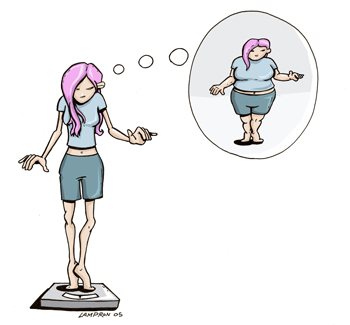
Eating Disorders Strike Younger and Younger


"I always wanted to be the good girl. Good girls are skinny and happy. The bad girls are the fat ones."
That was the explanation a recent visitor to the Alliance for Eating DisordersAwareness in West Palm Beach, Fla. gave when asked why she starved herself to the point of hospitalization. She was eleven years old.

Anorexia and its sister-disorder, bulimia,have historically been thought of as striking white, middle to upper class teenage girls. But a recent report from the American Academy of Pediatrics warns doctors that eating disorders arehappening to younger girls -- and boys -- at an alarming rate.

"People tend to have this idea of who gets eating disorders, but an eating disorder doesn't discriminate between age, gender, race, or class," says Johanna Kandel, founder and director of the alliance.

"Some research says that as much as ten percent of those with eating disorders are under the age of ten. What I'm finding at the alliance is that the number of parents seeking help for their 7-, 8-, 9-year-olds is escalating rapidly," she says.

A 2009 analysis found that in the last decade, hospitalizations for eating disorders more than doubled among children under twelve and now account for four percent of all such hospitalizations.

"Pediatricians need to be aware of the early symptoms of eating disorders because they are the medical professional that a child is mostly likely to see in any given year," says Dr. Jim Lock, director of the Eating Disorder Program at Packard Children's Hospital. "They are the gatekeepers."

It used to be that the onset of an eating disorder tended to be around mid-adolescence, around age fifteen or around the time of first menses at about age thirteen. So why are there a growing number of girls who are showing signs of bingeing and purging as young as eight?

When Kids are Weight-Obsessed

It could be hormonal, he says, as the onset of puberty has been occurring earlier over time, but a big trigger might be the dropping psychological onset of puberty as opposed to the physiological one. In terms of interest in appearance, clothing, social behavior and sexualization, girls at twelve are experiencing what girls at fourteen were experiencing just a decade ago, Lock says. Culturally, the cues to be concerned with appearance are being delivered to girls at younger and younger ages.
Part of the growth of anorexia may have to do with the growing focus on educating kids about obesity, Kandel says.

"There's been so much emphasis onchildhood obesity, all these programs to ameliorate the situation and in a way we're actually potentiating eating disorders. That's a very thin line we need to walk and make sure the dialogue is one of a healthy attitude towards food," she says.


How to Read the Signs

In many ways, an anorexic ten-year-old may not behave very differently from a fourteen-year-old one, experts say, but because of their age, parents and doctors may be less likely to recognize the signs of an eating disorder.

"What you look for is the same -- they stop eating, they start to restrict food intake or binge," says Dr. Carol Bernstein, associate professor of psychiatry at NYU School of Medicine. Unreasonable amounts of exercise and an obsession with food or weight are also signs that would be similar across the age group.

But because children do not have the mental or emotional maturity of their teen counterparts, Lock warns that they might not even be able to articulate that they are doing these things to lose weight. "Older girls might be able to say, I feel like I'm losing control or I feel scared that I'll gain weight, but like with any child psychiatric issue, you have to look at their behavior," he says.

A depressed child will often not recognize that they are sad but will have an unexplained stomach ache or be unable to sleep, he adds, so you have to watch the behavior. Parents should watch to see if their child may be displaying behaviors of an eating disorder even if they don't seem weight-obsessed.

The personality traits that tend to accompany eating disorders in older patients are also seen in children: anxiety, perfectionism and obsessive tendencies.

Weight loss doesn't necessarily have to be a symptom either, experts warn, because children under twelve are supposed to be putting on weight continually so even a child that is trying not to gain any weight could be doing his or herself harm.

Pediatricians, First Line of Defense

The American Academy of Pediatrics report, published Monday, suggests that pediatricians screen for eating disorders as part of annual checkups or during pre-participation sports exams. If an eating disorder is suspected, a more thorough history and physical exam should be ordered and possibly assessment for psychological problems.

It's essential to catch these behaviors at an early stage, Kandel says, "because you don't want this behavior to become any more entrenched than it already is."
For parents who are worried that their child might be at risk for developing an eating disorder, experts recommend teaching by doing.

"They observe and follow us," Bernstein says, so parents should set a good example and be careful not to obsess over food or their own weight in front of their children.

Encourage healthy eating in the home and stay away from using food as a punishment or reward, Kandel says, because this sets up an unhealthy relationship with food. Also stay away from talking about certain foods as categorically "good" or "bad" because this might lead to bingeing, she says

Source: ABC news 

Wednesday, December 22, 2010

Stop Food Cravings Through Imaginary Eating?


Imaginary chewing and swallowing can reduce cravings, study says.

Fighting an M&M's craving this holiday season? Let that milk chocolate melt in your mind—not in your mouth.

According to new research, imagining eating a specific food reduces your interest in that food, so you eat less of it.

This reaction to repeated exposure to food is called habituation, and it's well known to occur while eating. A "tenth bite of chocolate, for example, is desired less than the first bite," the study authors note.

But the new research is the first to show that habituation can occur solely via the power of the mind.

"A lot of people who diet try to avoid thinking about stimuli they crave. This research suggests that may not be the best strategy," said study leader Carey Morewedge, a psychologist at Carnegie Mellon University in Pittsburgh.

"If you just think about the food itself—how it tastes, smells, and looks—[that will] increase your appetite," Morewedge said.

"This research suggests that it might be better, actually, to force yourself to repeatedly think about tasting, swallowing, and chewing the food you crave to reduce your cravings."

What's more, the technique works with only the food you've imagined, he added. For instance, imagining eating chocolate wouldn't prevent you from gorging on cheese.

Mind Over Chocolate

Morewedge and colleagues conducted five experiments, all of which revealed that people who repeatedly imagined eating chocolate or cheese would eat less of that food than people who pictured eating the food fewer times, eating a different food, or not eating at all.

In one experiment, for instance, 51 subjects were divided into 3 groups. One group was asked to imagine inserting 30 quarters into a laundry machine—which requires the same motor skills as eating M&M's, the study says—and then eating three M&M's.

Another group was asked to imagine inserting three quarters into a laundry machine and then eating 30 M&M's. Lastly, a control group imagined just inserting 33 quarters into a laundry machine—no M&M's.

All participants then ate freely from bowls containing 1.5 ounces (40 grams) of M&M's each. When the subjects said they were done, the bowls were taken away and weighed.

The results showed that the group that imagined eating 30 M&M's each ate fewer of the chocolates than both the control group and the group that imagined eating 3 M&M's.

New Anti-OvereatingTechnique?

The study is part of a new area of research looking into the triggers that make us overeat, Morewedge noted.
Physical, digestive cues—that full-belly feeling—are only parts of what tells us that we're finished a meal. Recent research suggests that psychological factors, such as habituation or the size of a plate, also influence how much a person eats.

Such experiments are important as obesity rates climb—in the United States, for instance, nearly 30 percent of adults were obese in 2009, according to the U.S. Centers for Disease Control and Prevention. Obesity increases chances of Type 2 diabetes, heart disease, stroke, and other ailments.

The new study, Morewedge said, may lead to new behavioral techniques for people looking to control overeating or other addictive behaviors such as smoking.

Source:National Geographic 

Wednesday, December 15, 2010

How the Cell Phone Is Changing the World


The impact of the ubiquitous device extends from politics to business, medicine, and war.
The modern mobile-phone era dates back only to the 1970s. In just 40 years, in the West, they’ve gone from suitcase-size novelty to ubiquity. And they’re no longer just luxury goods. More than 4 billion of the 6 billion people on earth now have a cell phone, with a quarter of those owners getting one in just the last two years. And many are using them, in a giant global experiment, to change the way life is lived, from Manhattan to Ouagadougou.

The phones now allow Masai tribesmen in Kenya to bank the proceeds from selling cattle; Iranian protesters to organize in secret; North Koreans to communicate with the outside world; Afghan villagers to alert Coalition soldiers to Taliban forces; insurgents to blow up roadside bombs in Iraq; and charities to see, in real time, when HIV drugs run out in the middle of Malawi.

“I was actually sitting around with a bunch of Ethiopian farmers recently,” says Duncan Green, research director for the charity Oxfam, “when I noticed that none of them had light or running water, but each family had a mobile phone.” The reasons are simpler than we think, he says. “Before, these farmers, if they wanted to check on a sick relative elsewhere, had to walk three hours in each direction. Now they just make a call.” That convenience, he says, drives their eager embrace of the phones. But the phones’ growing ubiquity—“they’re a technological Coca-Cola,” Green says—has other uses, too. Here are five ways they’re changing the world.


Exposing Secrets

On the Chinese border with North Korea, human-rights activists have a mission. They aim to persuade the few North Koreans allowed to travel outside the country to smuggle cell phones back in, and help open the most closed society in the world. (Mobile phones are officially allowed, but are strictly limited in range and closely monitored.) If discovered with their smuggled phones, the spies risk imprisonment and death, all in an effort to report on everything from pets to famine, and the swirl of story and counter-story that manages to penetrate dictator Kim Jong-il’s wall of silence. One such person, The New York Times reports, was executed by firing squad when authorities discovered his cell phone.


Advancing Democracy


Cell phones present a problem for oppressive regimes everywhere. So many Iranians were using text
messages to secretly organize protests against last year’s flawed elections thatthe government eventually shut down service entirely. The Finnish company Nokia Siemens was criticized by the European Parliament for providing the government the equipment to do so. China presumably has its own capability: when prominent democracy campaigner Liu Xiaobo won the Nobel Peace Prize last month, messages containing the Chinese characters for his name failed to send, reported the Associated Press. Unbowed, his supporters continue to make their voices heard in the West. By cell phone, of course. In Africa, Green says, people are able to report violent incidents and government oppression in a way they couldn't before. “It’s kind of the first time they’ve had bottom-up democracy,” he says.


Enabling Commerce


In Tanzania, reports the BBC, only 5 percent of people have a bank account. In Kenya, there is one bank branch per 100,000 people. It’s a situation that is repeated in many developing countries, including such potential powerhouses as India. The solution, for some, has come through the cell phone.

 In Uganda, where villages often have one top-up phone run by a trusted operator, a basic system helps store and transfer money. In a TED talk in 2007, Jan Fishman, an analyst for Frog Design, a global innovation firm, outlined a common method of banking using a cell phone where there are no banks.

A villager, working hundreds of miles away from home, buys a cell-phone refill card with his earnings. To send his money back to the village, he calls the operator, who tops up the phone using the card. The operator, having taken a commission, then hands cash on to whoever has been authorized.

 In India, the systemhas been formalized and is supported by the Bank of India. In Kenya, the main service, M-Pesa, moves millions of dollars per day by text message. In the East African nation, the ability to SMS means that Masai farmers can bank the money from the sale of a cow instead of carrying the cash. One minor difficulty, says Green, is that the same farmer will sometimes spend money he should be using for food on a shiny new phone. “But that’s just people,” he says.


Distributing Medicine


Stock-outs—which is what it’s called when isolated clinics in countries such as Kenya, Uganda, Malawi, and Zambia run out of antimalaria medicine, zinc tablets, penicillin, HIV and AIDS drugs, and diarrhea treatments—are potentially deadly, even as their occurrence often is denied by local governments.

A new project, Stop Stock-Outs, aims to use cell phones to solve the problem. Activists send a simple text message to a central number reporting which drugs are out of stock. The information is collated in a virtually real-time map, on which bright red dots signify a dangerous shortage.


Waging War

In Afghanistan, The Wall Street Journal reports, the Taliban have forced local cell-phone-service providers to shut down their towers at night. The move is designed to stop locals reporting Taliban movements to Coalition forces. NATO troops, meanwhile, also black out entire areas of cell coverage before an offensive to prevent insurgents from remotely detonating roadside bombs, says one official who did not want to be named discussing operational details. Suppressing the devices will become harder and harder for both sides—cell phones are one of the few economic bright spots in the country. Hundreds of thousands of Afghans now have one.

Source:Newsweek

Wednesday, December 8, 2010

Modern Rugs, Carpets, and Doormats


While I was surfing some sites , I happen upon these modern and unique rugs ; therefore I wanted to share it with all of you .
the source: http://www.toxel.com


- Bedside Slippers Rug
Bedside rug with porthole cut outs for your matching slippers. 


- Bar-code Doormat

After the robot uprising, place this stylish doormat in front of your house to show you are open and happy to be included in the first generation of capitulators.


- Woody Wood Rug

Creative rug by YL design is a is a print of cross-section of a tree.


- Moss Carpet

Creative bathroom carpet designed by Nguyen La Chanh.


- Modern Rugs by Madeleine and Dudley

Creative rug designs by incredible artists Madeleine & Dudley.


- Breakfast Eggs Rug

Sunny Side Up Shag Rug by Designer Valentina Audrito.


- Steel Doormat

Beautiful modern doormat made from high-grade steel. 


- Top Floor Ethereal Rug

An organic floral pattern reaches into the whitespace on this rug, yet this pattern is more than grooves and layers. Designer Esti Barnes has cut these layers right through the rug itself, exposing the bare wood below.


- Black River Stone Doormat

Washed and polished river rocks are hand-applied with strong adhesive to a durable backing of indoor-outdoor carpet


Friday, November 26, 2010

Kitten Gets Really Wild Purr-tection


Recently the extraordinary scene appeared in a zoo of the Indonesia. A wild monkey has stunned animal fans after becoming very purr-tective of his new furry friend.


Sources:http://www.atautocar.com

Sunday, November 21, 2010

Is time running out for the wristwatch?


One in seven people in the UK have no need for a watch, a survey suggests. Are mobile phone time displays killing off the wristwatch?

For decades, people have sworn they would be lost without one.

A faulty movement or dead battery sent them scurrying to the watch repairers, desperate to restore to their lives the order of a regular tick.

And in today's time-poor society, the need to keep tabs on the passing minutes is greater than ever.
But according to market analyst Mintel, the growth of portable digital products - phones, laptops, MP3 players - with time displays represents a gathering cloud over the watch industry.

In its survey of more than 1,500 people in the UK, 14% said they had no need for a watch. Mirrored across the country, that would amount to 7.2 million people, while the percentage doubled among 15 to 24-year-old.

Mintel's analysts believe this will continue, with market figures showing a 9% increase in mobile phone ownership since 2005. The number of watch owners remained static.

"It's a growing trend that... is a potential threat to demand for standard wristwatches," says Mintel's Tamara Sender. "Young people who have grown up with technology are just as likely to check the time with a mobile phone."

Watches remain popular - 86% of people still own one, even if many of those last saw their timepiece buried somewhere in their sock drawer. Sales are expected to hold up - if not grow - as people replace broken ones.

But the concept of the watch could change, says Ms Sender.

Mintel cites as an example the new iPod nano, a miniaturised version of Apple's popular digital music player, which features a watch face and a clip on the back allowing it to be worn with a wrist-strap.

Such convergence of technology - as with phones, cameras, MP3 players and internet applications - is inevitable, according to Dr Ben Highmore.

Wristwatches are becoming "redundant" and will probably disappear in the coming decades, believes the cultural trends lecturer at the University of Sussex. "If you're in the habit of wearing a watch, you'll continue."

Digital natives


"But if you're growing up as a 'digital native' with a mobile phone and you don't get into that habit, then it's a leap to buy one.

Even so, he admits: "Buying a Rolex isn't about knowing the time." It's bound up with one of the historical reasons for carrying a watch - status.

At the beginning of the 20th Century the fashion was for pocket watches, says Jonathan Scatchard, author of Miller's guide to wristwatches.

"It was a bit of a rite of passage; a real man had a chain with a watch hanging from it," he says. During World War I, the practicalities of trench warfare led soldiers to attach them to the wrist with leather straps.

But it was not until improved technology, such as the self-winding mechanism, allowed for smaller, more convenient pieces, that they became the norm.

"Even in the late 1920s it could be thought of as a little bit effeminate if a man wore a wristwatch," says Mr Scatchard, who runs a website dedicated to another vintage status brand, Heuer.

Traditional wristwatches have seen off the threat of technology before - when consumers in the 1980s enjoyed an intense if short interest in the Japanese-pioneered digital watches - and will do again, he says.
"The fascination is with something made by hand that has a tick; almost like a heartbeat," he says.

"We all have mobile phones but they are out of date in two years and you never get attached to them."

Designer pull


But are pricey, carefully-crafted timepieces really likely to win over the emerging generation of wristwatch refuseniks?

While acknowledging this is the preserve of wealthy adults, Mr Scatchard says: "As younger people get older and start to have a bit more money, their attitudes will change."

It's a sentiment echoed by veteran watch repairer Robin Martin, who has experienced the industry's ups and downs from his Portsmouth repair shop since 1959.

"Absolute rubbish" is his response to the question of whether watch-wearing is in decline. "We're busier today than ever before. I haven't found any drop-off in use, even at the younger end," he says.

If young people are to be won over it will be through designer brands according to Mintel.
A quarter of those aged 15 to 24 preferred designer labels, although prices would likely put off young teenage buyers like the readers of Sugar magazine.

"Girls just want something bright and fancy, maybe with a bit of 'bling'," says Jo Sawkins, fashion editor at Sugar, adding that many girls choose cheap imitations of designer watches worn by celebrities.

Casio is tapping in to that youth market by using young stars such as singers Ke$ha and Pixie Lott to promote its Baby-G range of durable, brightly-coloured watches. But while some are available under £50, many cost more.

"Unless it's a birthday or Christmas gift, when it's something parents would spend money on, I don't know that a watch is something they would buy," says Ms Sawkins.

"It gets more to do with status the older they get."

Whether they come to view watches as essential in the way their parents did, however, only time will tell.

Source"BBC"

Saturday, September 18, 2010

Best Nutrition Secrets


1-Drink a second cup of coffee. 

  It might lower your risk of adult-onset diabetes, according to a study in the American Journal of Clinical Nutrition.


 2. Keep serving dishes off the table. 


 Researchers have found that when people are served individual plates, as opposed to empty plates with a platter of food in the middle of the table, they eat up to 35 percent less!


3. Think before you drink. 

The average person drinks more than 400 calories a day--double what he or she used to--and alone gets around 10 teaspoons of added sugar every single day from soft drinks. Swap out sweetened teas and sodas for no-cal drinks and you could lose up to 40 pounds in a single year!


4. Practice total recall.

British scientists found that people who thought about their last meal before snacking ate 30 percent fewer calories that those who didn't stop to think.

The theory: Remembering what you had for lunch might remind you of how satiating the food was, which then makes you less likely to binge on your afternoon snack.


5. Eat protein at every meal. 


Dieters who eat the most protein tend to lose more weight while feeling less deprived than those who eat the least protein. It appears that protein is the best nutrient for jumpstarting your metabolism, squashing your appetite, and helping you eat less at subsequent meals.


6. Choose whole-grain bread.


Eating whole grains (versus refined-grain or white bread) has been linked to lower risks of cancer and heart disease.


7. Think fish.

Consuming two 4- to 6-ounce servings of oily fish a week will sharpen your mind. Among the best: salmon, tuna, herring, mackerel, and trout. They're high in docosahexaenoic acid (DHA), which may reduce your risk of Alzheimer's. Study participants who had high blood levels of DHA also performed better on nonverbal reasoning tests and showed better mental flexibility, working memory, and vocabulary than those with lower levels.


8. Eat a handful of fruit and vegetables a day. 


In one study, people who ate four or five servings scored higher on cognitive tests than those who consumed less than one serving.


9. Sip green tea.


It might help you build a strong skeleton, say researchers in China, and help protect you from broken bones when you're older. And one study found that it helps fight bad breath, too.


10. Sleep 8 hours a night.

Too much or too little shut-eye can add extra pounds, say Wake Forest University researchers.


11. Drink two glasses of milk daily.


People who drink the most milk have about a 16 percent lower risk of heart disease than people who drink the least. (I recommend nonfat or 1 percent milk.)


12.  Snack on walnuts.


Eating a handful of walnuts each day may boost your HDL (good) cholesterol fastest, while lowering your LDL (bad) cholesterol.
25. Scramble your breakfast. People who ate eggs in the morning instead of a bagel consumed 264 fewer calories the rest of the day, according to a Saint Louis University study. That’s because protein is more filling than carbs.
----
Source:Shine
Related Posts Plugin for WordPress, Blogger...