skip to main |
skip to sidebar
Cigarette Tea Bags
Cigarettea are creative tea bags that look just like real cigarettes.
Tea Forté
Tall polyhedral infuser tea packs by Peter Hewitt, each with a disarmingly natural-looking leaf/sprout tag.
Tea Stick
Cool tea bags designed for people who do not make their tea in a kitchen: gardeners, builders and campers.
Lighting Tea Bag
Cool lighting concept by Wonsik Chae imitates the form of a tea bag
Hanger Tea
Creative tea bags by Soon Mo Kang are shaped like T-shirts with a hanger that hangs on the tea cup
Origami Tea Bags
Creative tea bags designed by Natalia Ponomareva from Russia.
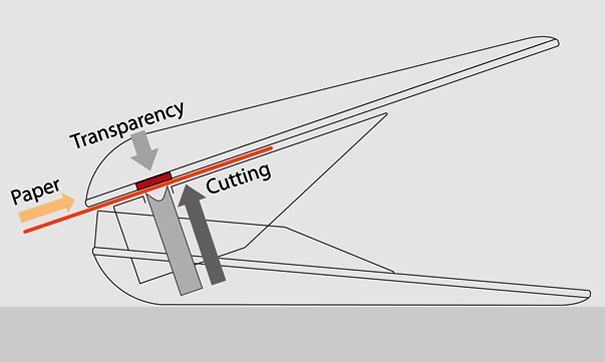
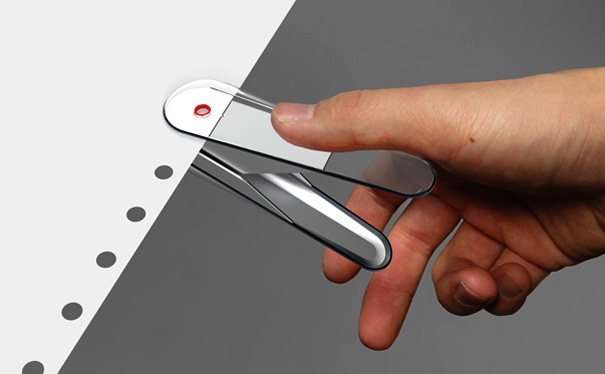
The Transparent Punch allows you to see where exactly you will be punching the hole in a paper. The red ring guides your placement and saves you from doing a shoddy job.
Designers: Kisang Yoon and Kyubok Lee
Source: Yanko design
Public libraries face an uncertain future but the value of reading is irreplaceable, says Joan Bakewell in her A Point of View column.
I was returning a library book last week. It had been important in some research I was doing so I sought to renew it. "No, I'm afraid it's in demand by someone else," came the reply.
A book first published in 1964 was still needed. I'm not surprised. Many books last a lifetime and go on being read. Then, on the library counter, I noticed printouts from our local newspaper. The headline was a question - Libraries slashed? - it asked.
I recall a Latin grammar construction defined as "expecting the answer 'yes'". I felt this applied to the headline. We in the London borough where I live know there will be massive council cuts. In London as a whole there are fears that 130 libraries could go.
And things are bad across the country. Buckinghamshire is said to be considering closing among others the Great Missenden library, inspiration for Roald Dahl's Matilda, who read library books. He would be appalled.
Another book event. Last week I helped celebrate the publication of probably the definitive account of the life and art of the painter LS Lowry, by Dr Tom Rosenthal. It was held in the gorgeous setting of Christies sales rooms, where a fine array of Lowry's work graced the walls.
I'm rather in awe of Point of View as it was once held by Alistair Cooke. It has a halo of significance. He was such an exemplar of the broadcast essay.
I'm interested in the way people use words and the way people talk about… having betrayed or broken promises and the nature of compromise.
In four decades (of journalism) I've been in touch with a great diversity of what people think and how they express themselves. I haven't spent a lifetime in studios and offices - I've been out there.
The Heart of the Matter tackled moral issues about current affairs. It tried to get people not to be of the left or of the right, but to think for themselves.
Later in the week some 20 of his paintings sold there for nearly £5.2m. There was an irony in seeing Lowry's bleak depictions of the Lancashire poor going for such high prices. Here they were, the huddled masses, hurrying from the factory, to the football match, crowding round a street accident, or spending their unsmiling leisure still fully clad on Lancashire's beaches.
Lowry's work divides people There are those who admire his bleak vision of the world he knew in the 30s and 40s, and those who demean it as nothing more than a host of matchstick men. I am of the former persuasion.
My reason is more than aesthetic, I have a local connection. My own great aunt lived in Salford at Crescent View, just such a row of terrace houses as Lowry painted. I knew the feel of Salford's streets, its little picket fences, and I loved the smell of Nana's stuffy kitchen, full of cooking and drying clothes.
The meaning of books came to me from just such a background. From the age of seven my father attended what was then called Chetham's Hospital in Manchester, a charity school for 40 poor boys founded in the 17th Century as the legacy of Humphrey Chetham. He was a wily old wool merchant whose motto "Quod tuum tene" - hold on to what is yours - just about sums up the industrial revolution that was to engulf the city and make it rich and make it poor.
But Chetham was a philanthropist and left provision not only for a school, but for a library within the same building. That library survives in its original glory - theology, law, local records, leather bound, beautifully preserved. Its Jacobean setting is one of the unsung treasures of Manchester, part of what is now the illustrious Chethams Music School.
The schoolboys in my father's day didn't read such books of course, they had their noses into Rider Haggard and Harrison Ainsworth. But my father - and his brothers - held the library in awe, acknowledging as everyone then did that learning and scholarship are among man's highest pursuits.
In the poverty that was then Salford, libraries were cherished. They were seen as the resource for the poor, where they could learn and begin to understand about the world beyond those Lowry streets.
The book I was returning to my local library is subtitled A Study in Protest. It is in fact an account by Christopher Driver of the rise of the anti-nuclear bomb campaigns of the late 50s and early 60s. Then as now, unruly groups grabbed the headlines. They always do.
But the book tells of concerted and sustained action to bring pressure on world powers to abandon nuclear weapons. We know they failed, but along the way they influenced public and world opinion to an extent that perhaps contributed to the test-ban treaties that were to be signed in the 1960s, in the years after the Cuba crisis.
The young have again been out on the streets in their thousands and students are meeting and plotting more protests even now. Will those of us who love libraries be able to make our voices heard? It would be hard to combat allegations of middle-class elitism, and indeed there is a case to answer.
If the pressure on finances is so great, at least as far as the coalition believe, then the availability of free books for all will need its defenders.
My defence should not be seen as the attempt merely to rescue a small building in a particular borough, or any other particular places threatened with closure. Rather it is a rallying call for the concept of free libraries. In our culture the library stands as tall and as significant as a parish church or the finest cathedral.
It goes back to the times when ideas first began to circulate in the known world. I worry where wisdom will come from.
I am a major consumer of information on the internet. I know that academics and students access information there more quickly and more specifically than they can faced with a shelf load of books. But it's not that relationship I'm concerned about.
I offer you two scenarios. I am on a train going north, the scenery beyond York is glorious and in the slanting light of a winter afternoon has a magical quality not to miss.
So I put down the paperback to enjoy it, then I resume my read. Again, on holiday, deck chair beside a blue swimming pool, a landscape of rolling hills and green pastures unfolds before me. I set aside the paperback to enjoy the view, and then return to the pages.
I live with the tensions between the world out there I want to see and even contemplate, and the inner world to which the book gives me access. It is the inner rewards of reading a book in a private and concentrated way that lead you into realms of your own imagination and thought that no other process offers.
Something happens between the words and the brain that is unique to the moment and to your own sensibilities.
It is why, at such moments, it is so awful to be interrupted - and why I am frequently late at meetings because I find it hard to tear myself away. Any society that doesn't value the richness of this encounter with ideas and the imagination will impoverish its citizens.
Of course, there are loads of books around. You can pick up a paperback for a few pounds that will last many years (my shelves are full of ageing paperbacks whose yellowing pages crack when I open them - only hardbacks last forever). Publishers think books are worth publishing, supermarkets think they are worth stacking on their shelves.
But these are market transactions. The free public library service is the only way for everyone to have access for free to objects that carry the world's wisdom.
Soon we will all be asked to tell the state what makes us happy, what increases our well-being. No doubt someone will come up with measurements of stress and depression.
We might be asked about our sense of neighbourliness or degrees of family closeness. Whether we are hungry or cold or neglected.
There are clearly data about social conditions that are worth collecting, but happiness is a dangerous word. It embraces all the subjectivity of our emotions and inner serenity.
It is a reflection of our character, the degree we are wracked by ambition or resentment, by envy or greed. It embraces what might be called spiritual well-being, the sort that might be underpinned by a happy marriage, a satisfying career, deep religious conviction.
Already television vox pops have asked people in the street what makes them happy and had replies that range from their children's laughter, to the music of Beethoven.
I think there might be many who consider one kind of happiness to be a deep armchair, a warm fire and a favourite book.
The impact of the ubiquitous device extends from politics to business, medicine, and war.
The modern mobile-phone era dates back only to the 1970s. In just 40 years, in the West, they’ve gone from suitcase-size novelty to ubiquity. And they’re no longer just luxury goods. More than 4 billion of the 6 billion people on earth now have a cell phone, with a quarter of those owners getting one in just the last two years. And many are using them, in a giant global experiment, to change the way life is lived, from Manhattan to Ouagadougou.
The phones now allow Masai tribesmen in Kenya to bank the proceeds from selling cattle; Iranian protesters to organize in secret; North Koreans to communicate with the outside world; Afghan villagers to alert Coalition soldiers to Taliban forces; insurgents to blow up roadside bombs in Iraq; and charities to see, in real time, when HIV drugs run out in the middle of Malawi.
“I was actually sitting around with a bunch of Ethiopian farmers recently,” says Duncan Green, research director for the charity Oxfam, “when I noticed that none of them had light or running water, but each family had a mobile phone.” The reasons are simpler than we think, he says. “Before, these farmers, if they wanted to check on a sick relative elsewhere, had to walk three hours in each direction. Now they just make a call.” That convenience, he says, drives their eager embrace of the phones. But the phones’ growing ubiquity—“they’re a technological Coca-Cola,” Green says—has other uses, too. Here are five ways they’re changing the world.
Exposing Secrets
On the Chinese border with North Korea, human-rights activists have a mission. They aim to persuade the few North Koreans allowed to travel outside the country to smuggle cell phones back in, and help open the most closed society in the world. (Mobile phones are officially allowed, but are strictly limited in range and closely monitored.) If discovered with their smuggled phones, the spies risk imprisonment and death, all in an effort to report on everything from pets to famine, and the swirl of story and counter-story that manages to penetrate dictator Kim Jong-il’s wall of silence. One such person, The New York Times reports, was executed by firing squad when authorities discovered his cell phone.
Advancing Democracy
Cell phones present a problem for oppressive regimes everywhere. So many Iranians were using text
messages to secretly organize protests against last year’s flawed elections thatthe government eventually shut down service entirely. The Finnish company Nokia Siemens was criticized by the European Parliament for providing the government the equipment to do so. China presumably has its own capability: when prominent democracy campaigner Liu Xiaobo won the Nobel Peace Prize last month, messages containing the Chinese characters for his name failed to send, reported the Associated Press. Unbowed, his supporters continue to make their voices heard in the West. By cell phone, of course. In Africa, Green says, people are able to report violent incidents and government oppression in a way they couldn't before. “It’s kind of the first time they’ve had bottom-up democracy,” he says.
Enabling Commerce
In Tanzania, reports the BBC, only 5 percent of people have a bank account. In Kenya, there is one bank branch per 100,000 people. It’s a situation that is repeated in many developing countries, including such potential powerhouses as India. The solution, for some, has come through the cell phone.
In Uganda, where villages often have one top-up phone run by a trusted operator, a basic system helps store and transfer money. In a TED talk in 2007, Jan Fishman, an analyst for Frog Design, a global innovation firm, outlined a common method of banking using a cell phone where there are no banks.
A villager, working hundreds of miles away from home, buys a cell-phone refill card with his earnings. To send his money back to the village, he calls the operator, who tops up the phone using the card. The operator, having taken a commission, then hands cash on to whoever has been authorized.
In India, the systemhas been formalized and is supported by the Bank of India. In Kenya, the main service, M-Pesa, moves millions of dollars per day by text message. In the East African nation, the ability to SMS means that Masai farmers can bank the money from the sale of a cow instead of carrying the cash. One minor difficulty, says Green, is that the same farmer will sometimes spend money he should be using for food on a shiny new phone. “But that’s just people,” he says.
Distributing Medicine
Stock-outs—which is what it’s called when isolated clinics in countries such as Kenya, Uganda, Malawi, and Zambia run out of antimalaria medicine, zinc tablets, penicillin, HIV and AIDS drugs, and diarrhea treatments—are potentially deadly, even as their occurrence often is denied by local governments.
A new project, Stop Stock-Outs, aims to use cell phones to solve the problem. Activists send a simple text message to a central number reporting which drugs are out of stock. The information is collated in a virtually real-time map, on which bright red dots signify a dangerous shortage.
Waging War
In Afghanistan, The Wall Street Journal reports, the Taliban have forced local cell-phone-service providers to shut down their towers at night. The move is designed to stop locals reporting Taliban movements to Coalition forces. NATO troops, meanwhile, also black out entire areas of cell coverage before an offensive to prevent insurgents from remotely detonating roadside bombs, says one official who did not want to be named discussing operational details. Suppressing the devices will become harder and harder for both sides—cell phones are one of the few economic bright spots in the country. Hundreds of thousands of Afghans now have one.
Source:Newsweek
Many of these laws were established during the end of the 1800s and early 1900s, when the United States was rapidly changing from an agricultural to industrial nation. Some of the laws went out of date or were repealed. Many are still on the books but not enforced.
-In Mohave County, Arizona, if anyone is caught stealing soap, he must wash himself with it until the soap is gone.

-A woman in Memphis, Tennessee, is not allowed to drive a car unless man is in front of the car waving a red flag to warn people and other cars.

-In Kalispell, Montana, children must have a doctor’s note if they want to buy a lollipop.
-It’s illegal in St. Louis, Missouri, for a fireman to rescue a woman wearing a nightgown. If she wants to be rescued, she must be fully clothed.
-In Arizona, a man may legally beat his wife once a month, but no more.
-According to an Atlanta, Georgia, ordinance, “smelly people” are not allowed to ride public streetcars.
Source:http://facts.randomhistory.com/
While I was surfing some sites , I happen upon these modern and unique rugs ; therefore I wanted to share it with all of you .
the source: http://www.toxel.com
- Bar-code Doormat
- Woody Wood Rug
- Moss Carpet
- Modern Rugs by Madeleine and Dudley
- Breakfast Eggs Rug
- Steel Doormat
- Top Floor Ethereal Rug
- Black River Stone Doormat
True, Founding Father Benjamin Franklin is on our $100 bill, but contrary to what many people believe, he was never president of the United States. He was far too busy to take on a job like that.
We’ve always been amazed by this man of many talents, and in honor of this weekend’s Independence Day, we wanted to honor his contribution to creating the U.S. Constitution—and so much else. As a scientist, writer, printer, philosopher, musician, politician, and inventor (we’ve probably forgotten a few things),
Franklin did more in a day than many people do in a lifetime. Here are some of our favorite Franklin facts.
He was a high school dropout. Franklin proved that you don’t need a fancy degree to succeed in life—due to family financial problems, he never graduated from high school. (But were he around today, he’d probably have more honorary PhDs than he could shake a stick at.)
He created America’s first library. In 1732, Franklin convinced a group of fellow intellectuals to create a library of their personal books, and then added a subscription service, in which funds would be used to purchase new books for all to read. The Library Company of Philadelphia, as it was called, still exists today, and has over five hundred thousand rare books.
He followed a strict daily schedule. It began with the question, “What good shall I do this day?”
He invented the first bifocal glasses, odometer, urinary catheter, lightning rod, and many other devices, yet never filed for a patent. Though any one of Franklin’s inventions could have made him a tremendous fortune, he wasn’t greedy about them.
He believed that his work was for the common good, and “as we enjoy great advantages from the inventions of others, we should be glad of an opportunity to serve others by any invention of ours; and this we should do freely and generously,” he wrote in his autobiography. We bet he’d be a big fan of Creative Commons.
He created a phonetic alphabet. Franklin’s alphabet got rid of six letters he thought were redundant, and added six new letters for other sounds. As you can probably tell, it never caught on.
As a young man, Franklin created a list of thirteen virtues, and worked on obeying them throughout his life.
Here is the list; you may find it helpful too:
Temperance: Eat not to dullness; drink not to elevation.
Silence: Speak not but what may benefit others or yourself; avoid trifling conversations.
Order: Let all your things have their places; let each part of your business have its time.
Resolution: Resolve to perform what you ought; perform without fail what you resolve.
Frugality: Make no expense but to do good to others or yourself; that is, waste nothing.
Industry: Lose not time; be always employed in something useful; cut off all unnecessary actions.
Sincerity: Use no hurtful deceit; think innocently and justly; speak accordingly.
Justice: Wrong none by doing injuries or omitting the benefits that are your duty.
Moderation: Avoid extremes; forbear resenting injuries so much as you think you deserve.
Cleanliness: Tolerate no uncleanliness in body, clothes or habitation.
Tranquility: Be not disturbed at trifles or accidents common or unavoidable.
Chastity: Rarely use venery but for health or offspring; never to dullness, weakness, or the injury of your own or another’s peace or reputation.
Humility: Imitate Jesus and Socrates.
By Kathryn Hawkins for Gimundo
Birds daub pink-producing oil onto feathers during mating season.
There's a reason why flamingos are so pretty in pink: The birds apply "makeup" to impress mates, a new study says.
Scientists had long assumed that flamingo feathers change color only when the plumage becomes faded by the sun or unintentionally stained by organic materials.
But while studying greater flamingos at the Doñana Biological Research Stationin Spain, ornithologist Juan Amat realized that something else was going on.
"We noticed that immediately after chicks were hatching, [adult] flamingos lost their pink color," he said.
Adults later regained their famous pink plumage, "yet they were not moulting, so we wondered if there was something cosmetic to consider."
Flamingos: Beyond the Pale
To examine this hypothesis, the researchers studied seasonal variations in flamingo color at three wetlands in Spain. The team also monitored the birds' breeding, feather maintenance, and courtship activities.
Using telescopes, the scientists assigned each flamingo a color value based on a scale of one to three, ranging from very pale to vibrant pink.
The team found that the color values dropped from an average of 1.7 in February—the height of the mating season—to an average of 1.0 in May, June, July, August, and September, when the birds were looking after hatchlings. In October the values leapt up again, to 1.6.
Flamingos, like all birds, produce oil in glands near their tails. Birds daub this oil onto their feathers with their beaks.
The oil is well known to improve the longevity of feathers and keep them waterproof. But Amat suspected that the flamingos might also be using the substance for coloration.
Flamingos get their color from compounds called carotenoids, which the birds absorb from their diets of algae and small crustaceans.
Flamingo feathers already contain some carotenoids. But, based on samples collected from captive flamingos, Amat and colleagues found that the oil is especially rich in the compounds.
Flamingos In Fine Feather
Both male and female birds increased their oil-daubing behavior during the mating season, the team noted.
In general, the deeper the pink, the more attractive the bird—so the flamingos were likely applying the oil like makeup to make themselves more desirable, he said.
"We were so excited to discover this," Amat said.
"Other birds, like the bearded vulture, are known to take mud baths that leave their feathers tinged with color. We now need to go and look at these species to see if they are applying cosmetics just like the flamingos do."
The flamingo-makeup study appeared online October 23 in the journalBehavioral Ecology and Sociobiology.
Source: National Geographic News
New York – Recent evidence shows that people who thrive at night have higher IQs. Early risers beg to differ
Are you the type who stays up late to finish your work, or do you get up early to make a fresh start on the day? If it's the former, you may be pleased to learn new research has found that those with higher IQs tend to be nocturnal night-owls. But if it's the latter, you might have good reason to distrust the claim. Here's an instant guide:
Is there solid science behind this finding?
Sleep researchers tend to divide people into two groups, explains zoologist Robert Alison in the Winnipeg Free Press, based on whether they exhibit "morningness" or "eveningness." A recent study claims that eveningness is an evolutionary advancement that marks out "more intelligent individuals," while "those with lower IQs tend to restrict their activities primarily to daytime."
How can that be?
Researchers from the London School of Economics say that human beings used to all be day-oriented, and that eveningness is an "evolutionarily novel preference" made by people with "a higher level of cognitive complexity." Basically, smart people evolve to stay up later.
I want to get more intelligent. Can I just start staying up late?
It isn't that simple. Several studies have shown that your sleep preferences are at least 50 percent genetic, and that your chronotype — that is, the time of day you are at your physical and mental peak — changes with your age. Generally speaking, "eveningness" peaks in the late teens and early 20s.
Are there any downsides to "eveningness"?
Night owls tend to be less reliable, more emotionally unstable, and more likely to have problems with addictions and eating disorders, according to a 2008 study by psychologist Marina Giamnietro. They are also more likely to drink alcohol and smoke, says Dutch psychiatrist Walter van den Broek at his Dr. Shock blog. Another study found that undergrad "evening types" had lower GPAs than those who awake early in the morning.
Is there any advantage to being a morning person?
Early risers tend to be more conscientious, persistent, and apt to cooperate, says van den Broek, a self-described morning person. They also "cope better with academic requirements and receive better grades." And when you think about it, adds Ace Burpee in the Winnipeg Free Press, "there are no sayings about late birds getting some sort of way better tasting worm."
Which am I?
If you're unsure, this test will tell you where you fit on the morningness-eveningness spectrum.
Sources: Winnipeg Free Press (2), Disinformation, Dr. Shock, ScienceDaily
View this article on TheWeek.com
Showing posts with label Entertainment. Show all posts
Tuesday, January 18, 2011
Clever and Creative Tea Packaging
Cigarette Tea Bags
Cigarettea are creative tea bags that look just like real cigarettes.
Tea Forté
Tall polyhedral infuser tea packs by Peter Hewitt, each with a disarmingly natural-looking leaf/sprout tag.
Tea Stick
Cool tea bags designed for people who do not make their tea in a kitchen: gardeners, builders and campers.
Lighting Tea Bag
Cool lighting concept by Wonsik Chae imitates the form of a tea bag
Hanger Tea
Creative tea bags by Soon Mo Kang are shaped like T-shirts with a hanger that hangs on the tea cup
Origami Tea Bags
Creative tea bags designed by Natalia Ponomareva from Russia.
Tuesday, January 11, 2011
Top 10 unusual winter sports
There is more to winter travel than skiing and snowboarding. Nontraditional winter sports and activities have sprouted up all over the world, catering to adventurers who crave new ways to get their adrenaline pumping.
Here are our ten favourite out-of-the-ordinary outdoor sports for your next winter vacation.
1. Polar bear swimming in Korea
Each January in Busan, thrill-seeking locals jump into the freezing cold water of the Korea Strait in nothing but their bikinis and swim trunks. The Polar Bear Swim competition has taken place at Haeundae Beach every year since 1988. It is the Korean way of welcoming good health in the new year. Get ready to run 10 meters across the sand, leap into the icy water, and then swim 80 meters toward the finish line. Even though it is technically a race, the Korean Tourism Organization (www.visitkorea.or.kr) points out that the Polar Bear Swim is less about competition and more about spreading good cheer.
2. Ski biking in Colorado
If bicycling in the snow sounds like trouble, try riding a bike outfitted with skis instead of wheels down snowy slopes in Colorado's Rocky Mountains. Durango Mountain Resort (www.durangomountainresort.com) has long offered ski biking as one of its winter activities. The ski resort holds an international ski bike festival once a year for participants and spectators alike. Be sure to take a lesson or two before going out on the slopes for the first time; it is not as easy as the YouTube videos make it look.
3. Ice karting in Finland
What could be more fun than go-kart racing on ice? In Kuusamo, Finland, give reckless driving a try on a frozen lake. Race against a few friends or strangers at Ruka Adventures (www.rukaadventures.fi/en) with the chance to win a medal. After the adrenaline rush, relax with some complimentary coffee, tea, sweets and sausages.
4. Dog sledding in Alaska
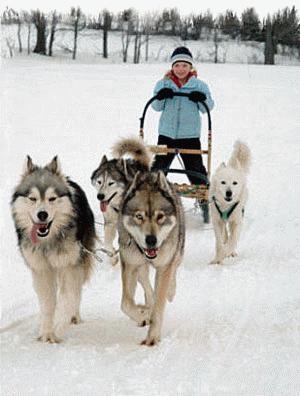
Dog sledding, or mushing, is Alaska's official sport. Enjoy the ride while a team of adorable huskies pulls you along for either a short sprint or a long journey. Dog sled rides can last anywhere from minutes to days, depending on your interests. Alaska Best Wilderness (www.alaskabestwilderness.com), based in Tanana, has 11-day backpacking expeditions that combine mushing, trekking and rafting. If you just want an afternoon with the beautiful sled dogs, Sun Dog Express (www.mosquitonet.com/~sleddog) in Fairbanks offers guided tours starting from just half a mile long.
5. Skijoring in Minnesota
For a snowy adventure with your own dogs, try skijoring in Minnesota. Skijoring is a combination of cross country skiing and dog sledding in which a person on skis is pulled along by his or her pups. The Midwest Skijorers Club (www.skijor.org) holds skijoring events around the Twin Cities in Minnesota.
6. Snow tubing in Canada
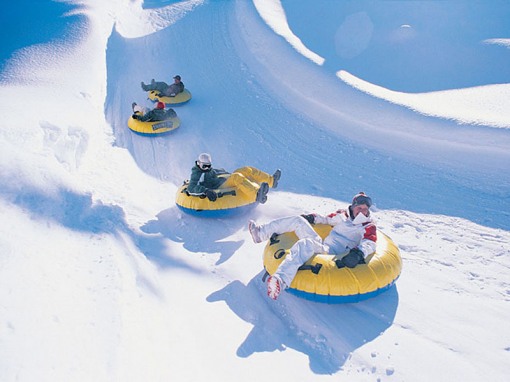
Snow lovers who do not ski or snowboard will love snow tubing. Basically sledding in a tube, snowtubing is easy, cheap and incredibly fun. Rock Ridge Recreation Park (www.rockridgetubing.com) in Ontario is especially dedicated to the sport and features six tubing runs. Attach a few tubes together to go down the slopes with your friends or family. Rock Ridge's season this year begins the day after Christmas.
7. Ice climbing in Chile
True exhilaration can be found just outside of Santiago, Chile in Cajón del Maipo. There, the awe-inspiring El Morado Glacier sets the scene for a simultaneously magnificent, terrifying and thrilling ice climbing trip. Trek out to the southwest side of Cerro El Morado where the most adventurous of adventurers climb the hanging glacier. The sights are spectacular, so remember to bring a camera.
8. Ice sailing in Poland
Feel the blustery wind rush over you as you sail across Poland's Great Masurian Lakes when they freeze over in the winter. With no waves to slow you down, the sport brings new meaning to the term "smooth sailing". Iceboats can reach very high speeds, so racing should only be attempted after you get the hang of basic sailing.
9. Snowkiting in Utah
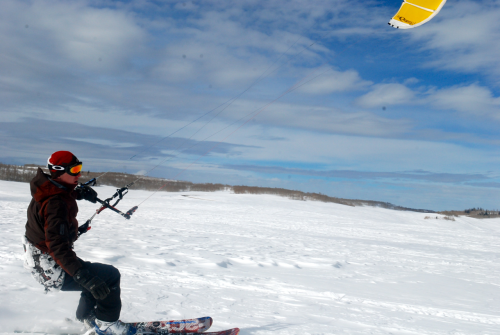
While many snowkite enthusiasts use a board or skis, all you really need to go snowkiting is a power kite and an appetite for excitement. Glide down the slopes in snowy Utah and let the wind pull you up into the air. Lessons can be found at the Utah Kite Addiction (www.utahkiteaddiction.com) snowkiting school in the Ogden Valley. Beginners should take a class to learn the basics about snowkiting safety.
10. Shark ice fishing in Greenland
The Greenland Shark Challenge (www.greenland-guide.gl/sharkchallenge) is anything but your average fishing trip. Battle icy waters to catch Greenland's largest fish, the Greenland shark. These sharks can get reach 21 feet and 2,200 pounds, so reeling one in is a feat worthy of bragging rights. The Challenge takes place in the beautiful town of Uummannaq which boasts stunning views of glaciers and mountains. Book a fixed week-long fishing tour or arrange for an individual angling trip with a local fisherman.
Source: World Tour Guide
Here are our ten favourite out-of-the-ordinary outdoor sports for your next winter vacation.
1. Polar bear swimming in Korea
Each January in Busan, thrill-seeking locals jump into the freezing cold water of the Korea Strait in nothing but their bikinis and swim trunks. The Polar Bear Swim competition has taken place at Haeundae Beach every year since 1988. It is the Korean way of welcoming good health in the new year. Get ready to run 10 meters across the sand, leap into the icy water, and then swim 80 meters toward the finish line. Even though it is technically a race, the Korean Tourism Organization (www.visitkorea.or.kr) points out that the Polar Bear Swim is less about competition and more about spreading good cheer.
2. Ski biking in Colorado
If bicycling in the snow sounds like trouble, try riding a bike outfitted with skis instead of wheels down snowy slopes in Colorado's Rocky Mountains. Durango Mountain Resort (www.durangomountainresort.com) has long offered ski biking as one of its winter activities. The ski resort holds an international ski bike festival once a year for participants and spectators alike. Be sure to take a lesson or two before going out on the slopes for the first time; it is not as easy as the YouTube videos make it look.
3. Ice karting in Finland
4. Dog sledding in Alaska
Dog sledding, or mushing, is Alaska's official sport. Enjoy the ride while a team of adorable huskies pulls you along for either a short sprint or a long journey. Dog sled rides can last anywhere from minutes to days, depending on your interests. Alaska Best Wilderness (www.alaskabestwilderness.com), based in Tanana, has 11-day backpacking expeditions that combine mushing, trekking and rafting. If you just want an afternoon with the beautiful sled dogs, Sun Dog Express (www.mosquitonet.com/~sleddog) in Fairbanks offers guided tours starting from just half a mile long.
5. Skijoring in Minnesota
For a snowy adventure with your own dogs, try skijoring in Minnesota. Skijoring is a combination of cross country skiing and dog sledding in which a person on skis is pulled along by his or her pups. The Midwest Skijorers Club (www.skijor.org) holds skijoring events around the Twin Cities in Minnesota.
6. Snow tubing in Canada
Snow lovers who do not ski or snowboard will love snow tubing. Basically sledding in a tube, snowtubing is easy, cheap and incredibly fun. Rock Ridge Recreation Park (www.rockridgetubing.com) in Ontario is especially dedicated to the sport and features six tubing runs. Attach a few tubes together to go down the slopes with your friends or family. Rock Ridge's season this year begins the day after Christmas.
7. Ice climbing in Chile
True exhilaration can be found just outside of Santiago, Chile in Cajón del Maipo. There, the awe-inspiring El Morado Glacier sets the scene for a simultaneously magnificent, terrifying and thrilling ice climbing trip. Trek out to the southwest side of Cerro El Morado where the most adventurous of adventurers climb the hanging glacier. The sights are spectacular, so remember to bring a camera.
8. Ice sailing in Poland
Feel the blustery wind rush over you as you sail across Poland's Great Masurian Lakes when they freeze over in the winter. With no waves to slow you down, the sport brings new meaning to the term "smooth sailing". Iceboats can reach very high speeds, so racing should only be attempted after you get the hang of basic sailing.
9. Snowkiting in Utah
While many snowkite enthusiasts use a board or skis, all you really need to go snowkiting is a power kite and an appetite for excitement. Glide down the slopes in snowy Utah and let the wind pull you up into the air. Lessons can be found at the Utah Kite Addiction (www.utahkiteaddiction.com) snowkiting school in the Ogden Valley. Beginners should take a class to learn the basics about snowkiting safety.
10. Shark ice fishing in Greenland
The Greenland Shark Challenge (www.greenland-guide.gl/sharkchallenge) is anything but your average fishing trip. Battle icy waters to catch Greenland's largest fish, the Greenland shark. These sharks can get reach 21 feet and 2,200 pounds, so reeling one in is a feat worthy of bragging rights. The Challenge takes place in the beautiful town of Uummannaq which boasts stunning views of glaciers and mountains. Book a fixed week-long fishing tour or arrange for an individual angling trip with a local fisherman.
Source: World Tour Guide
Thursday, December 30, 2010
No-Guessing, Only Clear Punching
The Transparent Punch allows you to see where exactly you will be punching the hole in a paper. The red ring guides your placement and saves you from doing a shoddy job.
Designers: Kisang Yoon and Kyubok Lee
Source: Yanko design
Wednesday, December 22, 2010
Does reading a book make us happier?
Public libraries face an uncertain future but the value of reading is irreplaceable, says Joan Bakewell in her A Point of View column.
I was returning a library book last week. It had been important in some research I was doing so I sought to renew it. "No, I'm afraid it's in demand by someone else," came the reply.
A book first published in 1964 was still needed. I'm not surprised. Many books last a lifetime and go on being read. Then, on the library counter, I noticed printouts from our local newspaper. The headline was a question - Libraries slashed? - it asked.
I recall a Latin grammar construction defined as "expecting the answer 'yes'". I felt this applied to the headline. We in the London borough where I live know there will be massive council cuts. In London as a whole there are fears that 130 libraries could go.
And things are bad across the country. Buckinghamshire is said to be considering closing among others the Great Missenden library, inspiration for Roald Dahl's Matilda, who read library books. He would be appalled.
Another book event. Last week I helped celebrate the publication of probably the definitive account of the life and art of the painter LS Lowry, by Dr Tom Rosenthal. It was held in the gorgeous setting of Christies sales rooms, where a fine array of Lowry's work graced the walls.
I'm rather in awe of Point of View as it was once held by Alistair Cooke. It has a halo of significance. He was such an exemplar of the broadcast essay.
I'm interested in the way people use words and the way people talk about… having betrayed or broken promises and the nature of compromise.
In four decades (of journalism) I've been in touch with a great diversity of what people think and how they express themselves. I haven't spent a lifetime in studios and offices - I've been out there.
The Heart of the Matter tackled moral issues about current affairs. It tried to get people not to be of the left or of the right, but to think for themselves.
Later in the week some 20 of his paintings sold there for nearly £5.2m. There was an irony in seeing Lowry's bleak depictions of the Lancashire poor going for such high prices. Here they were, the huddled masses, hurrying from the factory, to the football match, crowding round a street accident, or spending their unsmiling leisure still fully clad on Lancashire's beaches.
Lowry's work divides people There are those who admire his bleak vision of the world he knew in the 30s and 40s, and those who demean it as nothing more than a host of matchstick men. I am of the former persuasion.
My reason is more than aesthetic, I have a local connection. My own great aunt lived in Salford at Crescent View, just such a row of terrace houses as Lowry painted. I knew the feel of Salford's streets, its little picket fences, and I loved the smell of Nana's stuffy kitchen, full of cooking and drying clothes.
The meaning of books came to me from just such a background. From the age of seven my father attended what was then called Chetham's Hospital in Manchester, a charity school for 40 poor boys founded in the 17th Century as the legacy of Humphrey Chetham. He was a wily old wool merchant whose motto "Quod tuum tene" - hold on to what is yours - just about sums up the industrial revolution that was to engulf the city and make it rich and make it poor.
But Chetham was a philanthropist and left provision not only for a school, but for a library within the same building. That library survives in its original glory - theology, law, local records, leather bound, beautifully preserved. Its Jacobean setting is one of the unsung treasures of Manchester, part of what is now the illustrious Chethams Music School.
In the poverty that was then Salford, libraries were cherished. They were seen as the resource for the poor, where they could learn and begin to understand about the world beyond those Lowry streets.
The book I was returning to my local library is subtitled A Study in Protest. It is in fact an account by Christopher Driver of the rise of the anti-nuclear bomb campaigns of the late 50s and early 60s. Then as now, unruly groups grabbed the headlines. They always do.
But the book tells of concerted and sustained action to bring pressure on world powers to abandon nuclear weapons. We know they failed, but along the way they influenced public and world opinion to an extent that perhaps contributed to the test-ban treaties that were to be signed in the 1960s, in the years after the Cuba crisis.
The young have again been out on the streets in their thousands and students are meeting and plotting more protests even now. Will those of us who love libraries be able to make our voices heard? It would be hard to combat allegations of middle-class elitism, and indeed there is a case to answer.
If the pressure on finances is so great, at least as far as the coalition believe, then the availability of free books for all will need its defenders.
My defence should not be seen as the attempt merely to rescue a small building in a particular borough, or any other particular places threatened with closure. Rather it is a rallying call for the concept of free libraries. In our culture the library stands as tall and as significant as a parish church or the finest cathedral.
It goes back to the times when ideas first began to circulate in the known world. I worry where wisdom will come from.
I am a major consumer of information on the internet. I know that academics and students access information there more quickly and more specifically than they can faced with a shelf load of books. But it's not that relationship I'm concerned about.
I offer you two scenarios. I am on a train going north, the scenery beyond York is glorious and in the slanting light of a winter afternoon has a magical quality not to miss.
So I put down the paperback to enjoy it, then I resume my read. Again, on holiday, deck chair beside a blue swimming pool, a landscape of rolling hills and green pastures unfolds before me. I set aside the paperback to enjoy the view, and then return to the pages.
I live with the tensions between the world out there I want to see and even contemplate, and the inner world to which the book gives me access. It is the inner rewards of reading a book in a private and concentrated way that lead you into realms of your own imagination and thought that no other process offers.
Something happens between the words and the brain that is unique to the moment and to your own sensibilities.
Of course, there are loads of books around. You can pick up a paperback for a few pounds that will last many years (my shelves are full of ageing paperbacks whose yellowing pages crack when I open them - only hardbacks last forever). Publishers think books are worth publishing, supermarkets think they are worth stacking on their shelves.
But these are market transactions. The free public library service is the only way for everyone to have access for free to objects that carry the world's wisdom.
Soon we will all be asked to tell the state what makes us happy, what increases our well-being. No doubt someone will come up with measurements of stress and depression.
We might be asked about our sense of neighbourliness or degrees of family closeness. Whether we are hungry or cold or neglected.
There are clearly data about social conditions that are worth collecting, but happiness is a dangerous word. It embraces all the subjectivity of our emotions and inner serenity.
It is a reflection of our character, the degree we are wracked by ambition or resentment, by envy or greed. It embraces what might be called spiritual well-being, the sort that might be underpinned by a happy marriage, a satisfying career, deep religious conviction.
Already television vox pops have asked people in the street what makes them happy and had replies that range from their children's laughter, to the music of Beethoven.
I think there might be many who consider one kind of happiness to be a deep armchair, a warm fire and a favourite book.
Wednesday, December 15, 2010
How the Cell Phone Is Changing the World
The impact of the ubiquitous device extends from politics to business, medicine, and war.
The modern mobile-phone era dates back only to the 1970s. In just 40 years, in the West, they’ve gone from suitcase-size novelty to ubiquity. And they’re no longer just luxury goods. More than 4 billion of the 6 billion people on earth now have a cell phone, with a quarter of those owners getting one in just the last two years. And many are using them, in a giant global experiment, to change the way life is lived, from Manhattan to Ouagadougou.
The phones now allow Masai tribesmen in Kenya to bank the proceeds from selling cattle; Iranian protesters to organize in secret; North Koreans to communicate with the outside world; Afghan villagers to alert Coalition soldiers to Taliban forces; insurgents to blow up roadside bombs in Iraq; and charities to see, in real time, when HIV drugs run out in the middle of Malawi.
“I was actually sitting around with a bunch of Ethiopian farmers recently,” says Duncan Green, research director for the charity Oxfam, “when I noticed that none of them had light or running water, but each family had a mobile phone.” The reasons are simpler than we think, he says. “Before, these farmers, if they wanted to check on a sick relative elsewhere, had to walk three hours in each direction. Now they just make a call.” That convenience, he says, drives their eager embrace of the phones. But the phones’ growing ubiquity—“they’re a technological Coca-Cola,” Green says—has other uses, too. Here are five ways they’re changing the world.
Exposing Secrets
On the Chinese border with North Korea, human-rights activists have a mission. They aim to persuade the few North Koreans allowed to travel outside the country to smuggle cell phones back in, and help open the most closed society in the world. (Mobile phones are officially allowed, but are strictly limited in range and closely monitored.) If discovered with their smuggled phones, the spies risk imprisonment and death, all in an effort to report on everything from pets to famine, and the swirl of story and counter-story that manages to penetrate dictator Kim Jong-il’s wall of silence. One such person, The New York Times reports, was executed by firing squad when authorities discovered his cell phone.
Advancing Democracy
Cell phones present a problem for oppressive regimes everywhere. So many Iranians were using text
messages to secretly organize protests against last year’s flawed elections thatthe government eventually shut down service entirely. The Finnish company Nokia Siemens was criticized by the European Parliament for providing the government the equipment to do so. China presumably has its own capability: when prominent democracy campaigner Liu Xiaobo won the Nobel Peace Prize last month, messages containing the Chinese characters for his name failed to send, reported the Associated Press. Unbowed, his supporters continue to make their voices heard in the West. By cell phone, of course. In Africa, Green says, people are able to report violent incidents and government oppression in a way they couldn't before. “It’s kind of the first time they’ve had bottom-up democracy,” he says.
Enabling Commerce
In Tanzania, reports the BBC, only 5 percent of people have a bank account. In Kenya, there is one bank branch per 100,000 people. It’s a situation that is repeated in many developing countries, including such potential powerhouses as India. The solution, for some, has come through the cell phone.
In Uganda, where villages often have one top-up phone run by a trusted operator, a basic system helps store and transfer money. In a TED talk in 2007, Jan Fishman, an analyst for Frog Design, a global innovation firm, outlined a common method of banking using a cell phone where there are no banks.A villager, working hundreds of miles away from home, buys a cell-phone refill card with his earnings. To send his money back to the village, he calls the operator, who tops up the phone using the card. The operator, having taken a commission, then hands cash on to whoever has been authorized.
In India, the systemhas been formalized and is supported by the Bank of India. In Kenya, the main service, M-Pesa, moves millions of dollars per day by text message. In the East African nation, the ability to SMS means that Masai farmers can bank the money from the sale of a cow instead of carrying the cash. One minor difficulty, says Green, is that the same farmer will sometimes spend money he should be using for food on a shiny new phone. “But that’s just people,” he says.
Distributing Medicine
Stock-outs—which is what it’s called when isolated clinics in countries such as Kenya, Uganda, Malawi, and Zambia run out of antimalaria medicine, zinc tablets, penicillin, HIV and AIDS drugs, and diarrhea treatments—are potentially deadly, even as their occurrence often is denied by local governments.
A new project, Stop Stock-Outs, aims to use cell phones to solve the problem. Activists send a simple text message to a central number reporting which drugs are out of stock. The information is collated in a virtually real-time map, on which bright red dots signify a dangerous shortage.
Waging War
In Afghanistan, The Wall Street Journal reports, the Taliban have forced local cell-phone-service providers to shut down their towers at night. The move is designed to stop locals reporting Taliban movements to Coalition forces. NATO troops, meanwhile, also black out entire areas of cell coverage before an offensive to prevent insurgents from remotely detonating roadside bombs, says one official who did not want to be named discussing operational details. Suppressing the devices will become harder and harder for both sides—cell phones are one of the few economic bright spots in the country. Hundreds of thousands of Afghans now have one.
Source:Newsweek
Monday, December 13, 2010
Strange and Funny Laws
Many of these laws were established during the end of the 1800s and early 1900s, when the United States was rapidly changing from an agricultural to industrial nation. Some of the laws went out of date or were repealed. Many are still on the books but not enforced.
-In Mohave County, Arizona, if anyone is caught stealing soap, he must wash himself with it until the soap is gone.

-A woman in Memphis, Tennessee, is not allowed to drive a car unless man is in front of the car waving a red flag to warn people and other cars.
-In Kalispell, Montana, children must have a doctor’s note if they want to buy a lollipop.
-It’s illegal in St. Louis, Missouri, for a fireman to rescue a woman wearing a nightgown. If she wants to be rescued, she must be fully clothed.
-In Arizona, a man may legally beat his wife once a month, but no more.
-According to an Atlanta, Georgia, ordinance, “smelly people” are not allowed to ride public streetcars.
Source:http://facts.randomhistory.com/
Wednesday, December 8, 2010
Modern Rugs, Carpets, and Doormats
While I was surfing some sites , I happen upon these modern and unique rugs ; therefore I wanted to share it with all of you .
the source: http://www.toxel.com
- Bedside Slippers Rug
- Bar-code Doormat
After the robot uprising, place this stylish doormat in front of your house to show you are open and happy to be included in the first generation of capitulators.
- Woody Wood Rug
- Moss Carpet
- Modern Rugs by Madeleine and Dudley
- Breakfast Eggs Rug
- Steel Doormat
- Top Floor Ethereal Rug
An organic floral pattern reaches into the whitespace on this rug, yet this pattern is more than grooves and layers. Designer Esti Barnes has cut these layers right through the rug itself, exposing the bare wood below.
- Black River Stone Doormat
Washed and polished river rocks are hand-applied with strong adhesive to a durable backing of indoor-outdoor carpet
Fascinating Facts About Benjamin Franklin
True, Founding Father Benjamin Franklin is on our $100 bill, but contrary to what many people believe, he was never president of the United States. He was far too busy to take on a job like that.
We’ve always been amazed by this man of many talents, and in honor of this weekend’s Independence Day, we wanted to honor his contribution to creating the U.S. Constitution—and so much else. As a scientist, writer, printer, philosopher, musician, politician, and inventor (we’ve probably forgotten a few things),
Franklin did more in a day than many people do in a lifetime. Here are some of our favorite Franklin facts.
He was a high school dropout. Franklin proved that you don’t need a fancy degree to succeed in life—due to family financial problems, he never graduated from high school. (But were he around today, he’d probably have more honorary PhDs than he could shake a stick at.)
He created America’s first library. In 1732, Franklin convinced a group of fellow intellectuals to create a library of their personal books, and then added a subscription service, in which funds would be used to purchase new books for all to read. The Library Company of Philadelphia, as it was called, still exists today, and has over five hundred thousand rare books.
He followed a strict daily schedule. It began with the question, “What good shall I do this day?”
He invented the first bifocal glasses, odometer, urinary catheter, lightning rod, and many other devices, yet never filed for a patent. Though any one of Franklin’s inventions could have made him a tremendous fortune, he wasn’t greedy about them.
He believed that his work was for the common good, and “as we enjoy great advantages from the inventions of others, we should be glad of an opportunity to serve others by any invention of ours; and this we should do freely and generously,” he wrote in his autobiography. We bet he’d be a big fan of Creative Commons.
He created a phonetic alphabet. Franklin’s alphabet got rid of six letters he thought were redundant, and added six new letters for other sounds. As you can probably tell, it never caught on.
As a young man, Franklin created a list of thirteen virtues, and worked on obeying them throughout his life.
Here is the list; you may find it helpful too:
Temperance: Eat not to dullness; drink not to elevation.
Silence: Speak not but what may benefit others or yourself; avoid trifling conversations.
Order: Let all your things have their places; let each part of your business have its time.
Resolution: Resolve to perform what you ought; perform without fail what you resolve.
Frugality: Make no expense but to do good to others or yourself; that is, waste nothing.
Industry: Lose not time; be always employed in something useful; cut off all unnecessary actions.
Sincerity: Use no hurtful deceit; think innocently and justly; speak accordingly.
Justice: Wrong none by doing injuries or omitting the benefits that are your duty.
Moderation: Avoid extremes; forbear resenting injuries so much as you think you deserve.
Cleanliness: Tolerate no uncleanliness in body, clothes or habitation.
Tranquility: Be not disturbed at trifles or accidents common or unavoidable.
Chastity: Rarely use venery but for health or offspring; never to dullness, weakness, or the injury of your own or another’s peace or reputation.
Humility: Imitate Jesus and Socrates.
By Kathryn Hawkins for Gimundo
Friday, November 26, 2010
Flamingos Apply "Makeup" to Impress Mates
Birds daub pink-producing oil onto feathers during mating season.
There's a reason why flamingos are so pretty in pink: The birds apply "makeup" to impress mates, a new study says.
Scientists had long assumed that flamingo feathers change color only when the plumage becomes faded by the sun or unintentionally stained by organic materials.
But while studying greater flamingos at the Doñana Biological Research Stationin Spain, ornithologist Juan Amat realized that something else was going on.
"We noticed that immediately after chicks were hatching, [adult] flamingos lost their pink color," he said.
Adults later regained their famous pink plumage, "yet they were not moulting, so we wondered if there was something cosmetic to consider."
Flamingos: Beyond the Pale
To examine this hypothesis, the researchers studied seasonal variations in flamingo color at three wetlands in Spain. The team also monitored the birds' breeding, feather maintenance, and courtship activities.
Using telescopes, the scientists assigned each flamingo a color value based on a scale of one to three, ranging from very pale to vibrant pink.
The team found that the color values dropped from an average of 1.7 in February—the height of the mating season—to an average of 1.0 in May, June, July, August, and September, when the birds were looking after hatchlings. In October the values leapt up again, to 1.6.
Flamingos, like all birds, produce oil in glands near their tails. Birds daub this oil onto their feathers with their beaks.
The oil is well known to improve the longevity of feathers and keep them waterproof. But Amat suspected that the flamingos might also be using the substance for coloration.
Flamingos get their color from compounds called carotenoids, which the birds absorb from their diets of algae and small crustaceans.
Flamingo feathers already contain some carotenoids. But, based on samples collected from captive flamingos, Amat and colleagues found that the oil is especially rich in the compounds.
Flamingos In Fine Feather
Both male and female birds increased their oil-daubing behavior during the mating season, the team noted.
In general, the deeper the pink, the more attractive the bird—so the flamingos were likely applying the oil like makeup to make themselves more desirable, he said.
"We were so excited to discover this," Amat said.
"Other birds, like the bearded vulture, are known to take mud baths that leave their feathers tinged with color. We now need to go and look at these species to see if they are applying cosmetics just like the flamingos do."
The flamingo-makeup study appeared online October 23 in the journalBehavioral Ecology and Sociobiology.
Source: National Geographic News
Monday, November 22, 2010
Night owls vs. morning people: Who's smarter?
New York – Recent evidence shows that people who thrive at night have higher IQs. Early risers beg to differ
Are you the type who stays up late to finish your work, or do you get up early to make a fresh start on the day? If it's the former, you may be pleased to learn new research has found that those with higher IQs tend to be nocturnal night-owls. But if it's the latter, you might have good reason to distrust the claim. Here's an instant guide:
Is there solid science behind this finding?
Sleep researchers tend to divide people into two groups, explains zoologist Robert Alison in the Winnipeg Free Press, based on whether they exhibit "morningness" or "eveningness." A recent study claims that eveningness is an evolutionary advancement that marks out "more intelligent individuals," while "those with lower IQs tend to restrict their activities primarily to daytime."
How can that be?
Researchers from the London School of Economics say that human beings used to all be day-oriented, and that eveningness is an "evolutionarily novel preference" made by people with "a higher level of cognitive complexity." Basically, smart people evolve to stay up later.
I want to get more intelligent. Can I just start staying up late?
It isn't that simple. Several studies have shown that your sleep preferences are at least 50 percent genetic, and that your chronotype — that is, the time of day you are at your physical and mental peak — changes with your age. Generally speaking, "eveningness" peaks in the late teens and early 20s.
Are there any downsides to "eveningness"?
Night owls tend to be less reliable, more emotionally unstable, and more likely to have problems with addictions and eating disorders, according to a 2008 study by psychologist Marina Giamnietro. They are also more likely to drink alcohol and smoke, says Dutch psychiatrist Walter van den Broek at his Dr. Shock blog. Another study found that undergrad "evening types" had lower GPAs than those who awake early in the morning.
Is there any advantage to being a morning person?
Early risers tend to be more conscientious, persistent, and apt to cooperate, says van den Broek, a self-described morning person. They also "cope better with academic requirements and receive better grades." And when you think about it, adds Ace Burpee in the Winnipeg Free Press, "there are no sayings about late birds getting some sort of way better tasting worm."
Which am I?
If you're unsure, this test will tell you where you fit on the morningness-eveningness spectrum.
Sources: Winnipeg Free Press (2), Disinformation, Dr. Shock, ScienceDaily
View this article on TheWeek.com
Labels:
Animals,
Biology,
Birds,
Entertainment,
ODD,
Science,
Specials,
Weird News
About Me
- Nairuz
- Hi Everyone This a blog about different, amazing, weird and valuable news around the worlds that I gather from many of places to enlighten our knowledge and follow the fast paces of the world.
Total Pageviews
Labels
- Advices (4)
- Amazing (1)
- Amazing Bridges (3)
- Animals (11)
- Animals World (1)
- Art (2)
- Articles (5)
- Biology (2)
- Birds (4)
- Breakthroughs (1)
- Cars (1)
- Celebrations (2)
- Cell phones (2)
- Cheetah Family (1)
- Comments (1)
- Computers (1)
- Congress (1)
- Countries (1)
- Culture (1)
- Customs (1)
- Deer (1)
- Designs (4)
- Did you Know (40)
- Diet (17)
- Education (5)
- Electronics (4)
- Entertainment (38)
- Entertainment.jokes (2)
- Environment (11)
- Exercise (1)
- Facts (71)
- Facts about World Cup (1)
- Fish (1)
- Food (20)
- Forests (1)
- Friendship (1)
- Fuji (1)
- Gadgets (1)
- General News (33)
- Governments (1)
- Health (57)
- History (4)
- Holidays (2)
- Insects (2)
- Internet (4)
- Japan (1)
- Jungle (1)
- l News (3)
- Leisure (2)
- Life (22)
- Love (1)
- Medicine (5)
- Mount (1)
- News (18)
- Nutrients (1)
- Occasions (3)
- ODD (18)
- p (1)
- People (1)
- Photos (9)
- Politics (3)
- Psychology (6)
- Questions (6)
- Quotation of the Day (15)
- Quotation of the Day.Creativity (6)
- Religions (1)
- Remedies (2)
- Richest (1)
- Rituals (2)
- Science (101)
- Sea World (2)
- Sepcial Stories (20)
- Sepcials (34)
- Socials (3)
- Space (3)
- Special Places (2)
- Special Stories (3)
- Specials (53)
- Sport (1)
- Sports (7)
- Tech (13)
- Tigers (1)
- Tops (1)
- Travel (2)
- Weird (5)
- Weird Customs (1)
- Weird News (10)
- Wise Quotation (10)
- World Cup (3)
- World Facts (3)
Popular Posts
-
By Jen Drake, eHow Contributing Writer Bovinae is a scientific classification for a specific subfamily of mammals that includes cows, oxen...
-
1-Stockholm Tunnelbana (Sweden) `Subway stations are usually designed in a clean and modernistic style in order to make people forget they...
-
In a perfect world, everyone would work out enough and eat right all the time. But that's not always possible, so we turned to the expe...
-
Birds daub pink-producing oil onto feathers during mating season. There's a reason why flamingos are so pretty in pink: The birds ap...
-
Trying to get more shut-eye? Take a look at your diet. Eating the right foods in the hours before you hit the hay may help you fall asleep ...
Blog Archive
Visitors
Hits
Followers
Powered by Blogger.
by : arab-alrab7on
My Blog List
-
-
This Turkish Ice Cream Man Is the Ultimate Prankster - Imagine a world where buying ice cream isn’t just about preparing to eat a delicious frozen treat, but also about the ice cream man pulling entertaining...12 years ago
-