Showing posts with label News. Show all posts

Thursday, January 27, 2011

The 'Ark' Eco Building of the Future can be built on land or sea.


The housing of the future as anticipated by Russian architect Alexander Remizov might be built quickly, resist environmental failures, and space 10,000 people at a time. No longer unhealthy if you don't thoughts residing in a place that looks eerily very similar to a hamster Habitrail. The eco-friendly dome, 'The Ark,' is designed to withstand biblical flood ranges and can be built on land or sea.

Clear roof allows for plants to develop inside.The Ark will additionally be built to flow on water, and will face up to rising tides and floods of biblical proportion.Then the framework of metal cables is added. The housing can be constructed in earthquake zones. Its structure of ropes and arches distributes pressure from temblors across the development

Saturday, January 15, 2011

Breastfeeding boosts schoolboys' brains, not girls'


Breastfeeding improves later academic performance in boys but appears to have no such effect in girls.
Wendy Oddy at the Telethon Institute for Child Health Research in Subiaco, Western Australia, and colleagues, examined whether having been breastfed affected the test scores of over 1000 10-year-olds.
Studies have suggested that children who were breastfed have higher IQs than those who were not, but few separated out boys and girls. Mothers who breastfeed are on average wealthier and more educated, so Oddy's team accounted for these factors.

Boys who were mainly breastfed for at least six months scored 9 per cent higher in mathematics and writing tests, 7 per cent higher in spelling and 6 per cent higher in reading, compared with boys fed with formula milk or breastfed for shorter periods. There were no significant differences in results for girls.

"We know that breast milk contains the optimal nutrients for development of the brain and central nervous system," says Oddy, but the gender differences were surprising.

Hormone link

Oddy points out that other studies have suggested boys are more vulnerable to stress and adversity during critical periods of brain development. She speculates this could be because girls seem to be protected by higher levels of oestrogen during childhood. She says the improved academic performance of boys could be explained by oestrogen in breast milk having similar neuro-protective effects.

Some studies have suggested that fatty acids uniquely present in breast milk explain research showing that it can help babies become more intelligent. Whether or not these fatty acids help in boosting IQ may be linked to the presence of certain gene variants involved in their processing.

A large randomised trial conducted by Michael Kramer at McGill University in Montreal, Canada, concluded that prolonged breastfeeding was linked tohigher IQ and academic ratings by teachers in Belarussian children at age 6, but found no sex differences.

"These results add to the evidence that longer and exclusive breastfeeding is beneficial for cognitive development," says Kramer.

The World Health Organization recommends exclusive breastfeeding for at least six months, and states that failing to do so impairs intellectual and social development.

Source: newscientist.com

Thursday, December 30, 2010

Eating Disorders Strike Younger and Younger


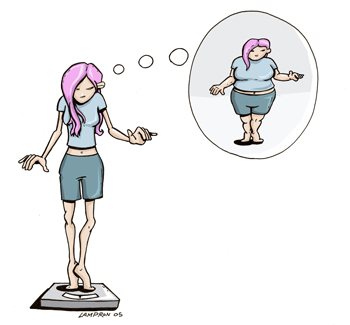
"I always wanted to be the good girl. Good girls are skinny and happy. The bad girls are the fat ones."
That was the explanation a recent visitor to the Alliance for Eating DisordersAwareness in West Palm Beach, Fla. gave when asked why she starved herself to the point of hospitalization. She was eleven years old.

Anorexia and its sister-disorder, bulimia,have historically been thought of as striking white, middle to upper class teenage girls. But a recent report from the American Academy of Pediatrics warns doctors that eating disorders arehappening to younger girls -- and boys -- at an alarming rate.

"People tend to have this idea of who gets eating disorders, but an eating disorder doesn't discriminate between age, gender, race, or class," says Johanna Kandel, founder and director of the alliance.

"Some research says that as much as ten percent of those with eating disorders are under the age of ten. What I'm finding at the alliance is that the number of parents seeking help for their 7-, 8-, 9-year-olds is escalating rapidly," she says.

A 2009 analysis found that in the last decade, hospitalizations for eating disorders more than doubled among children under twelve and now account for four percent of all such hospitalizations.

"Pediatricians need to be aware of the early symptoms of eating disorders because they are the medical professional that a child is mostly likely to see in any given year," says Dr. Jim Lock, director of the Eating Disorder Program at Packard Children's Hospital. "They are the gatekeepers."

It used to be that the onset of an eating disorder tended to be around mid-adolescence, around age fifteen or around the time of first menses at about age thirteen. So why are there a growing number of girls who are showing signs of bingeing and purging as young as eight?

When Kids are Weight-Obsessed

It could be hormonal, he says, as the onset of puberty has been occurring earlier over time, but a big trigger might be the dropping psychological onset of puberty as opposed to the physiological one. In terms of interest in appearance, clothing, social behavior and sexualization, girls at twelve are experiencing what girls at fourteen were experiencing just a decade ago, Lock says. Culturally, the cues to be concerned with appearance are being delivered to girls at younger and younger ages.
Part of the growth of anorexia may have to do with the growing focus on educating kids about obesity, Kandel says.

"There's been so much emphasis onchildhood obesity, all these programs to ameliorate the situation and in a way we're actually potentiating eating disorders. That's a very thin line we need to walk and make sure the dialogue is one of a healthy attitude towards food," she says.


How to Read the Signs

In many ways, an anorexic ten-year-old may not behave very differently from a fourteen-year-old one, experts say, but because of their age, parents and doctors may be less likely to recognize the signs of an eating disorder.

"What you look for is the same -- they stop eating, they start to restrict food intake or binge," says Dr. Carol Bernstein, associate professor of psychiatry at NYU School of Medicine. Unreasonable amounts of exercise and an obsession with food or weight are also signs that would be similar across the age group.

But because children do not have the mental or emotional maturity of their teen counterparts, Lock warns that they might not even be able to articulate that they are doing these things to lose weight. "Older girls might be able to say, I feel like I'm losing control or I feel scared that I'll gain weight, but like with any child psychiatric issue, you have to look at their behavior," he says.

A depressed child will often not recognize that they are sad but will have an unexplained stomach ache or be unable to sleep, he adds, so you have to watch the behavior. Parents should watch to see if their child may be displaying behaviors of an eating disorder even if they don't seem weight-obsessed.

The personality traits that tend to accompany eating disorders in older patients are also seen in children: anxiety, perfectionism and obsessive tendencies.

Weight loss doesn't necessarily have to be a symptom either, experts warn, because children under twelve are supposed to be putting on weight continually so even a child that is trying not to gain any weight could be doing his or herself harm.

Pediatricians, First Line of Defense

The American Academy of Pediatrics report, published Monday, suggests that pediatricians screen for eating disorders as part of annual checkups or during pre-participation sports exams. If an eating disorder is suspected, a more thorough history and physical exam should be ordered and possibly assessment for psychological problems.

It's essential to catch these behaviors at an early stage, Kandel says, "because you don't want this behavior to become any more entrenched than it already is."
For parents who are worried that their child might be at risk for developing an eating disorder, experts recommend teaching by doing.

"They observe and follow us," Bernstein says, so parents should set a good example and be careful not to obsess over food or their own weight in front of their children.

Encourage healthy eating in the home and stay away from using food as a punishment or reward, Kandel says, because this sets up an unhealthy relationship with food. Also stay away from talking about certain foods as categorically "good" or "bad" because this might lead to bingeing, she says

Source: ABC news 

Wednesday, December 22, 2010

Scam: 'See who viewed your Facebook profile'!


Many of us are quite curious to know who viewed our Facebook profile. However, unfortunately scammers too are aware of this, and use the lure of such functionality as a way to trick users.

And, one such scam is again prowling on Facebook having claimed thousands of victims. The rogue application is spreading virally among Facebook users pretending to offer them a way of seeing who has viewed their profile.

According to security firm Sophos, "Messages spreading rapidly across the Facebook social network right now say: OMG OMG OMG... I can't believe this actually works! Now you really can see who viewed your profile!"

In fact, so far there is no application or way to find out who viewed your facebook profile. This means all those applications that promise you to show who has viewed your Facebook profile pages are actually scams.

Sophos warns that scams like these are used to earn commission for the mischief makers behind them, who have no qualms about using your Facebook profile to spread their spammy links even further.

However, in case, you've already fallen to the scam like this, remove references to it from your newsfeed, and revoke the right of rogue applications to access your profile via Account/ Privacy Settings/ Applications and Websites.

Saturday, October 30, 2010

Lungs have taste buds, scientists find


Scientists have discovered that lungs can taste which may lead to new treatments for asthma.

Human lungs can detect bitter tastes in the same way as the tongue can and respond to the sensation in a particular way.

The team from University of Maryland School of Medicine found that contrary to what they thought would happen, the airways in the lungs opened in response to a bitter taste.

Senior author Dr Stephen Liggett said: “I initially thoguht the bitter-taste receptors in the lungs would prompt a ‘fight or flight’ response to a noxious inhaleant causing chest tightness and coughing so you would leave the toxic environment but that’s not what we found.

It turns out that the bitter compounds worke the opposite way from what we thought. They all opned the airway more profoundly than any known drug that we have for treatment of asthma or chronic obstructive pulmonary disease.

“This could replace or enhance what is now in use and represents a completely new approach.”
The team tested bitter substances on human and mouse airways and published the results in Nature Medicine.
Quinine and chloroquinine, normally used to combat malaria, were used as they taste bitter along with the artificial sweetner saccharin, which has a bitter aftertaste.

Dr Liggett said: “Based on our research we think that the best drugs wold be chemical modifications of bitter compounds which would be aerosolised and then inhaled into the lungs in an inhaler.”

The discovery was made by accident when the team were studying muscle receptors that cause contraction and relaxation in the lungs.

It is thought that the bitter substances affect how calcium controls muscles.

Source:telegraph.co.uk

Friday, August 20, 2010

Autism Study: Baby's Babble May Contain Vital Clues


To a parent's ears, there's nothing more enchanting than the babble of a child learning to talk. Now research shows that those nonsense syllables could contain coded signals that a toddler is autistic.

In a study released today, scientists report that they have designed a computer program that can distinguish between the speech of normal children and those with autism. Even though the work is only a first stab at analyzing audio recordings for signs of autism, it can correctly identify more than 85 percent of autistic and nonautistic children.

"We had no idea that this was possible," Kim Oller of the University of Memphis, head of the research team behind the study, told AOL News. "It's very surprising that you can use a totally objective system and get this much information so quickly."

The finding could eventually help doctors diagnose autism early in a child's life. Early diagnosis is crucial, because the earlier autistic children start intensive therapy, the more they improve.

If the computer program proves itself, "it would be very helpful to have an automated way to screen for autism," said Geraldine Dawson, a top autism researcher and the chief scientific officer for Autism Speaks, a science and advocacy group.

Autism is an often-devastating disorder that is being diagnosed in a growing number of children. One in 110 kids in the United States has autism or a related disorder, according to the U.S. Centers for Disease Control and Prevention. Children with full-blown autism have trouble communicating and relating to others. Many autistic kids, even as babies, avoid making eye contact. They may flap their hands and obsessively line up their toys rather than playing with them.

Scientists have known for decades that autistic children show early problems in their speech, but there's tremendous variety in how such toddlers distort their babbling, Oller said. That has made it difficult to use speech problems to help diagnose autism.

Oller and his colleagues tucked miniature voice recorders -- each roughly the weight of a candy bar -- into the chest pockets of more than 200 children ages 10 months to 4 years. The team then recorded everything that came out of the kids' mouths over six to eight days, for roughly 12 hours each day. The computer software filtered out crying, sneezes and coughs and focused on the sounds that resembled syllables.

All children mangle their syllables while learning to talk. But the scientists discovered that autistic children tended to do so far longer than normal children, making it easy for the software to pick out the autistic kids' voices.

The current gold standard for diagnosing autism is a long observation session by a medical specialist who watches a child and tallies up activities characteristic of autism.

The computer program "is the first kind of system that's totally objective," Oller said. "I don't know of any other system that doesn't involve judgments being made by people."

He doesn't think his program alone, even when perfected, should be used to declare that a child is autistic. But audio analysis "could be used very effectively" as a tool for screening children whose parents are worried about their development, he said.

Dawson agrees, saying automated voice analysis could help "improve our ability to identify infants who are at risk." Such a tool could also be useful in countries where autism specialists are in short supply, she said.

The study is being published today in the Proceedings of the National Academy of Sciences. Several of the authors were paid consultants to a for-profit company that developed the recorder and computer program. The company was turned into a nonprofit foundation in 2009. Oller said the consulting fees had no influence on his research and that he stopped accepting them when he decided to write this paper.

Tuesday, August 17, 2010

Cicada


Cicadas are probably best known for their buzzing and clicking noises, which can be amplified by multitudes of insects into an overpowering hum.

Males produce this species-specific noise with vibrating membranes on their abdomens. The sounds vary widely and some species are more musical than others. Though cicada noises may sound alike to humans, the insects use different calls to express alarm or attract mates.

Cicadas are also famous for their penchant for disappearing entirely for many years, only to reappear in force at a regular interval. There are some 3,000 cicada species, but only some share this behavior (the 17-year cicada is an example).

Others are called annuals because, although individuals have multi-year lifecycles, some adults appear every year. The dog day cicada, for example, emerges each year in mid-summer.

When young cicada nymphs hatch from their eggs, they dig themselves into the ground to suck the liquids of plant roots. They spend several early life stages in these underground burrows before surfacing as adults. The process varies in length but often takes a number of years.

Periodical cicadas do not create destructive plagues, as some locusts do, though tens or hundreds of thousands of insects may crowd into a single acre. Large swarms can overwhelm and damage young trees by feeding and laying eggs, but older trees usually escape without serious damage.

Cicadas are members of the order Homoptera and are physically distinguished by their stout bodies, broad heads, clear-membrane wings, and large compound eyes.

The insect's amazing lifestyle has been a source of fascination since ancient times. Several cultures, such as the ancient Chinese, regarded these insects as powerful symbols of rebirth.

Monday, August 9, 2010

10 Medication Mistakes to Avoid


1. Taking an OTC Remedy Without Reading the Label

When it comes to over-the-counter drugs, many people have a blasé attitude, thinking "They can't really hurt me, right?" Wrong. Plenty of people end up with serious health problems from accidentally taking too much of an over-the-counter drug (such as a painkiller), overusing drugs such as laxatives or acid blockers, or taking something that interferes with another medication they're on. No matter how innocuous a drug may seem, it's always smart to read the label. It might surprise you.

2. Taking Sedatives if You Have Heartburn

People who took prescription drugs called benzodiazepines (Valium, Xanax, Halcion) to fall asleep were 50 percent more likely to have heartburn at night than those who didn't in one large survey. Other research has shown that these prescription antianxiety drugs loosen up the lower esophageal sphincter, the ring of muscle that keeps stomach acid where it belongs.


3. Taking an Antidiarrheal if You Have a Fever

Never treat yourself at home with a diarrhea remedy if you also have a fever or if there's blood or mucus in your bowel movements. These are signs of an infection and warrant a call to your doctor.


4. Taking a Daily Aspirin without Asking Your Doctor

Some people shouldn't take aspirin every day, especially since it can cause stomach bleeding. Doctors usually recommend it only for people who have an increased risk of heart attack and stroke. Women may not benefit as much from aspirin therapy as men. And some people appear to be resistant to aspirin's anticlotting effects. (Tests are available to check for aspirin resistance, though some doctors question their accuracy).


5. Quitting an Antianxiety Med Cold Turkey

If you've been taking an antianxiety medicine for a long time, do not quit abruptly. Talk to your doctor about how to gradually taper the dose. Otherwise, you could experience very serious complications such as seizures.


6. Using Old Antibiotics for a New Infection

First, you should have finished the entire prescription the first time around. Second, many antibiotics are specific to the type of infection you have. Taking the wrong antibiotic might not work and can lead to antibiotic-resistant bacteria, making treatment for that type of infection more difficult the next time.


7. Taking an Antipsychotic Without Asking Why You Need It

Don't accept a prescription for an antipsychotic drug if you don't have schizophrenia or other severe mental illnesses like psychosis without asking your doctor "why this drug?" A study published in the Journal of Clinical Psychiatry and sponsored by the National Institutes of Health found that the majority of people prescribed these drugs didn't have schizophrenia or other severe mental disorders for which the drugs are approved. Instead, they had conditions like depression, anxiety, or post-traumatic stress disorder that could be managed with safer, less-expensive medications. Although some antipsychotics are labeled for use in depression, they should be used as a last resort if typical antidepressants don't work.


8. Taking Calcium on an Empty Stomach

The calcium in most supplements is bound to a form of salt called carbonate. Your stomach needs plenty of hydrochloric acid to break down calcium carbonate, so always take your supplement with a meal or snack. Food will cause your stomach to produce the acid.


9. Stopping Your Medication

Don't skimp on eczema medicine. In one study, researchers found that about 65 percent of parents stopped applying prescription ointments to the skin of kids with eczema just 3 days after it was prescribed. To get the most out of your eczema treatment, use it exactly as your doctor prescribes.


10. Diagnosing Your Own Yeast Infection

Yes, the itching and discharge could be a yeast infection — but it might not be. In one study of 95 women who diagnosed themselves, testing showed that just a third actually had a yeast infection; the rest had various other vaginal infections. Pay a visit to your doctor for the correct diagnosis.

Saturday, August 7, 2010

"Lost" Languages to Be Resurrected by Computers?

New program can translate ancient Biblical script.

Tim Hornyak
for National Geographic News


A new computer program has quickly deciphered a written language last used in Biblical times—possibly opening the door to "resurrecting" ancient texts that are no longer understood, scientists announced last week.

Created by a team at the Massachusetts Institute of Technology, the program automatically translates written Ugaritic, which consists of dots and wedge-shaped stylus marks on clay tablets. The script was last used around 1200 B.C. in western Syria.

Written examples of this "lost language" were discovered by archaeologists excavating the port city of Ugarit in the late 1920s. It took until 1932 for language specialists to decode the writing. Since then, the script has helped shed light on ancient Israelite culture and Biblical texts.

 
Using no more computing power than that of a high-end laptop, the new program compared symbol and word frequencies and patterns in Ugaritic with those of a known language, in this case, the closely related Hebrew.

Through repeated analysis, the program linked letters and words to map nearly all Ugaritic symbols to their Hebrew equivalents in a matter of hours.

The program also correctly identified Ugaritic and Hebrew words with shared roots 60 percent of the time. Shared roots are when words in different languages spring from the same source, such as the French homme and Spanish hombre, which share the Latin root for "man."

Led by computer science professor Regina Barzilay, the team may be the first to show that a computer approach to dead scripts can be effective, despite claims that machines lack the necessary intuition.


"Traditionally, decipherment has been viewed as a sort of scholarly detective game, and computers weren't thought to be of much use," Barzilay said.

"Our aim is to bring to bear the full power of modern machine learning and statistics to this problem."
Not Always a "Rosetta Stone"

The next step should be to see whether the program can help crack the handful of ancient scripts that remain largely incomprehensible.

Etruscan, for example, is a script that was used in northern and central Italy around 700 B.C. but was displaced by Latin by about A.D. 100. Few written examples of Etruscan survive, and the language has no known relations, so it continues to baffle archaeologists.

"In the case [of Ugaritic], you're dealing with a small and simple writing system, and there are closely related languages," noted Richard Sproat, an Oregon Health and Science University computational linguist who was not involved in the new work.

"It's not always going to be the case that there are closely related languages that one can use" for Rosetta Stone-like comparisons.

But study leader Barzilay thinks the decoding program can overcome this hurdle by scanning multiple languages at once and taking contextual information into account—improvements that could uncover unexpected similarities or links to known languages.

A paper describing the new computer program was presented last week at the 48th annual meeting of the Association for Computational Linguistics in Uppsala, Sweden. 

Monday, July 12, 2010

World Cup Winner!!!!!!!!!!!!!


Spain won the World Cup for the first time in its history .Congratulation !!!!!!!!!

Sunday, June 20, 2010

Mozzarella gets the blues in Italy

ROME (AP) -- Italian police confiscated some 70,000 balls of mozzarella in Turin after consumers noticed the milky-white cheese quickly developed a bluish tint when the package was opened, authorities said Saturday.

Agriculture Minister Giancarlo Galan ordered ministry laboratories to investigate what he called a "disturbing" development.

State TV said a woman in Turin called police after noticing that the mozzarella, made in Germany for an Italian company, turned blue after contact with air, and that several merchants in Turin had received similar complaints. Later in the day another consumer, in Trento, a city 200 kilometers (125 miles) to the east in northern Italy, made a similar discovery, authorities said.

Samples were sent to laboratories that normally deal with anti-doping testing in sport to see if they could detect any foreign substances.

Results were expected in a few days.

Health Minister Ferruccio Fazio alerted German authorities and the European Commission to the apparently tainted mozzarella, the health ministry said.

No cases of illness were immediately reported.

The mysterious blue mozzarella was the latest embarrassment for a food that is a point of pride for Italians and a staple in pizzas, panini and even the signature "caprese" salad in the red-white-and-green colors of the national flag -- ripe tomatoes, creamy rich cheese and fragrant basil leaves.

Most prized of all the mozzarella is the kind made from buffalo milk. But earlier this year, Italian agriculture authorities said some of the buffalo mozzarella, which comes from an area south of Rome, had fallen below standard after traces of cow's milk were found in it.

Two years earlier, tests at hundreds of Italian mozzarella production plants found high levels of dioxin in some samples of buffalo milk. That scare led some countries to suspend imports.

Buffalo mozzarella enjoys Europe's Protected Designation of Origin label, meaning the real thing has to be made following strict criteria, including using only buffalo milk.

After blue mozzarella surfaced, the Italian agriculture lobby Coldiretti lamented that many consumers don't know that half the mozzarella sold in Italy is made from foreign-produced milk. It is pushing for legislation that would oblige producers to the origin of all ingredients on the label.

Currently, only cartons of fresh milk must indicate where the contents come from. Makers of yogurt, powdered milk and cheeses can use imported milk without mentioning it on the label.

Authorities didn't immediately make public the name of the German company making the suspect mozzarella or the Italian label on it.

The health ministry said areas in Italy where the blue mozzarella might be put on sale were put on alert in case the product shows up in stores.

Monday, June 14, 2010

Cause of death of Italian saint uncovered

Researchers have used X-ray techniques to uncover the cause of death of a 700-year-old Italian saint.

Santa Rosa - who died when she was 18 or 19 years old - was most likely killed by a blood clot in the heart, say the Italian research team.

It is said the 13th Century saint had miraculous powers that allowed her to raise someone from the dead and to survive the flames of a burning pyre.

Her mummified remains are conserved in a monastery near Rome.
The research team had been asked in 1995 to carry out some preservation work on the body, which was showing signs of damage.

As part of the restoration work, they were able to take X-rays using a mobile device.
Rare condition

Historical records suggested she may have died of tuberculosis, the researchers said, but they found no evidence she had the infection.

What they did find was that she had Cantrell's syndrome - a rare condition causing defects in the heart and surrounding tissues.

Now an X-ray of the heart has shown a dark area suggestive of a probably fatal blockage, according to a report published in The Lancet.

Study leader Professor Ruggero D'Anastasio said: "Santa Rosa is one of the most important saints in the Roman Catholic Church and is revered by thousands of people.

"In the future we hope to analyse the heart with more modern technologies."

Saturday, June 12, 2010

Animals suffer after Gulf oil spill

1-Dead turtle floats on pool
oil spill2


2- Pelican sits covered with oil
Oil spill1


3-Brown pe
lican coated in heavy oil

oil spill 4


4-Bird is mired in oil on beach


oil spill 5


5-Dead fish is seen on beach
oil spill 7


6-Bird covered in oil flails
oil spill 8


7-Brown pelican is seen on beach
oil spill 10


8-Oil oozes through reeds at mouth
oil spill 9

Wednesday, June 9, 2010

Woman jailed for giving baby methadone-soaked dummy

An Edinburgh woman who put methadone on a baby's dummy to stop him crying has been jailed for three years.

Susan Taylor, 29, admitted a charge of culpably and recklessly causing the child to ingest methadone, to the danger of his life in November 2008.

Although Taylor admitted the charge last September, the case could not be reported until Tuesday because her partner was facing trial.

Lynn Cowan, 28, admitted she failed to tell medics the baby had methadone.

At Edinburgh Sheriff Court on Tuesday Cowan appeared from custody and halted a planned trial by admitting that when Taylor told her she had given the little boy methadone, Cowan failed to pass on the information to doctors.

A court heard that the 10-week-old child, who cannot be identified for legal reasons, almost died.

Doctors found "a huge quantity" of the drug, given to addicts to wean them off heroin, in the baby's urine.

They said it was too early to tell whether there might be lasting effects, advocate depute Morag Jack, prosecuting, told the High Court in Edinburgh.

Sheriff Alistair Noble jailed Cowan for a total of 10 months, eight months for a charge brought under the Children and Young Persons Act and two months for missing a previous court date.
The High Court hearing last September was told that the couple, who both have drug problems, regularly looked after the little boy at his home in the Leith area of Edinburgh.

Ms Jack described how they were watching television there when Cowan suddenly realised the baby wasn't breathing.

"His lips were blue and his face was grey", said Ms Jack.

By the time ambulance personnel arrived on the scene the baby was not breathing, apart from a single gasp for air.

The child suffered fits on the way to the city's Royal Hospital for Sick Children and was kept in intensive care, gradually improving over the next 36 hours.

Police were called in when tests revealed methadone was in the baby's system two days later.

When questioned, Taylor admitted rolling the child's dummy around the measuring cup she used to take her daily methadone.

The judge was also told that poisons expert Professor Robin Braithwaite had prepared a report on the case.

He said methadone presented a high risk to children because it tasted sweet. As little as half a teaspoonful could prove fatal.

Ms Jack said: "Professor Braithwaite is of the opinion that without prompt medical intervention the baby would have died"

Defence advocate Susan Duff said Taylor was "distressed" when the baby cried and she was unable to settle him.

The lawyer added: "She in no way intended to cause him any harm

"She loves him. She had no concept of how dangerous feeding methadone to a young baby was."

But Lord Bannatyne told Taylor, formerly from Leith, that she had shown "a high degree of recklessness".

Lord Bannatyne ordered the three year sentence to follow a 26-month sentence Taylor was currently serving for snatching a 66-year-old woman's bag at knife-point.


Source:BBC

Monday, May 31, 2010

Smoking Toddler !!!!!!


Jakarta, Indonesia (CNN) -- Two-year-old Aldi yanked on his mother's hair and squirmed in her arms.

Tears formed a small pool in the folds of his double chin.

"He's crying because he wants a cigarette," said Diana, his mother, who like many Indonesians goes by only one name.

We caught up with Aldi, who is nearly twice the weight of other babies his age (20 kilograms or 44 pounds), and his mother at Jakarta's airport.

Video of him plopped on a brightly-colored toy truck inhaling deeply and happily blowing smoke rings had circulated on the Internet last week, turning him into a local celebrity.

As we spoke to his mother, a crowd gathered and a man taunted Aldi with a cigarette, blowing smoke in his direction.

"Smoking has been a part of our culture for so long it isn't perceived as being hazardous, as causing illness, as poisonous," said Seto Mulyadi, chairman of Indonesia's National Commission for Child Protection. "A lot of adults who are around children will smoke. They will carry a baby in one hand and a cigarette in another. Even mothers don't understand that they are poisoning their children."

Mulyadi met with Aldi in Jakarta, where his mother brought him for help. He said Aldi was a bright boy, quicker than most children his age.

He also said Aldi was a victim of his environment.

Mulyadi told Diana that she needed to find other things to occupy the boy's time.

But he told us what was disturbing was that the parents motivation to get Aldi to quit wasn't stemming primarily from an understanding of the risk to his health, but more from the cost of spending four dollars a day -- Aldi smokes an average of 40 cigarettes daily.

"Well, I don't want to give him cigarettes, but what I am I supposed to do? I am confused," his mother said. "I didn't let him smoke, I even forbade him from smoking, but I was trying to stop him from getting sick."

She showed us a scar on Aldi's head, where she said he smashed his head into a wall during one of his tantrums. She said he also vomits when he can't satisfy his addiction.

"I was smoking when I was pregnant, but after I gave birth I quit," she said. "I don't remember when, but we went to the market and then suddenly he had a cigarette in his hand. Even when he was a baby and he would smell smoke he would be happy."

Both she and her husband have quit smoking. She said that Aldi had cut down his habit in Jakarta and hopefully he will soon quit.

"For us, it's not shocking at all, but it's very, very sad," Mulyadi said. "What we know about this phenomenon is only the tip of the iceberg."

He said ignorance about the dangers of smoking is compounded by aggressive advertising by tobacco companies.

Nearly 170 nations have signed a treaty calling for health warnings and other anti-smoking measures. Indonesia, however, is the only country in the Asia-Pacific region not to have ratified the World Health Organization's framework on tobacco control. Legislation has been stuck in parliament for years.

The spokesman for the Ministry of Health, Tritarayati, said: "We're still discussing it."

A study by the child protection commission shows that between 2001 and 2007, the number of children smoking between the ages of five and nine jumped 400 percent. That is tens of thousands of cases and does not take into account children like Aldi, who are under the age of five.

Mulyadi believes the number is significantly higher and child smokers are getting younger.

A few months ago, video of a four-year-old Indonesian boy smoking also appeared online. An adult male voice prompts him off camera and laughs as the child blows smoke rings calling himself a "bad boy."

That child was also helped by the National Commission for Child Protection and is now smoke free, Mulyadi said.

"We are fighting to remind the country that we really need to protect our children," Mulyadi said.

Aldi's mother asked to end to the interview after she had spoken with us for a few minutes. She said she was tired.

"I learned that I can't use force to stop him, but I need to be gentle and try to distract him."

We asked her what she had learned about her child and smoking: "I learned that my kid is smart and he doesn't have any illnesses," she said.

Diana seemed uncomfortable with the attention and the questions. Cheeks wet, Aldi waved a chubby arm goodbye to the watching crowd.

Wednesday, May 26, 2010

9/11 link to rise in male foetal death rate, study says

The stress caused by the 9/11 attacks on the World Trade Center may have led to an increase in miscarriages of male foetuses, US researchers say.

A study in BMC Public Health found 12% more male babies were lost in September 2001 after the 20th week of pregnancy than in a "normal" September.

Data says fewer boys were born in all states three to four months after 9/11.

The review by the University of California, Irvine, is said to support the theory of "communal bereavement".

This is defined as acute mental distress related to a major national event, like 9/11, even if there is no direct connection to those who died or were involved in these events.

Pregnant mothers are thought to be particularly prone to this experience, as are unborn baby boys.

In order to analyse male foetal death rates, the researchers gathered data for the years 1996-2002.

When they analysed the data, they found that the average number of reported male foetal deaths per month in the US for that period was 995. Female foetal deaths numbered 871 on average per month.

In September 2001, however, their research showed an additional 120 male foetal losses, equivalent to a 12% increase.

Dr Tim Bruckner, who led the research at the University of California, Irvine, said that miscarriages were grossly under-reported in the US and that the real figure of male foetal losses was likely to be much higher.

Explaining the findings he said: "Across many species, stressful times reportedly reduce the male birth rate.

"This is commonly thought to reflect some mechanism conserved by natural selection to improve the mother's overall reproductive success."

However, by studying birth rates nine months after the 11 September attacks, researchers say there was no evidence that the conception of male babies was affected.

Almost 3,000 people lost their lives after two hijacked passenger jets were flown into the 110-storey World Trade Center Twin Towers, causing both to collapse.

Friday, May 7, 2010

Dating by blood type in Japan

By Roland Buerk
BBC News, Tokyo


People in most parts of the world do not think about their blood group much, unless they have an operation or an accident and need a transfusion.

But in Japan, whether someone is A, B, O or AB is a topic of everyday conversation.

There is a widespread belief that blood type determines personality, with implications for life, work and love.

It is Saturday night and a speed dating session is under way in a small building in the backstreets of Tokyo.

Men and women are sitting nervously at tables hoping to find that special someone.

The room is brightly painted in red and white, the staff upbeat and enthusiastic, but the conversations are rather stilted.

The couples have just a few minutes to try to sound each other out before a bell rings and they have to move on to the next lonely single.

It is a scene repeated in cities across the world but this speed dating session in Japan has a twist.

It is for women who want to meet men with blood group A or AB.

One says she decided to narrow down her search for a boyfriend after a bad experience with a man with type B.

"Looking back it seems trivial," she said. "But I couldn't help getting annoyed by how disorganised he was."

"I really would like someone with type A blood," added her friend. "My image is of someone who is down to earth, something like that."


'Burahara'

Interest in blood type is widespread in Japan, particularly which combinations are best for romance.
Blood type can have an effect on professional as well as personal life


Women's magazines run scores of articles on the subject, which has also inspired best-selling self-help books.

The received wisdom is that As are dependable and self sacrificing, but reserved and prone to worry.

Decisive and confident - that is people with type O.

ABs are well balanced, clear-sighted and logical, but also high-maintenance and distant.

The black sheep though seem to be blood group B - flamboyant free-thinkers, but selfish.

"At the interview for my first job they asked me about my blood type," said a man with blood group B, who wanted to identify himself only as Kouichi.

"The surprise was written on my face. Why? It turned out the company president really cared. She'd obviously had a bad experience with a B type blood person. But somehow I got the job anyway."


Later, though, the issue of his blood came up again.

"The president was the kind of person who couldn't take her drink and at one company party she got drunk. So she sent B people home before the others. 'You are blood type B,' she said. 'Get out.'"

There is even a term for such behaviour in Japan, burahara, which translates as blood group harassment.

The preoccupation with blood ultimately dates back to theories of eugenics during the inter-war years.

One study compared the blood of people in Taiwan, who had rebelled against Japanese colonial rule, with the Ainu from Japan's northern island of Hokkaido, thought to be more peaceable.

Stripped of its racial overtones, the idea emerged again in the 1970s.


Debunked

Now, blood typecasting is as common as horoscopes in the West, with the whiff of science - although dubious - giving it added credibility.
Taro Aso was proud to identify himself as a type A while in office


Some firms organise work teams by blood type to try to ensure office harmony.

And people going on a date or meeting someone for the first time are liable to be asked: "What is your blood group?"

"This particular thing about blood types is a clever way of telling people what you think about them, but indirectly," said Jeff Kingston, professor of Asian Studies at Temple University in Japan.

"Here people don't like to be upfront and open about their opinions. So if you can hide behind blood types you can then tell someone indirectly what you think about them."

Scientists regularly debunk the blood group theory but it retains its hold - some believe because, in a largely homogenous society, it provides an easy framework to divide people up into easily recognisable groups.

The last Prime Minister, Taro Aso, even put the fact that he was a type A in his official profile on the internet.

If he had hoped that having a favoured blood group would give him a boost at the polls he was disappointed.

When the election came around, he lost.

Wednesday, April 28, 2010

Color Parker, Future Pen for future world


Written By: admin from the most interesting fact

Color Picker is a pen that can scan any color from the objects around us and can be used instantly to draw / write. The way it works are, the first attach sensor on the object that have the color we want, then press the Scan button. RGB cartridge will work so that the color we want appears in the display of the pen.

So Color Parker works simply as follow scan a leave or an apple and you can write or draw after scans through the scanning device at the end of the pen to the desired subject in the exact color of that apple of leaves.

Here are some pictures of the pen:


                                                                     Scan leave 


Draw after scan 
Related Posts Plugin for WordPress, Blogger...